Introduction
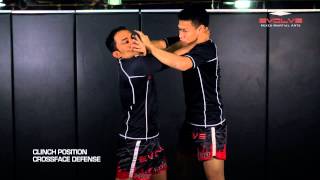
Dan Henderson presents fundamental clinch position mechanics designed to prevent strikes and maintain control. The focus is on proper posture and hand placement to avoid vulnerable positions.
Clinch Posture Fundamentals
Correct clinch posture prevents knee strikes to the stomach and ribs while maintaining defensive integrity. The goal is to establish a controlling position that minimizes exposure to strikes.
Underhook Placement
The underhook should grip the opponent's shoulder muscle rather than simply holding the arm. This grip placement distributes force across the shoulder and prevents fatigue in the holding arm.
Collar Tie Integration
The opposite hand can establish a collar tie, wrist control, or blocking position depending on the situation. In an over-under configuration, maintaining a deep underhook prevents the opponent from applying downward pressure.
Posture and Hip Position
The clincher should maintain an upright posture with hips tucked in to prevent knee strikes. Bending forward creates openings for strikes to the torso and face.
Foot Placement and Balance
Weight should be distributed evenly on both feet to maintain mobility in all directions. Leaning to one side compromises balance and limits defensive movement options.
Head Position
The chin should rest on the hand to maintain an upright head position and prevent uppercuts up the centerline. Lowering the head creates vulnerability to facial strikes.
Application Across Positions
The same posture and control principles apply whether clinching in open space, on the mat, or against the fence. Maintaining this position through consistent posture prevents the opponent from effectively execute knee strikes.
Core Principles Summary
The fundamental clinch position combines an underhook, collar tie, upright posture, engaged hips, and elevated head position. This configuration provides maximum control while minimizing vulnerability to strikes.
Dan Henderson's Techniques of the Week: Clinch Position
Key Takeaways
- •Introduction
- •Clinch Posture Fundamentals
- •Underhook Placement
- •Collar Tie Integration
In this week's lesson, Dan Henderson shows us how to have good technique while in the clinch to avoid exposing yourself. He starts out by having an underhook on the shoulder muscle of his opponent. Make sure to keep it deep in his arm. Avoid bending over and keep hips in. Don't put your head down, instead keep your chin on your opponent's shoulder. For more MMA techniques and advice from legend Dan Henderson visit our blog at: danhenderson.revlabs.com To supplement like Dan Henderson Check Out: http://www.amazon.com/revlabs?channel=youtube
Frequently Asked Questions
What does this video teach about clinch?
This video covers introduction, clinch posture fundamentals, underhook placement. It provides detailed instruction from RevLabs.
How long does it take to learn clinch?
The basic mechanics can be understood in a single session, but developing reliable execution requires consistent drilling over weeks of practice. This 9-part breakdown helps structure your training by isolating each phase of the technique.
What are the key details for finishing clinch?
The same posture and control principles apply whether clinching in open space, on the mat, or against the fence. Maintaining this position through consistent posture prevents the opponent from effectively execute knee strikes.