Wrestling Cradles in MMA & Jiu-Jitsu: Breakdown, Smash Guard, Submit
0
Cradle From Side Control·Sonny Brown
Cradles aren’t just a wrestling pin. In BJJ and MMA, they’re a structure-breaking system that transitions from takedowns…
Перевод: Cradle (katakana loanword); cervical flexion neck crank
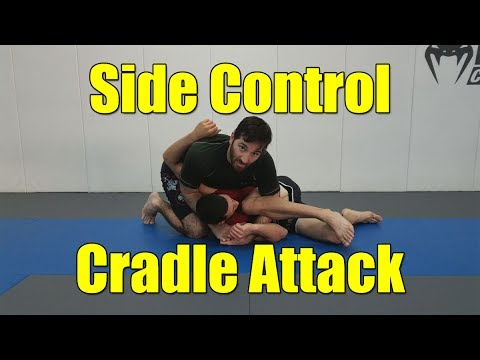
The cradle neck crank from side control is applied by the top player who locks a cradle grip — connecting the hands behind the opponent's head and under one leg — from the side control position, then drives the knee toward the head to compress the opponent into a ball and crank the cervical spine through forced flexion. [1],[2] The cradle locks the opponent's upper and lower body together, eliminating hip escape and bridging defense. [1] The neck crank occurs as the head is driven into the chest with increasing force from the clasped hands. [1],[2]
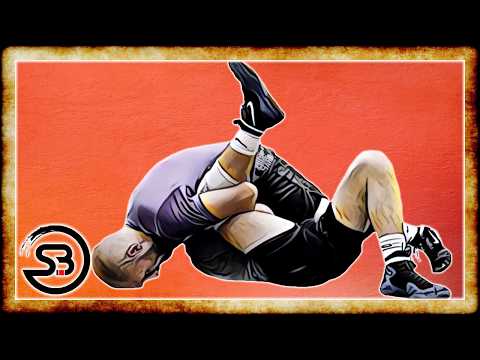
The cradle is one of wrestling's most fundamental pinning combinations, used extensively in American folkstyle wrestling. [1],[2] The transition from a cradle pin to a cradle neck crank in submission grappling occurred naturally as wrestlers brought their pinning techniques into BJJ and MMA. [1] The side control cradle became recognized as both a control position and a submission threat, reflecting the blending of wrestling control with submission grappling's finishing objectives. [1],[2]
Highly effective control and submission tool from side control — the cradle locks the opponent's body and can create cervical pressure. Wrestlers transitioning to submission grappling find this particularly effective [1]
A fundamental wrestling technique (near cradle / far cradle) adapted to submission grappling. The cradle has been part of folkstyle, freestyle, and Greco-Roman wrestling for over a century [1]
Common in wrestling-based MMA and submission grappling; Ben Askren and other folkstyle wrestlers have demonstrated the cradle's effectiveness in MMA competition [1]
Изображений для этой техники пока нет.
Войдите, чтобы предложить изображение.
Cradles aren’t just a wrestling pin. In BJJ and MMA, they’re a structure-breaking system that transitions from takedowns…
If you find yourself stuck on top side control with nothing going on, the cradle might be the solution to your problems.…
Bmac talks using this staple of Wrestling to pass in Jiu Jitsu & what we need to do to stop the guard recovery. Join th…
The cradle from side control is a versatile grappling position that transitions from established side control into multiple offensive opportunities. David Avellan emphasizes the entry mechanics: after achieving side control, the practitioner threatens knee-on-belly to draw out the opponent's leg, then secures it with either a gable or S-grip while pinching the elbows together to create mechanical pressure. Avellan details two primary pathways from this position: if the opponent's arm extends outward, an armlock becomes available via knee-on-belly and elbow tracking; if the arm tucks inward, the position transitions to back control for rear-naked choke setup. Brandon Mccaghren focuses on the cradle pass mechanics, emphasizing S-grip advantages over gable grips—specifically the ability to apply the grip from distance and adjust angles—and detailing the sprawl-and-walk mechanics to pass into mount or back control. Sonny Brown provides the broadest systematic overview, categorizing nearside versus far-side cradles and explaining how the cradle functions as a breakdown tool by connecting two distant body points (head and leg) to create structural vulnerability. Brown also addresses cradle entries from knee shield, single-leg defense, and front headlock positions, plus submission transitions including guillotine, head-and-arm, das, and anaconda chokes accessible during cradle transitions. All three instructors agree on the fundamental principle: elbow pinching and compression against the opponent's head and leg create the controlling structure, though they emphasize different subsequent applications—Avellan on submission branching, Mccaghren on passing mechanics, and Brown on comprehensive positional theory.
Сформировано на основе 3 инструкторов
Учебных курсов по этой технике пока нет.
Войдите, чтобы предложить курс.
Риск травмы для человека, к которому применяется техника
Flexion cranks force the chin toward the chest; compresses anterior cervical structures
Уровень мастерства, необходимый для надёжного выполнения техники
Разрешена ли техника по основным соревновательным правилам
Japanese wrestling/BJJ standard terminology
Japanese wrestling/BJJ standard terminology
Standard katakana transliteration of Western martial arts terminology (外来語) — used in Japanese MMA, boxing, and BJJ communities
Japanese terminology sourced from Japanese wrestling/BJJ standard terminology
grip or squeeze strength, positional control
strong upper body for sustained compression
forearms, biceps, pectorals, core stabilisers
Каждое движение в любом боевом искусстве обладает рядом универсальных свойств. Комбинируйте параметры ниже, чтобы найти нужный инструмент или сравнить аналоги из разных стилей.
Brandon McCaghren emphasizes turning your palm down on your opponent's head rather than grabbing like a chin strap, then making an S-grip with your elbows trying to make them touch together.
Brandon McCaghren advises dropping your hip and covering the opponent's elbow with your body weight below the elbow to prevent them from bumping you out with the high underhook.
Sonny Brown explains that the cradle works by connecting two distant points of the body—the head and the leg—which creates a structural weakness that prevents effective posting and hip movement needed to escape.
Sonny Brown distinguishes that in a nearside cradle your chest faces your opponent's chest, while in a far side cradle your chest faces their back, with transitions between them opening up additional attacking opportunities.
The cradle neck crank from side control is applied by the top player who locks a cradle grip — connecting the hands behind the opponent's head and under one leg — from the side control position, then drives the knee toward the head to compress the opponent into a ball and crank the cervical spine through forced flexion. The cradle locks the opponent's upper and lower body together, eliminating hip escape and bridging defense.
The cradle is one of wrestling's most fundamental pinning combinations, used extensively in American folkstyle wrestling. The transition from a cradle pin to a cradle neck crank in submission grappling occurred naturally as wrestlers brought their pinning techniques into BJJ and MMA.
IBJJF: разрешён — Legal at all belt levels, gi and no-gi — chokes are the safest submission cat…; IJF: разрешён — Legal (shime-waza) — strangulation techniques are one of three permitted subm…; ADCC: разрешён — Legal; Unified MMA: разрешён — Legal — choke submissions are among the most common finishes in MMA; FIAS Sport Sambo: запрещён — All chokes prohibited in Sport Sambo; FIAS Combat Sambo: разрешён — Legal
Оценка опасности 8/10. Flexion cranks force the chin toward the chest; compresses anterior cervical structures
Стандартная цепочка подготовки: Establish Position → Create the Threat → Secure the Hold → Finish.
Стандартные контрприёмы: Early Recognition — identify the submission attempt early and begin defence immediately / Posture and Base — maintain strong posture and base to prevent submission setups / Grip Fight — deny the attacker their preferred gripping configuration.
Распространённые варианты: Standard grip variation (primary hand configuration for maximum choking pressure); Gi variation (uses the lapel or collar as an anchor for additional fric…); No-gi variation (adapted grip and positioning for submission grappling wit…); Transition finish (applied during a positional change to catch the opponent …).
Common in wrestling-based MMA and submission grappling; Ben Askren and other folkstyle wrestlers have demonstrated the cradle's effectiveness in MMA competition
Основные ошибки, на которые стоит обратить внимание: Not connecting the hands — the cradle requires the hands to meet; if the head and knee are too far apart, adjust posi… / Reaching for the knee without maintaining head control — the crossface must stay tight while the other hand reaches f… / Releasing side control pressure during the reach — maintain chest-to-chest pressure while connecting the hands / Not squeezing after connecting — the hand connection creates the position; active squeezing creates the crank.
Cradle From Side Control также известен как Kureidoru, Side Control Cradle Crank, Near-Side Cradle.