Standard Can Opener

Разновидность

Перевод: Basic Can Opener

Дистанция и классификация

Категория
Удар и защитаЗамкиБлижний бойБой против нескольких
Дистанция
БлижняяСредняяДальняя
Целевая зона
Верхняя частьСредняя частьНижняя часть

Обзор

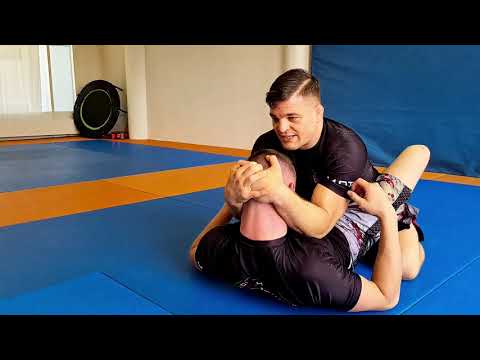
The standard can opener is a cervical flexion crank applied from inside the opponent's closed guard, where the attacker clasps both hands behind the opponent's head and pulls it forward toward the chest. [1] The attacker interlocks the fingers behind the occipital bone, then drives the elbows together while pulling upward, forcing the opponent's chin toward their sternum in extreme cervical flexion. [1],[2] The name 'can opener' refers to the prying open effect on the closed guard — the intense neck pain typically causes the bottom player to open their legs to relieve pressure. [2] While primarily used as a guard opener, the can opener can cause legitimate cervical injury if applied explosively and is illegal in many competition rulesets. [2],[3]

Также известна как
Classic Can Opener[1]Basic Guard Can Opener[2]
Используется в

История и происхождение

The can opener is one of the oldest guard-opening techniques, dating back to early no-rules grappling and vale tudo. [1] It has been progressively restricted in sport BJJ competitions but remains legal in MMA and some no-gi rulesets. [2],[3]

Страна происхождения· показано в случайном порядке

  • БразилияБразильское джиу-джитсу, Сабмишн-грэпплинг, ММА
  • Япония基本缶切り(Kihon Kankiri)Бразильское джиу-джитсу, Дзюдо, Сабмишн-грэпплинг
  • СШАСабмишн-грэпплинг, ММА
  • РоссияСамбо

Эффективность

The standard can opener applies cervical flexion pressure from inside closed guard using clasped hands behind the head. [1]

Родословная

The standard can opener technique comes from catch wrestling and was used in early MMA. [1]

Соревновательные результаты

Standard can openers are used in MMA competition and submission events where neck cranks are permitted. [1]

Изображения

Изображений для этой техники пока нет.

Войдите, чтобы предложить изображение.

Биомеханический механизм

Primary ActionCross-collar or lapel-driven compression of the carotid arteries using gi material as a friction anchor
Joints InvolvedCervical spine (flexion or lateral bend), wrists and forearms (grip and rotation)
Force VectorOpposing forearm rotation creates a scissors effect across both sides of the neck
Gi FactorLapel fabric increases friction and distributes force over a wider surface area, making the choke harder to escape

Позиция и вход

From controlling position (gi)Secure the necessary collar or lapel grips, configure hands for the choke, and apply opposing rotational pressure
From guard (gi)Break posture and secure deep collar grips, feed the choke and angle to finish
From back control (gi)Establish collar grip access, feed the second hand and apply the cross-collar squeeze

Варианты

Standard grip variationprimary hand configuration for maximum choking pressure
Gi variationuses the lapel or collar as an anchor for additional friction and control
No-gi variationadapted grip and positioning for submission grappling without the gi
Transition finishapplied during a positional change to catch the opponent off-guard

Видео

Can Opener - Illegal BJJ Submission Neck Crank from Top Guard advanced Grappling for MMA - CanOpener

0
Standard Can Opener·Peter Mettler Martial Arts
1 video

Изучить технику

Учебных курсов по этой технике пока нет.

Войдите, чтобы предложить курс.

Оценки

Уровень опасности

Риск травмы для человека, к которому применяется техника

8
Очень высокий8/10

The can opener forces the head forward from inside closed guard; banned in most BJJ competition

Сложность

Уровень мастерства, необходимый для надёжного выполнения техники

Начинающий
Допустимость на соревнованиях

Разрешена ли техника по основным соревновательным правилам

Запрещено
IBJJF — Neck cranks and spinal locks prohibited at all be...
IBJJF Rules Book v6.0, June 2024PDF
IJF — Neck cranks prohibited
IJF Sport and Organisation Rules 2025, Article 27PDF
FIAS Sport Sambo — All chokes prohibited in Sport Sambo
FIAS International Sambo Competition RulesPDF
Разрешено
ADCC — Legal
ADCC Rules Update, April 2025PDF
Unified MMA — Legal — choke submissions are among the mos...
Unified Rules of MMA, August 2025PDF
FIAS Combat Sambo — Legal
FIAS Combat Sambo RulesPDF

Заметки по тренировке

The standard can opener is the basic version applied from inside closed guard — lace the fingers behind the head, tuck the elbows, and use back extension to drive the chin to the chest (Gracie & Gracie, Brazilian Jiu-Jitsu: Theory and Technique, 2001)
The standard version uses a gable grip or interlocked fingers behind the occipital bone (back of the head) — the grip must be secure before applying force
The motion: posture upright while pulling the head forward and down — the opposition between the upright torso and the forward-driven head creates the cervical flexion
The standard can opener is a guard-opening tool: the primary goal is to make the closed guard uncomfortable enough that the bottom player opens their legs to relieve the neck pressure
Timing: apply the can opener as part of a guard-opening sequence — combine it with hip pressure and standing to ensure the guard opens
The standard version is the most controlled: the attacker's posture and base remain stable throughout, minimising risk of sweeps or submissions from the bottom player
Once the guard opens, immediately transition to a passing position: combat base, standing, or toreando — the can opener's window is brief

Типичные ошибки

!Hunching forward during the can opener — the torso should remain upright; hunching reduces the mechanical advantage and makes you vulnerable to guard attacks
!Gripping too high on the head — grip behind the occipital bone, not on top of the head; crown-of-head grips create a downward push rather than a flexion force
!Applying the can opener without a plan for what comes next — have a guard pass ready; the can opener creates a reaction, not a submission (in most rule sets)
!Not maintaining base — the can opener requires a stable base; if your posture is compromised, the bottom player sweeps rather than opening the guard
!Holding the can opener for extended periods — the technique works quickly or not at all; prolonged application causes unnecessary discomfort and risks injury
!Using interlocked fingers against a strong neck — a strong neck can resist the flexion; if the basic opener doesn't work, stand to pass rather than cranking harder
!Ignoring the bottom player's arms — while focused on the head, the opponent may set up armbars or collar chokes; maintain defensive awareness

Связанные техники

Контрприёмы

Цепочка подготовки

1Control the Armisolate and grip the target arm
2Position the Hipsalign hips perpendicular to the arm for maximum leverage
3Pinch Kneessqueeze knees together to prevent arm extraction
4Extend for the Finishbridge hips up while pulling the wrist down to hyperextend the elbow

Источники и ссылки

Основной источник

Japanese BJJ — kihon (基本) standard modifier

1КнигаJapanese BJJ — kihon (基本) standard modifier

Japanese terminology sourced from Japanese BJJ — kihon (基本) standard modifier

2Учебная программаKodokan Judo Institute — Official Waza Names

Standard Japanese martial arts terminology (kanji/hiragana)

3ДругоеJapanese Martial Arts Standard Terminology (武道用語)

Established Japanese martial arts naming convention — native Japanese term (和語/漢語)

4ЦитатаJapanese BJJ — kihon (基本) standard modifier

Japanese terminology sourced from Japanese BJJ — kihon (基本) standard modifier

Сообщество

Атлетизм

Requires

grip or squeeze strength, positional control

Favours

strong upper body for sustained compression

Key muscles

forearms, biceps, pectorals, core stabilisers

Часто задаваемые вопросы

Why is the can opener technique illegal in most BJJ competitions?

According to Peter Mettler, the can opener was outlawed in BJJ specifically because it is so effective and dangerous—it's a neck crank submission from top guard that competitors cannot defend against once applied, which is why rulemakers banned it.

What's the basic setup for the can opener?

You only need head control from top guard. Grab the back of the opponent's head fairly high, lift slightly, and drive your elbow in to apply the technique, according to Peter Mettler.

How do I prevent my opponent from pushing me off during a can opener?

Peter Mettler emphasizes controlling your opponent's hips with tight knee control by pulling them toward your hips, which allows you to maintain the submission even if they try to push your head away or push against your face.

Are there different styles of the can opener?

Yes, Peter Mettler notes there are three distinct styles of the can opener, with the crank variation being his preferred method for applying the technique.

Как работает Standard Can Opener?

The standard can opener is a cervical flexion crank applied from inside the opponent's closed guard, where the attacker clasps both hands behind the opponent's head and pulls it forward toward the chest. The attacker interlocks the fingers behind the occipital bone, then drives the elbows together while pulling upward, forcing the opponent's chin toward their sternum in extreme cervical flexion.

Откуда происходит Standard Can Opener?

The can opener is one of the oldest guard-opening techniques, dating back to early no-rules grappling and vale tudo. It has been progressively restricted in sport BJJ competitions but remains legal in MMA and some no-gi rulesets.

Разрешён ли Standard Can Opener на соревнованиях?

IBJJF: запрещён — Neck cranks and spinal locks prohibited at all belt levels; IJF: запрещён — Neck cranks prohibited; ADCC: разрешён — Legal; Unified MMA: разрешён — Legal — choke submissions are among the most common finishes in MMA; FIAS Sport Sambo: запрещён — All chokes prohibited in Sport Sambo; FIAS Combat Sambo: разрешён — Legal

Насколько опасен Standard Can Opener?

Оценка опасности 8/10. The can opener forces the head forward from inside closed guard; banned in most BJJ competition

Как подготовить Standard Can Opener?

Стандартная цепочка подготовки: Control the Arm → Position the Hips → Pinch Knees → Extend for the Finish.

Как защититься от Standard Can Opener?

Стандартные контрприёмы: Clasp Hands — grip own wrist to prevent arm extension / Stack — drive forward to compress the attacker and relieve elbow pressure / Hitchhiker Escape — rotate the thumb toward the mat and roll to extract the arm.

Какие есть варианты Standard Can Opener?

Распространённые варианты: Standard grip variation (primary hand configuration for maximum choking pressure); Gi variation (uses the lapel or collar as an anchor for additional fric…); No-gi variation (adapted grip and positioning for submission grappling wit…); Transition finish (applied during a positional change to catch the opponent …).

Насколько эффективен Standard Can Opener на соревнованиях?

Standard can openers are used in MMA competition and submission events where neck cranks are permitted.

Какие типичные ошибки при выполнении Standard Can Opener?

Основные ошибки, на которые стоит обратить внимание: Hunching forward during the can opener — the torso should remain upright; hunching reduces the mechanical advantage a… / Gripping too high on the head — grip behind the occipital bone, not on top of the head; crown-of-head grips create a … / Applying the can opener without a plan for what comes next — have a guard pass ready; the can opener creates a reacti… / Not maintaining base — the can opener requires a stable base; if your posture is compromised, the bottom player sweep….

Какие ещё названия есть у Standard Can Opener?

Standard Can Opener также известен как Kihon Kankiri, Classic Can Opener, Basic Guard Can Opener.