Can Opener - Illegal BJJ Submission Neck Crank from Top Guard advanced Grappling for MMA - CanOpener
0
Can Opener From Closed Guard Top·Peter Mettler Martial Arts
Перевод: Can Opener (katakana loanword)
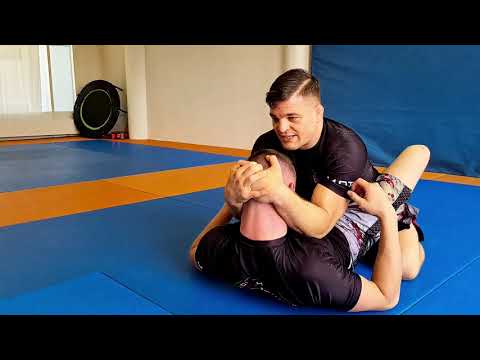
The can opener from closed guard top is applied by the top player who clasps both hands behind the opponent's head and drives the head forward toward the chest, flexing the cervical spine under intense pressure while the bottom player's hips are immobilized by the closed guard position. [1],[2] The opposing force of the anchored hips and the cranked neck creates extreme cervical flexion stress. [1] The technique is primarily used to force the guard player to open their legs to relieve the neck pressure, though it can produce a submission tap from spinal pain alone. [1],[2]
The can opener is one of the oldest and most basic guard-opening techniques in grappling, known across multiple traditions including catch wrestling and judo. [1],[2] In early BJJ competition, the can opener was frequently used as a guard-breaking method before it was restricted in many rulesets due to the cervical injury risk at lower belt levels. [1] It remains legal in ADCC and many no-gi competitions, and its use in MMA continues as a practical method to open the closed guard or force a submission. [1],[2]
One of the most effective ways to force open a closed guard — cervical pressure makes it nearly impossible for the bottom player to maintain guard closure. Risk of neck injury limits its use in sport grappling [1]
A foundational wrestling-to-submission technique; the can opener has been used in catch wrestling and combat sports for over a century. Widely employed in early UFC/PRIDE MMA events [1]
Extremely common in early MMA (UFC 1-50 era); now banned at many IBJJF divisions but still legal and effective in MMA and some submission grappling rule sets [1]
Изображений для этой техники пока нет.
Войдите, чтобы предложить изображение.
Being inside the closed guard in a self-defense scenario is a favorable position because you can strike from there. Howe…
The can opener from closed guard top is a neck-crank submission performed by the top player that exploits the opponent's closed guard position. According to Peter Mettler Martial Arts, the technique requires head control and can be executed through three main variations: rolling the opponent inward, lifting and squeezing, or applying a rotational crank. Mettler emphasizes grabbing the back of the head fairly high, driving the elbow in, and lifting the opponent while pulling their head toward the hip. Critical defensive details include controlling the opponent's hips with the knees to prevent them from scooping out, and managing long-armed opponents by lifting and pushing downward. Mettler notes the can opener is highly effective partly because it has been banned in many competitions, and stresses that practitioners must tap immediately when caught, as neck injuries from spinal manipulation do not heal quickly. The technique should be practiced carefully and is recommended for blue belt and above. While Mastery Jiu-Jitsu's video focuses primarily on guard-passing concepts rather than the can opener itself, it provides context on why top-position players need efficient techniques to break the closed guard. Both instructors agree that the can opener represents one of few viable submissions available from top closed guard and underscore safety protocols essential for responsible practice.
Сформировано на основе 2 инструкторов
Учебных курсов по этой технике пока нет.
Войдите, чтобы предложить курс.
Риск травмы для человека, к которому применяется техника
Flexion cranks force the chin toward the chest; compresses anterior cervical structures
Уровень мастерства, необходимый для надёжного выполнения техники
Разрешена ли техника по основным соревновательным правилам
JBJJF competition rules; Japanese BJJ community
Official Japanese BJJ federation — competition rules and terminology
Standard katakana transliteration of Western martial arts terminology (外来語) — used in Japanese MMA, boxing, and BJJ communities
Japanese terminology sourced from JBJJF competition rules; Japanese BJJ community
grip or squeeze strength, positional control
strong upper body for sustained compression
forearms, biceps, pectorals, core stabilisers
Каждое движение в любом боевом искусстве обладает рядом универсальных свойств. Комбинируйте параметры ниже, чтобы найти нужный инструмент или сравнить аналоги из разных стилей.
The stack-through can opener combines the traditional can opener neck crank with a stacking guard pass, driving the opponent's knees toward their face while cranking the neck in flexion. [1] From closed guard top position, the attacker clasps the hands behind the opponent's head, pulls it forward and upward, then drives the body forward to stack the opponent onto their shoulders. [1,2] The stacking motion amplifies the cervical flexion by using the attacker's body weight to compress the opponent's spine from both ends simultaneously — the hands pull the head forward while the torso stacks the legs backward. [2] This dual compression makes the stack-through variant significantly more painful and dangerous than the standard can opener. [2,3]
The standard can opener is a cervical flexion crank applied from inside the opponent's closed guard, where the attacker clasps both hands behind the opponent's head and pulls it forward toward the chest. [1] The attacker interlocks the fingers behind the occipital bone, then drives the elbows together while pulling upward, forcing the opponent's chin toward their sternum in extreme cervical flexion. [1,2] The name 'can opener' refers to the prying open effect on the closed guard — the intense neck pain typically causes the bottom player to open their legs to relieve pressure. [2] While primarily used as a guard opener, the can opener can cause legitimate cervical injury if applied explosively and is illegal in many competition rulesets. [2,3]
All you need is head control. According to Peter Mettler, once you have control of the head, you can roll your opponent into the can opener position.
Use your knees to control their hips by pulling them toward your hips and keeping your knees tight. This gives you stability even if they try to push your head off or push against your face with their hands, according to Peter Mettler.
The can opener is outlawed in most BJJ rulesets specifically because it is a neck crank that is quite dangerous and difficult to defend against, as Peter Mettler explains.
The can opener from closed guard top is applied by the top player who clasps both hands behind the opponent's head and drives the head forward toward the chest, flexing the cervical spine under intense pressure while the bottom player's hips are immobilized by the closed guard position. The opposing force of the anchored hips and the cranked neck creates extreme cervical flexion stress.
The can opener is one of the oldest and most basic guard-opening techniques in grappling, known across multiple traditions including catch wrestling and judo. In early BJJ competition, the can opener was frequently used as a guard-breaking method before it was restricted in many rulesets due to the cervical injury risk at lower belt levels.
IBJJF: разрешён — Legal at all belt levels, gi and no-gi — chokes are the safest submission cat…; IJF: разрешён — Legal (shime-waza) — strangulation techniques are one of three permitted subm…; ADCC: разрешён — Legal; Unified MMA: разрешён — Legal — choke submissions are among the most common finishes in MMA; FIAS Sport Sambo: запрещён — All chokes prohibited in Sport Sambo; FIAS Combat Sambo: разрешён — Legal
Оценка опасности 8/10. Flexion cranks force the chin toward the chest; compresses anterior cervical structures
Стандартная цепочка подготовки: Establish Position → Create the Threat → Secure the Hold → Finish.
Стандартные контрприёмы: Early Recognition — identify the submission attempt early and begin defence immediately / Posture and Base — maintain strong posture and base to prevent submission setups / Grip Fight — deny the attacker their preferred gripping configuration.
Распространённые варианты: Standard grip variation (primary hand configuration for maximum choking pressure); Gi variation (uses the lapel or collar as an anchor for additional fric…); No-gi variation (adapted grip and positioning for submission grappling wit…); Transition finish (applied during a positional change to catch the opponent …).
Extremely common in early MMA (UFC 1-50 era); now banned at many IBJJF divisions but still legal and effective in MMA and some submission grappling rule sets
Основные ошибки, на которые стоит обратить внимание: Relying on the can opener as the sole guard-passing tool — it opens the guard, but a complete passing game requires f… / Applying explosive flexion — the cervical spine is vulnerable; use controlled, progressive pressure / Not maintaining posture while applying — the strength comes from the back and shoulders, not the arms; maintain uprig… / Not having a pass ready for when the guard opens — the opening is brief; without a prepared follow-up, the opponent r….
Can Opener From Closed Guard Top также известен как Kyan Ōpunā, Can Opener, Guard Opener Neck Crank, Stack Neck Crank.