Face locks / Neck cranks
0
Face Crank·AZ Battle School
Caution! Be extremely careful. Only train this with a certified professional. This is for information only.
Перевод: Face Twist
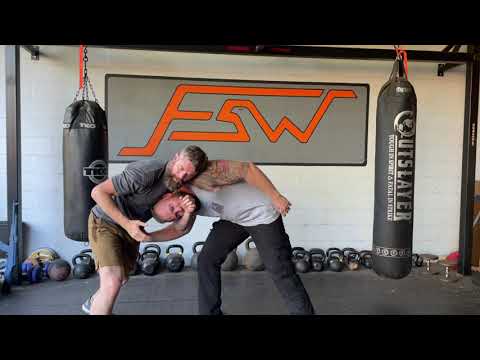
The face crank applies pressure across the opponent's face — typically the chin, jaw, or nose — to force cervical hyperextension and create intense pain. [1],[2],[3] The attacker clasps hands under or across the face and pulls upward or backward, driving the chin toward the ceiling and hyperextending the cervical spine. [1],[4] Face cranks are often applied from back control, mount, or north-south when the opponent tucks their chin to defend chokes. [1],[5] While primarily a pain submission, sustained face cranking can cause cervical spine injury, making it a dangerous technique that is banned or restricted in some competitions. [1],[6]
Face cranks have existed across wrestling traditions for centuries as a method to force positional compliance. [1],[2] In catch wrestling, face cranking was a standard technique for exposing the neck. [1],[3] In modern BJJ and MMA, the face crank became a controversial technique — effective but often viewed as 'grinding' rather than technical submission. [1],[4],[5] The IBJJF prohibits cranking the face without a choke component. [1],[6]
Face cranks apply rotational pressure to the jaw and face, creating intense pain and threatening cervical spine damage. [1]
Face cranks appear in catch wrestling and early MMA as pain-based submissions. [1]
Face cranks are legal in MMA, where they occasionally force tap-outs. [1]
Изображений для этой техники пока нет.
Войдите, чтобы предложить изображение.
Caution! Be extremely careful. Only train this with a certified professional. This is for information only.
This video shows another face clinch option from the NAUKA Fighting System. A couple quick points for this face clinch…
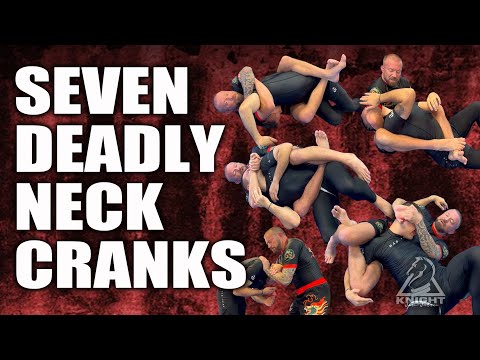
There are obviously more than 7 neck cranks in grappling, but the title has to be catchy... Neck cranks are some of the …
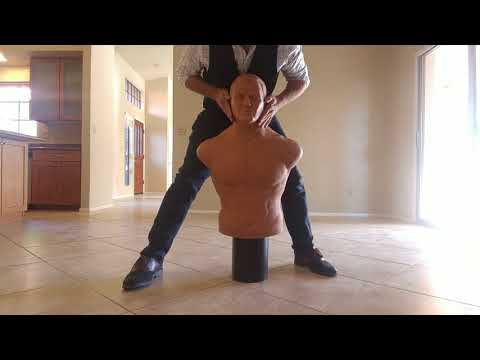
The face crank is a cervical-extension submission that applies rotational and compressive pressure to the neck and head by targeting facial structures rather than the neck directly. Knight Jiu-Jitsu describes face cranks as effective but potentially injurious submissions that exploit chin-tucked defenses against chokes; the instructor demonstrates variants from closed guard (using the crown of the head and forearm on the collarbone), side control (with arm collection and rib compression), rear control (using the radial notch of the wrist under the cheekbone), front headlock transitions, north-south position (the dragon sleeper/executioner hold), crucifix (pulling high near the hairline), and twister setups (full-body spinal twist). AZ Battle School approaches face locks through a self-defense lens, identifying anatomical pressure points—orbital ridge, bridge of nose, chin, mandible, and jawline—that function within the attacker's "cloud of power" through cutting, grinding, and collapsing motions. Rich Graham's NAUKA system distinguishes face clinches from pure neck attacks, combining neck bending and head rotation with pain compliance via wrist-bone pressure against facial tissue, applicable in clinch and ground positions. All three instructors emphasize that face cranks are tournament-illegal in many rule sets, cause cumulative neck damage, demand careful partner communication, and differ from chokes in that they typically rely on spinal manipulation and pain rather than circulation restriction to force submission.
Сформировано на основе 3 инструкторов
Учебных курсов по этой технике пока нет.
Войдите, чтобы предложить курс.
Риск травмы для человека, к которому применяется техника
Face cranks use the jaw or orbital ridge as a lever to torque the cervical spine
Уровень мастерства, необходимый для надёжного выполнения техники
Разрешена ли техника по основным соревновательным правилам
Koryu Jujutsu; Shooto commentary
Japanese terminology sourced from Koryu Jujutsu; Shooto commentary
Classical schools: Tenjin Shin'yo-ryu, Takenouchi-ryu, etc.
Japanese MMA pioneer organization — technique terminology
Standard Japanese martial arts terminology (kanji/hiragana)
Established Japanese martial arts naming convention — native Japanese term (和語/漢語)
Japanese terminology sourced from Koryu Jujutsu; Shooto commentary
shoulder and chest pressure, hip sprawl endurance
heavier upper body, broad shoulders
deltoids, pectorals, core, hip extensors
Каждое движение в любом боевом искусстве обладает рядом универсальных свойств. Комбинируйте параметры ниже, чтобы найти нужный инструмент или сравнить аналоги из разных стилей.
The face crank from crucifix is applied when the attacker has secured the crucifix position — trapping one of the opponent's arms with the legs (typically the far arm threaded between the legs) while controlling the second arm with the hands or shoulder pin — and then places a hand or forearm across the opponent's face, pulling upward to hyperextend the cervical spine. [1,2] The crucifix eliminates the opponent's ability to use their hands for defense, leaving the face and neck completely exposed to cranking pressure. [1] The attacker can grip under the nose, chin, or forehead and lever the head backward against the trapped body, creating intense spinal extension pressure. [1,2]
The face crank from rear mount is applied from standard back control by placing a hand or forearm across the opponent's face — typically under the nose or on the chin — and pulling the head backward while the hooks or body triangle anchor the body in place. [1,2] The opposing forces of the anchored torso and the cranked head create cervical hyperextension. [1] This technique is commonly used as a setup to force the opponent to expose their neck for a rear naked choke, though it can produce a submission through spinal pain alone. [1,2]
According to Knight Jiu-Jitsu, a neck crank involves cranking the neck by going up higher toward the temple or hairline, whereas a choke is simply squeezing the neck. Knight emphasizes that the placement of the forearm is crucial to distinguish between these two mechanics.
Yes, Knight Jiu-Jitsu explains that using a neck crank can make your opponent open their guard, which allows you to start initiating a pass. This is one tactical application of the crank when you want to move into guard passing rather than finish the submission.
Knight Jiu-Jitsu suggests using the snuff box (the radius near the wrist) placed under the cheekbone, then switching into a short choke to crank the neck while getting your forearm behind the opponent's shoulder.
Knight Jiu-Jitsu stresses the importance of keeping your neck strong through prehab and rehab, and recommends tools like the Iron Neck device to prevent injuries and maintain the longevity of your jiu-jitsu career.
According to AZ Battle School, when applying a neck crank or face lock, you're essentially pulling your opponent into your cloud of power, turning them, and collapsing their spine—since the spine becomes weaker once it bends.
The face crank applies pressure across the opponent's face — typically the chin, jaw, or nose — to force cervical hyperextension and create intense pain. The attacker clasps hands under or across the face and pulls upward or backward, driving the chin toward the ceiling and hyperextending the cervical spine.
Face cranks have existed across wrestling traditions for centuries as a method to force positional compliance. In catch wrestling, face cranking was a standard technique for exposing the neck.
IBJJF: запрещён — Neck cranks and spinal locks prohibited at all belt levels; IJF: запрещён — Neck cranks prohibited; ADCC: разрешён — Legal; Unified MMA: разрешён — Legal — choke submissions are among the most common finishes in MMA; FIAS Sport Sambo: запрещён — All chokes prohibited in Sport Sambo; FIAS Combat Sambo: разрешён — Legal
Оценка опасности 8/10. Face cranks use the jaw or orbital ridge as a lever to torque the cervical spine
Стандартная цепочка подготовки: Achieve Controlling Position → Isolate the Neck → Set the Grip → Apply Pressure.
Стандартные контрприёмы: Tuck Chin — protect the neck by lowering the chin to prevent the choke from sinking / Two-on-One Grip Fight — use both hands to strip the choking grip before it locks / Turn Into — rotate toward the choking arm to relieve carotid pressure / Posture Up — straighten the spine and create distance to break the choking angle.
Распространённые варианты: Standard north-south choke (shoulder drives into the neck from north-south position); Paper-cutter variation (uses the forearm blade across the throat from the north-s…); Transition finish (applied during the walk-around from side control to north…).
Face cranks are legal in MMA, where they occasionally force tap-outs.
Основные ошибки, на которые стоит обратить внимание: Using face cranks as primary attacks — they should be transitional: use the face crank to open the neck for a proper … / Applying face cranks explosively in training — the jaw and neck are vulnerable; progressive application allows the tr… / Ignoring the training partner's discomfort — face cranks cause pain before structural damage; respect the tap and dis… / Relying on face cranks against experienced opponents — skilled grapplers recognise face cranks and will either endure….
Face Crank также известен как Kao Hineri, Jaw Crank, Crossface Crank, Kao-hishigi.