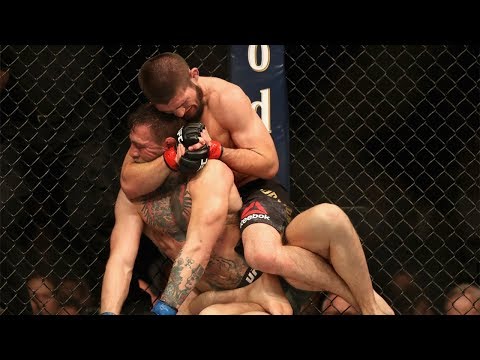
Every Neck Crank Finish in UFC History
0
Cervical Extension Crank·UFC
Submissions due to neck cranks were more popular in the early part of the promotion's history with Tank Abbott, Tito Ort…
Перевод: Cervical Spine Extension Twist
Cervical extension cranks force the opponent's head backward, hyperextending the cervical spine. [1],[2] The can opener (from inside closed guard) is the most common example — the attacker clasps hands behind the opponent's head and drives downward, forcing the chin toward the chest and the cervical spine into extension. Cervical extension cranks are prohibited in most grappling rule sets due to spinal injury risk. [3],[4]
The cervical extension crank hyperextends the neck backward, attacking the cervical spine ligaments and vertebrae. [1]
Cervical cranks appear in catch wrestling, pro wrestling (camel clutch), and self-defence systems. [1]
Neck cranks are legal in MMA and some submission grappling events but banned in IBJJF competition. [1]
Изображений для этой техники пока нет.
Войдите, чтобы предложить изображение.
Submissions due to neck cranks were more popular in the early part of the promotion's history with Tank Abbott, Tito Ort…
Учебных курсов по этой технике пока нет.
Войдите, чтобы предложить курс.
Риск травмы для человека, к которому применяется техника
Cervical extension cranks force the head backward, risking vertebral disc injury and nerve damage
Уровень мастерства, необходимый для надёжного выполнения техники
Разрешена ли техника по основным соревновательным правилам
Shooto Official Rules — anatomical terminology
Japanese MMA pioneer organization — technique classification
Standard Japanese martial arts terminology (kanji/hiragana)
Established Japanese martial arts naming convention — native Japanese term (和語/漢語)
Japanese terminology sourced from Shooto Official Rules — anatomical terminology
grip or squeeze strength, positional control
strong upper body for sustained compression
forearms, biceps, pectorals, core stabilisers
Каждое движение в любом боевом искусстве обладает рядом универсальных свойств. Комбинируйте параметры ниже, чтобы найти нужный инструмент или сравнить аналоги из разных стилей.
The face crank applies pressure across the opponent's face — typically the chin, jaw, or nose — to force cervical hyperextension and create intense pain. [1,2,3] The attacker clasps hands under or across the face and pulls upward or backward, driving the chin toward the ceiling and hyperextending the cervical spine. [1,4] Face cranks are often applied from back control, mount, or north-south when the opponent tucks their chin to defend chokes. [1,5] While primarily a pain submission, sustained face cranking can cause cervical spine injury, making it a dangerous technique that is banned or restricted in some competitions. [1,6]
The Nelson neck crank uses a half-nelson or full-nelson position to drive the opponent's chin toward their chest (flexion) or force the head sideways, creating cervical spine pressure. [1,2] In the full nelson, both arms thread under the opponent's armpits and lock behind the head, then push the head forward and down. [1] The half-nelson uses one arm behind the head while the other controls the body. [1,3] Nelson cranks are common in wrestling and are applied from back control, side control, or during turtle attacks. [1]
The rear neck crank from back without hooks is a cervical-spine submission applied from a partial back position — chest-to-back contact established, but no hooks or body triangle. [1] Rather than relying on positional control, the attacker uses upper-body grips alone to crank the cervical spine. [1,2] In the cervical-extension form, the hands gable-grip behind the opponent's head (or the radius bone of the forearm presses under the cheekbone) and drive the chin upward and back while the chest pulls in the opposite direction, forcing extension at the cervical spine. [2] Without hooks, the attacker trades positional stability for speed of attack, making this common in scramble situations and transitions; the absence of leg control means the opponent can potentially rotate free, so the technique requires rapid application. [2,3]
From back control, you can apply the crank by getting under the chin and using punches or positioning to control the opponent's head before cranking the neck extension. The key is to prevent your opponent from turning the wrong way out of back control, which can trap them in the submission.
When caught in a cervical extension crank, it is very important to relax your arms rather than tense them, as this can help you escape or reduce injury before tapping.
Cervical extension cranks force the opponent's head backward, hyperextending the cervical spine. The can opener (from inside closed guard) is the most common example — the attacker clasps hands behind the opponent's head and drives downward, forcing the chin toward the chest and the cervical spine into extension.
Cervical extension attacks have roots in catch wrestling and classical jujutsu. The can opener remains one of the most commonly attempted neck cranks in MMA, used to open the closed guard.
IBJJF: запрещён — Neck cranks and spinal locks prohibited at all belt levels; IJF: запрещён — Neck cranks prohibited; ADCC: разрешён — Legal; Unified MMA: разрешён — Legal — choke submissions are among the most common finishes in MMA; FIAS Sport Sambo: запрещён — All chokes prohibited in Sport Sambo; FIAS Combat Sambo: разрешён — Legal
Оценка опасности 9/10. Cervical extension cranks force the head backward, risking vertebral disc injury and nerve damage
Стандартная цепочка подготовки: Establish Position → Create the Threat → Secure the Hold → Finish.
Стандартные контрприёмы: Early Recognition — identify the submission attempt early and begin defence immediately / Posture and Base — maintain strong posture and base to prevent submission setups / Grip Fight — deny the attacker their preferred gripping configuration.
Распространённые варианты: Standard grip variation (primary hand configuration for maximum choking pressure); Gi variation (uses the lapel or collar as an anchor for additional fric…); No-gi variation (adapted grip and positioning for submission grappling wit…); Transition finish (applied during a positional change to catch the opponent …).
Neck cranks are legal in MMA and some submission grappling events but banned in IBJJF competition.
Основные ошибки, на которые стоит обратить внимание: Applying cervical extension explosively — the anterior structures of the neck are vulnerable and lack the muscular pr… / Not stabilising the opponent's body — the torso must be controlled so the extension force focuses on the cervical spi… / Using cervical extension in casual training without agreement — this is a dangerous technique; only apply with experi… / Confusing extension with flexion — extension tilts the head backward (chin up); flexion tilts forward (chin to chest)….
Cervical Extension Crank также известен как Keitsui Shinten Hineri, Neck Extension Lock, Posterior Cervical Crank.