BJJ Defended Arm Bar Alternate Submissions Tutorial
0
Headscissors From Guard·Stuart Tomlinson
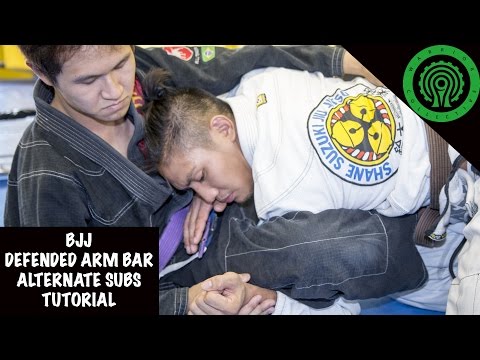
Kelvin Yeo, instructor at Fight G in Singapore is here filmed by the Warrior Collective giving a tutorial on different s…
Перевод: Head Scissors (katakana loanword)
The headscissors from guard is applied by the bottom player who traps the opponent's head between their thighs while in the guard position, then squeezes the legs together to compress the carotid arteries and restrict blood flow to the brain. [1],[2] The guard position provides the hip angle and leg positioning needed to isolate the head, and the attacker may use arm control to prevent the opponent from posturing. [1] The technique requires significant adductor strength and proper alignment of the thighs against the neck for effective bilateral compression. [1],[2]
Headscissors techniques date back to ancient wrestling traditions documented in Greek and Roman combat sports. [1],[2] In judo, the technique appears as a form of ashi-garami applied to the neck rather than the limbs. [1] The guard-based headscissors became a recognized option in BJJ for fighters with strong legs, though it is less commonly finished in high-level competition compared to triangle chokes due to the difficulty of maintaining proper alignment against resisting opponents. [1],[2]
Moderate effectiveness from guard — the guard player can generate good squeezing power but the opponent has posture and hand-fighting options to defend [1]
A classical guard technique found in judo, catch wrestling, and early BJJ. Was more common in vale tudo and early MMA before guard-passing technique became sophisticated [1]
Royce Gracie attempted headscissors from guard in early UFC events. Rarely finished at modern elite competition but still viable at lower levels [1]
Изображений для этой техники пока нет.
Войдите, чтобы предложить изображение.
Kelvin Yeo, instructor at Fight G in Singapore is here filmed by the Warrior Collective giving a tutorial on different s…
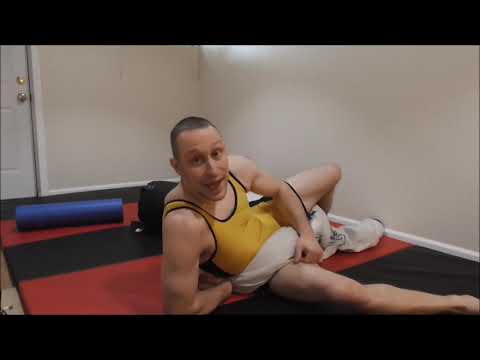
Hii Guys! Today I am rolling with two new white belts. They are both showing very different strengths which is so excit…
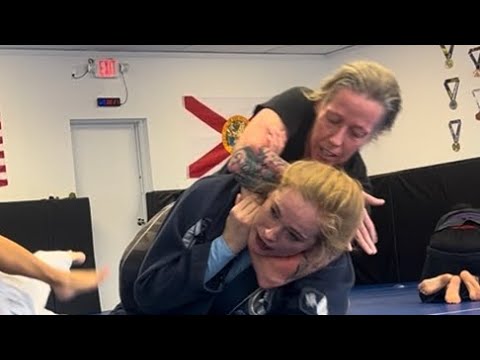
This is a sneaky little submission off of the darce defense. The important details are maintaining control til you get …
The headscissors from guard is a leg-based strangulation technique executed when an opponent attempts to pass or control the guard. Gay Wrestling classes provides the most detailed technical breakdown, emphasizing that the technique begins when an opponent gains an underhook while passing guard—a position where they seek back control. The defender cups the opponent's shoulder, brings a leg underneath their body, and transitions by falling to the side while threading the bottom leg over the top leg to frame the opponent's face. Critical to execution is maintaining a 90-degree bend in the top leg to generate lifting power while keeping the bottom leg pinned against the opponent's shoulder; a straight leg provides insufficient mechanical advantage. The defender secures a fist-to-wrist grip on the opponent's wrist and drives the hips forward while performing internal hip rotation to complete the choke. Gay Wrestling classes emphasizes maintaining pressure throughout transitions and notes that opponents may attempt to sit up or turn inward, requiring the defender to post the foot into the mat and scoop under the head to maintain shoulder pressure. Stuart Tomlinson's transcript addresses headscissors as an alternate submission from the underhook position following armbar attempts, describing a similar foot placement under the neck with heel-to-toe ankle positioning and external leg configuration. Fallon Fratone's instructional content does not directly address headscissors from guard specifically, focusing instead on beginner-level positional instruction and rear naked choke applications. The synthesis of these sources emphasizes mechanical precision over speed, particularly regarding leg bend angle and hip positioning.
Сформировано на основе 3 инструкторов
Учебных курсов по этой технике пока нет.
Войдите, чтобы предложить курс.
Риск травмы для человека, к которому применяется техника
Headscissors use the thighs to squeeze the head laterally; risk of neck strain
Уровень мастерства, необходимый для надёжного выполнения техники
Разрешена ли техника по основным соревновательным правилам
Japanese grappling/BJJ standard terminology; JBJJF competition usage
Official Japanese BJJ federation — competition rules and terminology
Standard katakana transliteration of Western martial arts terminology (外来語) — used in Japanese MMA, boxing, and BJJ communities
Japanese terminology sourced from Japanese grappling/BJJ standard terminology; JBJJF competition usage
grip or squeeze strength, positional control
strong upper body for sustained compression
forearms, biceps, pectorals, core stabilisers
Каждое движение в любом боевом искусстве обладает рядом универсальных свойств. Комбинируйте параметры ниже, чтобы найти нужный инструмент или сравнить аналоги из разных стилей.
The figure-four headscissors from guard uses a figure-four leg configuration — one leg bent behind the knee of the other — to lock the head squeeze from a bottom guard position. [1] The attacker traps the opponent's head between the thighs, then hooks one foot behind the opposite knee to form the figure-four, which structurally locks the squeeze and prevents the opponent from simply pulling the head free. [1,2] The figure-four configuration recruits the powerful hip adductor muscles and adds the mechanical advantage of the interlocking leg structure, significantly increasing compression force. [2] This is the highest-control variant of the guard headscissors because the figure-four lock is extremely difficult to break once established. [2,3]
The reverse headscissors from guard applies the head squeeze with the attacker's legs oriented in the opposite direction compared to the standard version, typically with the attacker's hips angled or inverted. [1] The reverse orientation changes the compression angle — instead of squeezing the sides of the neck from a front-facing position, the reverse headscissors attacks from an angled or rear-facing direction, which can target different portions of the carotid arteries. [1,2] This variant often occurs during scrambles when the attacker's guard is partially passed but they manage to recapture the head between the legs from an unconventional angle. [2] The reverse orientation can be disorienting for the trapped opponent, as standard headscissors defence strategies may not apply. [2,3]
The standard headscissors strangle from guard is the fundamental leg-based head squeeze where the attacker traps the opponent's head between the thighs from a bottom guard position and squeezes. [1] The attacker captures the opponent's head as it dips forward during a guard pass attempt, closes the legs around the skull and neck, and contracts the adductor muscles to compress both sides of the neck simultaneously. [1,2] The standard variant uses a straight leg squeeze without a figure-four lock, relying purely on adductor strength and thigh circumference to generate compression. [2] While simpler than the figure-four version, the standard headscissors can still produce unconsciousness through carotid compression when sufficient force is applied. [2,3]
A bent leg gives you lifting power to control your opponent's elbow while keeping their shoulder pinned down. If you keep your leg straight, you won't have any lifting ability no matter how far you move, making the technique ineffective.
Turn your toe down into the mat so your heel is up—this creates internal rotation of your hip that keeps their shoulder pinned to the ground. Posting your toe is very important because without it, you won't have enough pressure on the shoulder to stop them from sitting up.
Placing your bottom leg on top creates a wall that prevents your opponent from moving out or unhooking you and pushing you away, making the position much more secure.
Keep your opponent's head facing towards you when possible because of the taper of your legs. If their head faces away or straight up, they're closer to your calves and you risk a trachea crush, but you still maintain good power.
The headscissors from guard is applied by the bottom player who traps the opponent's head between their thighs while in the guard position, then squeezes the legs together to compress the carotid arteries and restrict blood flow to the brain. The guard position provides the hip angle and leg positioning needed to isolate the head, and the attacker may use arm control to prevent the opponent from posturing.
Headscissors techniques date back to ancient wrestling traditions documented in Greek and Roman combat sports. In judo, the technique appears as a form of ashi-garami applied to the neck rather than the limbs.
IBJJF: разрешён — Legal at all belt levels, gi and no-gi — chokes are the safest submission cat…; IJF: разрешён — Legal (shime-waza) — strangulation techniques are one of three permitted subm…; ADCC: разрешён — Legal; Unified MMA: разрешён — Legal — choke submissions are among the most common finishes in MMA; FIAS Sport Sambo: запрещён — All chokes prohibited in Sport Sambo; FIAS Combat Sambo: разрешён — Legal
Оценка опасности 7/10. Headscissors use the thighs to squeeze the head laterally; risk of neck strain
Стандартная цепочка подготовки: Establish Position → Create the Threat → Secure the Hold → Finish.
Стандартные контрприёмы: Early Recognition — identify the submission attempt early and begin defence immediately / Posture and Base — maintain strong posture and base to prevent submission setups / Grip Fight — deny the attacker their preferred gripping configuration.
Распространённые варианты: Standard grip variation (primary hand configuration for maximum choking pressure); Gi variation (uses the lapel or collar as an anchor for additional fric…); No-gi variation (adapted grip and positioning for submission grappling wit…); Transition finish (applied during a positional change to catch the opponent …).
Royce Gracie attempted headscissors from guard in early UFC events.
Основные ошибки, на которые стоит обратить внимание: Opening the guard before the head is captured — only open the guard when the head is between the thighs; premature op… / Not repositioning the hips for the headscissors — the guard position may need hip adjustment to align the thighs with… / Allowing the opponent to posture before locking — the headscissors requires the head to stay low; if they posture, re… / Not locking the figure-four immediately — lock as soon as the head is captured; delay allows the opponent to pull the….
Headscissors From Guard также известен как Heddo Shizāzu, Guard Head Scissors, Bottom Scissor Choke.