Figure-Four Headscissors

Разновидность

Перевод: Triangle Strangle

Дистанция и классификация

Категория
Удар и защитаЗамкиБлижний бойБой против нескольких
Дистанция
БлижняяСредняяДальняя
Целевая зона
Верхняя частьСредняя частьНижняя часть

Обзор

The figure-four headscissors from guard uses a figure-four leg configuration — one leg bent behind the knee of the other — to lock the head squeeze from a bottom guard position. [1] The attacker traps the opponent's head between the thighs, then hooks one foot behind the opposite knee to form the figure-four, which structurally locks the squeeze and prevents the opponent from simply pulling the head free. [1],[2] The figure-four configuration recruits the powerful hip adductor muscles and adds the mechanical advantage of the interlocking leg structure, significantly increasing compression force. [2] This is the highest-control variant of the guard headscissors because the figure-four lock is extremely difficult to break once established. [2],[3]

Также известна как
Figure-Four Scissor Choke[1]Figure-4 Head Scissors[2]
Используется в

История и происхождение

Figure-four leg locks around the head have been used in wrestling traditions worldwide, from sumo to catch wrestling. [1] The guard application was formalised in BJJ and submission grappling as a positional control tool that can produce a strangle or serve as a platform for other attacks. [2],[3]

Страна происхождения· показано в случайном порядке

  • БразилияБразильское джиу-джитсу, Сабмишн-грэпплинг, ММА
  • Япония三角絞(Sankaku-jime)Бразильское джиу-джитсу, Дзюдо, Сабмишн-грэпплинг
  • СШАСабмишн-грэпплинг, ММА
  • РоссияСамбо

Эффективность

The figure-four headscissors uses the legs in a figure-four configuration around the opponent's head to create compression pressure. [1]

Родословная

Head scissors appear in judo (do-jime family), catch wrestling, and pro wrestling as both control and submission techniques. [1]

Соревновательные результаты

Head scissors submissions occasionally appear in MMA and submission grappling. [1]

Изображения

Изображений для этой техники пока нет.

Войдите, чтобы предложить изображение.

Биомеханический механизм

Primary ActionCompression of the neck structures — restricts blood flow or airway depending on technique application
Joints InvolvedCervical spine, surrounding musculature, and vascular structures of the neck
Force VectorDirected compression against the neck from the choking limb or body position
Finishing MechanicSustained pressure causes either vascular occlusion (unconsciousness) or tracheal restriction (breathing difficulty)

Позиция и вход

From guard (bottom position)Use legs to control the opponent's head and arm, lock the leg configuration and apply compression
From mount (top)Transition from mount by isolating an arm and threading legs around the head and arm
From side control (spinning)Spin to face the opponent's legs, throw legs over the head to lock the choke

Варианты

Standard grip variationprimary hand configuration for maximum choking pressure
Gi variationuses the lapel or collar as an anchor for additional friction and control
No-gi variationadapted grip and positioning for submission grappling without the gi
Transition finishapplied during a positional change to catch the opponent off-guard

Видео

04 Crusafix shoulder lock and straight headscissor

0
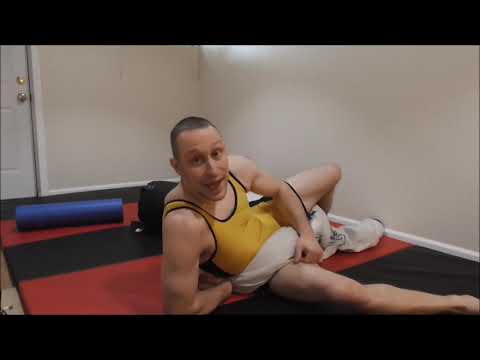
Figure-Four Headscissors·Gay Wrestling classes

This is a sneaky little submission off of the darce defense. The important details are maintaining control til you get

1 video

Изучить технику

Учебных курсов по этой технике пока нет.

Войдите, чтобы предложить курс.

Оценки

Уровень опасности

Риск травмы для человека, к которому применяется техника

7
Очень высокий7/10

Headscissors squeeze the head laterally using the thighs; risk of neck compression

Сложность

Уровень мастерства, необходимый для надёжного выполнения техники

Средний
Допустимость на соревнованиях

Разрешена ли техника по основным соревновательным правилам

Запрещено
FIAS Sport Sambo — All chokes prohibited in Sport Sambo
FIAS International Sambo Competition RulesPDF
Разрешено
IBJJF — Legal at all belt levels, gi and no-gi — chokes a...
IBJJF Rules Book v6.0, June 2024PDF
ADCC — Legal
ADCC Rules Update, April 2025PDF
Unified MMA — Legal — choke submissions are among the mos...
Unified Rules of MMA, August 2025PDF
FIAS Combat Sambo — Legal
FIAS Combat Sambo RulesPDF

Заметки по тренировке

The figure-four headscissors traps the opponent's head between the thighs in a figure-four leg lock configuration — the legs compress both sides of the neck to restrict blood flow to the brain (Gracie & Gracie, Brazilian Jiu-Jitsu: Theory and Technique, 2001)
The figure-four configuration: one thigh presses against each side of the neck — one leg hooks behind the knee of the other, creating the interlocking structure that prevents escape
Unlike the triangle choke (which includes the opponent's arm), the headscissors captures only the head — both carotid arteries are compressed directly by the thighs
The headscissors is one of the oldest submission techniques: it appears in Greek wrestling, catch wrestling, and judo (sankaku) — predating modern BJJ
From guard or north-south: position the opponent's head between the thighs, lock the figure-four, and squeeze — hip extension and adductor engagement create the compression
The headscissors is extremely powerful: the adductor muscles of the thighs are among the strongest muscles in the body — when they compress the neck, unconsciousness comes rapidly
The figure-four lock prevents the opponent from prying the legs apart: unlike a straight squeeze, the interlocked legs create a mechanical advantage that resists opening

Типичные ошибки

!Squeezing with the knees instead of the thighs — the compression should come from the inner thighs (adductors) pressing against the carotid arteries, not the knees
!Not locking the figure-four properly — one leg's ankle must hook behind the other knee to create the lock; an unlocked squeeze is much weaker
!Trapping the chin inside the legs — the chin should be above the thigh; trapping the chin allows the opponent to turn and creates a neck-crank rather than a choke
!Placing the legs too low on the neck — the thighs should compress at the level of the carotid arteries (mid-neck); too low presses the shoulders, too high compresses the jaw
!Not extending the hips — hip extension drives the thighs together and increases compression; keeping the hips neutral reduces pressure
!Allowing space between thigh and neck — the thighs must contact the neck completely; gaps allow blood flow to continue
!Crossing the ankles instead of using a figure-four — crossed ankles are a weaker lock; the figure-four provides superior mechanical advantage

Связанные техники

Контрприёмы

Цепочка подготовки

1Establish Positionachieve the controlling position needed for this submission
2Create the Threatbegin the submission setup to force a defensive reaction
3Secure the Holdlock the submission grip with proper body mechanics
4Finishapply increasing pressure until the opponent taps or the joint/choke takes effect

Источники и ссылки

Основной источник

Kodokan Judo — Sankaku-jime

1КнигаKodokan Judo — Sankaku-jime

Japanese terminology sourced from Kodokan Judo — Sankaku-jime

Official Kodokan ground technique classification system

3Учебная программаKodokan Judo Institute — Official Waza Names

Standard Japanese martial arts terminology (kanji/hiragana)

4ДругоеJapanese Martial Arts Standard Terminology (武道用語)

Established Japanese martial arts naming convention — native Japanese term (和語/漢語)

5ЦитатаKodokan Judo — Sankaku-jime

Japanese terminology sourced from Kodokan Judo — Sankaku-jime

Сообщество

Атлетизм

Requires

grip or squeeze strength, positional control

Favours

strong upper body for sustained compression

Key muscles

forearms, biceps, pectorals, core stabilisers

Часто задаваемые вопросы

How do I position my legs to get proper pressure in a figure-four headscissors?

Keep your bottom leg on top of your top leg to create a wall that prevents your opponent from unhooking or pushing you off. Maintain a 90-degree bend in your legs rather than keeping them straight, as the bend gives you lifting power and allows you to control your opponent's shoulder and head simultaneously.

Why is turning my toe down into the mat important for this technique?

Turning your toe down into the mat creates internal rotation of your hip, which keeps your opponent's shoulder pinned to the ground and prevents them from sitting up. Without this internal rotation, you won't have enough pressure on the shoulder even if your leg is positioned correctly.

What's the correct head position for my opponent in a figure-four headscissors?

Position your opponent's head facing towards you to take advantage of the taper of your legs for maximum pressure. If their head faces straight up, they risk a trachea crush, and if they face away, they're close to your calves where you still have good power.

How do I finish the figure-four headscissors once I have it locked in?

Once you have control with your bottom leg on top and your toe turned into the mat, internally rotate your hips to finish the choke. Keep pressure on your opponent's face and maintain your leg bend throughout the finish.

Как работает Figure-Four Headscissors?

The figure-four headscissors from guard uses a figure-four leg configuration — one leg bent behind the knee of the other — to lock the head squeeze from a bottom guard position. The attacker traps the opponent's head between the thighs, then hooks one foot behind the opposite knee to form the figure-four, which structurally locks the squeeze and prevents the opponent from simply pulling the head free.

Откуда происходит Figure-Four Headscissors?

Figure-four leg locks around the head have been used in wrestling traditions worldwide, from sumo to catch wrestling. The guard application was formalised in BJJ and submission grappling as a positional control tool that can produce a strangle or serve as a platform for other attacks.

Разрешён ли Figure-Four Headscissors на соревнованиях?

IBJJF: разрешён — Legal at all belt levels, gi and no-gi — chokes are the safest submission cat…; IJF: разрешён — Legal (shime-waza) — strangulation techniques are one of three permitted subm…; ADCC: разрешён — Legal; Unified MMA: разрешён — Legal — choke submissions are among the most common finishes in MMA; FIAS Sport Sambo: запрещён — All chokes prohibited in Sport Sambo; FIAS Combat Sambo: разрешён — Legal

Насколько опасен Figure-Four Headscissors?

Оценка опасности 7/10. Headscissors squeeze the head laterally using the thighs; risk of neck compression

Как подготовить Figure-Four Headscissors?

Стандартная цепочка подготовки: Establish Position → Create the Threat → Secure the Hold → Finish.

Как защититься от Figure-Four Headscissors?

Стандартные контрприёмы: Early Recognition — identify the submission attempt early and begin defence immediately / Posture and Base — maintain strong posture and base to prevent submission setups / Grip Fight — deny the attacker their preferred gripping configuration.

Какие есть варианты Figure-Four Headscissors?

Распространённые варианты: Standard grip variation (primary hand configuration for maximum choking pressure); Gi variation (uses the lapel or collar as an anchor for additional fric…); No-gi variation (adapted grip and positioning for submission grappling wit…); Transition finish (applied during a positional change to catch the opponent …).

Насколько эффективен Figure-Four Headscissors на соревнованиях?

Head scissors submissions occasionally appear in MMA and submission grappling.

Какие типичные ошибки при выполнении Figure-Four Headscissors?

Основные ошибки, на которые стоит обратить внимание: Squeezing with the knees instead of the thighs — the compression should come from the inner thighs (adductors) pressi… / Not locking the figure-four properly — one leg's ankle must hook behind the other knee to create the lock; an unlocke… / Trapping the chin inside the legs — the chin should be above the thigh; trapping the chin allows the opponent to turn… / Placing the legs too low on the neck — the thighs should compress at the level of the carotid arteries (mid-neck); to….

Какие ещё названия есть у Figure-Four Headscissors?

Figure-Four Headscissors также известен как Sankaku-jime, Figure-Four Scissor Choke, Figure-4 Head Scissors.