Standard Headscissors Strangle

Разновидность

Перевод: Head Scissors (katakana loanword)

Дистанция и классификация

Категория
Удар и защитаЗамкиБлижний бойБой против нескольких
Дистанция
БлижняяСредняяДальняя
Целевая зона
Верхняя частьСредняя частьНижняя часть

Обзор

The standard headscissors strangle from guard is the fundamental leg-based head squeeze where the attacker traps the opponent's head between the thighs from a bottom guard position and squeezes. [1] The attacker captures the opponent's head as it dips forward during a guard pass attempt, closes the legs around the skull and neck, and contracts the adductor muscles to compress both sides of the neck simultaneously. [1],[2] The standard variant uses a straight leg squeeze without a figure-four lock, relying purely on adductor strength and thigh circumference to generate compression. [2] While simpler than the figure-four version, the standard headscissors can still produce unconsciousness through carotid compression when sufficient force is applied. [2],[3]

Также известна как
Classic Head Scissors Strangle[1]Standard Kubi-basami from Guard[2]
Используется в

История и происхождение

Head scissors are among the oldest grappling techniques, depicted in ancient Greek and Egyptian wrestling art. [1] The guard application was incorporated into BJJ's ground fighting curriculum as both a positional control and a legitimate strangulation attempt. [2],[3]

Страна происхождения· показано в случайном порядке

  • БразилияБразильское джиу-джитсу, Сабмишн-грэпплинг, ММА
  • ЯпонияБразильское джиу-джитсу, Дзюдо, Сабмишн-грэпплинг
  • СШАСабмишн-грэпплинг, ММА
  • РоссияСамбо

Эффективность

Effective when the legs can lock around the neck with proper angle; the squeeze compresses the carotid arteries bilaterally. Requires strong adductors and precise positioning [1]

Родословная

One of the oldest submission techniques in grappling history, depicted in ancient Greek pankration art. Present in catch wrestling, judo (do-jime family), sambo, and BJJ [1]

Соревновательные результаты

Rare standalone finish at elite BJJ and ADCC events but occasionally seen in MMA, catch wrestling, and sambo competition [1]

Изображения

Изображений для этой техники пока нет.

Войдите, чтобы предложить изображение.

Биомеханический механизм

Primary ActionBilateral compression of the carotid arteries — restricts blood flow to the brain, causing unconsciousness within seconds
Joints InvolvedCervical spine (lateral flexion), glenohumeral joint of the trapped arm (if arm-in), nuchal region
Force VectorLateral squeeze creates inward pressure on both sides of the neck simultaneously
Choking MechanismVascular strangle — occludes carotid arteries and jugular veins, distinct from airway (tracheal) chokes

Позиция и вход

From guard (bottom position)Use legs to control the opponent's head and arm, lock the leg configuration and apply compression
From mount (top)Transition from mount by isolating an arm and threading legs around the head and arm
From side control (spinning)Spin to face the opponent's legs, throw legs over the head to lock the choke

Варианты

Standard grip variationprimary hand configuration for maximum choking pressure
Gi variationuses the lapel or collar as an anchor for additional friction and control
No-gi variationadapted grip and positioning for submission grappling without the gi
Transition finishapplied during a positional change to catch the opponent off-guard

Видео

04 Crusafix shoulder lock and straight headscissor

0
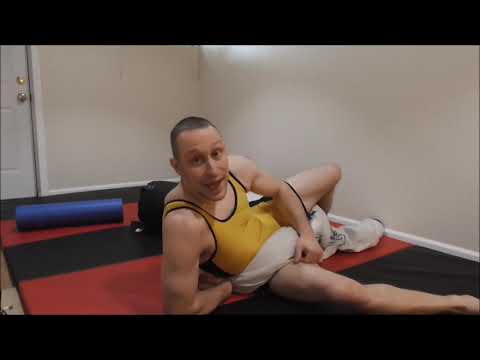
Standard Headscissors Strangle·Gay Wrestling classes

This is a sneaky little submission off of the darce defense. The important details are maintaining control til you get

1 video

Изучить технику

Учебных курсов по этой технике пока нет.

Войдите, чтобы предложить курс.

Оценки

Уровень опасности

Риск травмы для человека, к которому применяется техника

7
Очень высокий7/10

Headscissors use the thighs to squeeze the head laterally; risk of neck strain

Сложность

Уровень мастерства, необходимый для надёжного выполнения техники

Средний
Допустимость на соревнованиях

Разрешена ли техника по основным соревновательным правилам

Запрещено
FIAS Sport Sambo — All chokes prohibited in Sport Sambo
FIAS International Sambo Competition RulesPDF
Разрешено
IBJJF — Legal at all belt levels, gi and no-gi — chokes a...
IBJJF Rules Book v6.0, June 2024PDF
ADCC — Legal
ADCC Rules Update, April 2025PDF
Unified MMA — Legal — choke submissions are among the mos...
Unified Rules of MMA, August 2025PDF
FIAS Combat Sambo — Legal
FIAS Combat Sambo RulesPDF

Заметки по тренировке

The standard headscissors strangle traps the opponent's head between the thighs in the fundamental orientation — the attacker faces the opponent's head, squeezing both inner thighs against the carotid arteries (Gracie & Gracie, Brazilian Jiu-Jitsu: Theory and Technique, 2001)
The standard orientation: the attacker faces the same direction as the opponent's head, with one thigh pressing each side of the neck — the most natural and commonly drilled headscissors position
The figure-four lock secures the position: one leg hooks behind the knee of the other, creating an interlocking structure that prevents the opponent from prying the legs apart
The squeeze uses the adductor muscles: the inner thighs (among the strongest muscles in the body) compress bilaterally — this creates rapid unconsciousness when both carotids are occluded
From guard: the standard headscissors is applied when the opponent's head is low and between the legs — common during guard passes, head-down postures, or scrambles
The standard headscissors is one of the oldest submissions: it appears in ancient Greek wrestling, catch wrestling, and judo (juji-jime family) — a truly universal technique
Finishing: lock the figure-four, extend the hips, and squeeze the knees together — the combination of structural lock, hip extension, and adductor engagement creates maximum compression

Типичные ошибки

!Squeezing with the knees rather than the thighs — the compression should come from the inner thigh surfaces (adductors), not the knees; knee squeezing is painful for the attacker
!Not locking the figure-four — the ankle-behind-knee lock is essential; without it, the squeeze is weaker and the opponent can pry the legs apart
!Placing the legs too low on the neck — the thighs should compress at carotid level (mid-neck); too low catches the shoulders, too high catches the jaw
!Not extending the hips — hip extension drives the thighs together with structural force; without it, the squeeze relies on muscular effort alone
!Allowing space between thigh and neck — the thighs must make full contact with both sides of the neck; gaps allow blood flow to continue
!Crossing the ankles instead of figure-four — crossed ankles provide a weaker lock and can be ankle-locked by the opponent
!Holding without squeezing — the position alone doesn't choke; active adductor engagement and hip extension are required for the finish

Связанные техники

Контрприёмы

Цепочка подготовки

1Achieve Controlling Positionsecure the position from which the choke is applied
2Isolate the Neckclear defending hands and establish access to the throat
3Set the Griplock the choking configuration (arm, lapel, or leg placement)
4Apply Pressuresqueeze to compress the carotid arteries for the finish

Источники и ссылки

Основной источник

Japanese grappling/BJJ standard terminology; JBJJF competition usage

Official Japanese BJJ federation — competition rules and terminology

2ДругоеJapanese Combat Sports Katakana Convention

Standard katakana transliteration of Western martial arts terminology (外来語) — used in Japanese MMA, boxing, and BJJ communities

3ЦитатаJapanese grappling/BJJ standard terminology; JBJJF competition usage

Japanese terminology sourced from Japanese grappling/BJJ standard terminology; JBJJF competition usage

Сообщество

Атлетизм

Requires

grip or squeeze strength, positional control

Favours

strong upper body for sustained compression

Key muscles

forearms, biceps, pectorals, core stabilisers

Часто задаваемые вопросы

How do I keep my opponent from escaping the headscissors by sitting up?

Turn your toe down into the mat to create internal rotation of your hip, which keeps the shoulder pinned down and prevents them from sitting up. According to Gay Wrestling classes, simply placing your leg under the head without this internal rotation won't create enough pressure on the shoulder.

Why should I keep a bend in my legs during the headscissors finish?

A bent leg gives you lifting power to elevate the opponent's elbow while keeping your other leg down, whereas a straight leg provides no lifting capability. Gay Wrestling classes emphasizes this is a common mistake that reduces the effectiveness of the technique.

What's the importance of having my bottom leg on top in the final position?

Placing your bottom leg on top creates a wall that prevents your opponent from unhooking you and pushing you off, allowing you to straighten out and finish the choke. This positioning makes it much harder for them to escape the submission.

How should I position my opponent's head for maximum pressure?

Keep their head facing toward you to take advantage of the taper of your legs; if their head faces straight up, you risk a trachea crush, and if it faces away, they'll be near your calves but you lose optimal pressure angle.

Как работает Standard Headscissors Strangle?

The standard headscissors strangle from guard is the fundamental leg-based head squeeze where the attacker traps the opponent's head between the thighs from a bottom guard position and squeezes. The attacker captures the opponent's head as it dips forward during a guard pass attempt, closes the legs around the skull and neck, and contracts the adductor muscles to compress both sides of the neck simultaneously.

Откуда происходит Standard Headscissors Strangle?

Head scissors are among the oldest grappling techniques, depicted in ancient Greek and Egyptian wrestling art. The guard application was incorporated into BJJ's ground fighting curriculum as both a positional control and a legitimate strangulation attempt.

Разрешён ли Standard Headscissors Strangle на соревнованиях?

IBJJF: разрешён — Legal at all belt levels, gi and no-gi — chokes are the safest submission cat…; IJF: разрешён — Legal (shime-waza) — strangulation techniques are one of three permitted subm…; ADCC: разрешён — Legal; Unified MMA: разрешён — Legal — choke submissions are among the most common finishes in MMA; FIAS Sport Sambo: запрещён — All chokes prohibited in Sport Sambo; FIAS Combat Sambo: разрешён — Legal

Насколько опасен Standard Headscissors Strangle?

Оценка опасности 7/10. Headscissors use the thighs to squeeze the head laterally; risk of neck strain

Как подготовить Standard Headscissors Strangle?

Стандартная цепочка подготовки: Achieve Controlling Position → Isolate the Neck → Set the Grip → Apply Pressure.

Как защититься от Standard Headscissors Strangle?

Стандартные контрприёмы: Tuck Chin — protect the neck by lowering the chin to prevent the choke from sinking / Two-on-One Grip Fight — use both hands to strip the choking grip before it locks / Turn Into — rotate toward the choking arm to relieve carotid pressure / Posture Up — straighten the spine and create distance to break the choking angle.

Какие есть варианты Standard Headscissors Strangle?

Распространённые варианты: Standard grip variation (primary hand configuration for maximum choking pressure); Gi variation (uses the lapel or collar as an anchor for additional fric…); No-gi variation (adapted grip and positioning for submission grappling wit…); Transition finish (applied during a positional change to catch the opponent …).

Насколько эффективен Standard Headscissors Strangle на соревнованиях?

Rare standalone finish at elite BJJ and ADCC events but occasionally seen in MMA, catch wrestling, and sambo competition

Какие типичные ошибки при выполнении Standard Headscissors Strangle?

Основные ошибки, на которые стоит обратить внимание: Squeezing with the knees rather than the thighs — the compression should come from the inner thigh surfaces (adductor… / Not locking the figure-four — the ankle-behind-knee lock is essential; without it, the squeeze is weaker and the oppo… / Placing the legs too low on the neck — the thighs should compress at carotid level (mid-neck); too low catches the sh… / Not extending the hips — hip extension drives the thighs together with structural force; without it, the squeeze reli….

Какие ещё названия есть у Standard Headscissors Strangle?

Standard Headscissors Strangle также известен как Heddo Shizāzu, Classic Head Scissors Strangle, Standard Kubi-basami from Guard.