29-11 Essential Armbar Variations: Step-by-Step Judo Instruction
0
Headscissors·Female Judo
Conviértete en miembro de este canal para disfrutar de ventajas: https://www.youtube.com/channel/UCgprmBVd9z0Or1Z2lcy0sd…
Перевод: Head Scissors (katakana loanword)
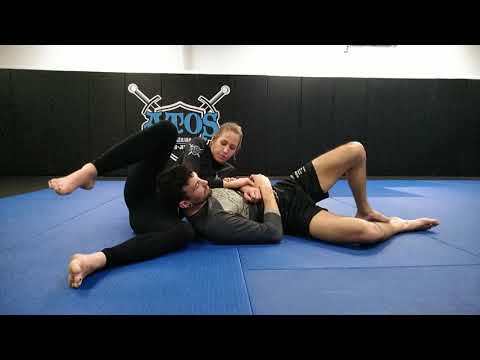
The headscissors strangle uses both legs wrapped around the opponent's head — typically in a figure-four leg configuration — to compress the carotid arteries and/or restrict breathing. [1],[2] The attacker positions the opponent's head between the thighs, locks one ankle behind the opposite knee, and squeezes the legs together while extending the hips. [1] The headscissors can be applied from guard, mount, side control, or north-south positions, and the powerful leg muscles generate significantly more compression than arm-based strangles. [1],[3]
Headscissors appear in the earliest grappling traditions, including Greek wrestling, pankration, and Japanese jujutsu. [1],[2] In judo, do-jime (body scissors) and related leg compressions were recognized techniques, though the head-specific application was less systematized. [2],[3] Modern BJJ and catch wrestling refined the headscissors as a finishing submission from multiple positions. [1]
The headscissors is one of the oldest and most instinctive submission techniques — bilateral carotid compression via leg squeeze. Effective when locked but difficult to secure against trained opponents who understand head positioning [1]
Ancient technique depicted in Greek and Egyptian wrestling art. Present across nearly all grappling traditions worldwide: catch wrestling, judo, sambo, traditional jujutsu, pankration, and BJJ [1]
Rare at elite modern competition but historically significant. More commonly finished in MMA, sambo, and catch wrestling than in pure BJJ/ADCC events [1]
Изображений для этой техники пока нет.
Войдите, чтобы предложить изображение.
Conviértete en miembro de este canal para disfrutar de ventajas: https://www.youtube.com/channel/UCgprmBVd9z0Or1Z2lcy0sd…
Hii Guys! Today I am rolling with two new white belts. They are both showing very different strengths which is so excit…
I hit this choke back at EBI 12 and it can be pretty sneaky when your opponent's focused on defending the kimura. Check …
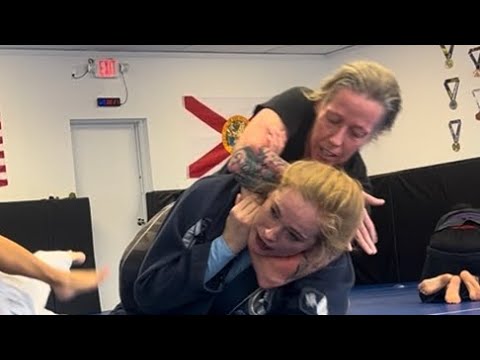
The headscissors (also called scissor choke) is a leg-based strangle performed primarily from top position, typically following guard passing or when the opponent's neck is exposed. According to nicsulli, the technique is commonly set up from a Kimora grip after passing guard, where the practitioner slides the knee behind the opponent's shoulder and places it underneath the head as a pillow. The top leg is then brought over the opponent's chin, with the knee's tendon positioned under the chin. The legs are locked (top foot under the bottom foot) and the hips are extended and turned downward to apply pressure. Nicsulli emphasizes maintaining the Kimora grip throughout the motion to prevent the opponent from escaping or reversing position, and notes that if the opponent's chin is hidden, the knee tendon can ratchet underneath to expose it. The instructor also describes defensive responses: if the opponent explosively bridges and escapes to top position, the practitioner can transition by sliding under the head and locking the leg choke without losing positional advantage. Fallon Fratone's instructional content on rear naked chokes with beginners provides contextual detail on the importance of back control and proper choking mechanics, though her primary focus is on the rear naked choke rather than headscissors specifically. Female Judo's transcript does not contain substantive instruction on headscissors technique. All instructors agree that leg control and hip positioning are fundamental to successful execution.
Сформировано на основе 3 инструкторов
Учебных курсов по этой технике пока нет.
Войдите, чтобы предложить курс.
Риск травмы для человека, к которому применяется техника
Headscissors use the thighs to squeeze the head laterally; risk of neck strain
Уровень мастерства, необходимый для надёжного выполнения техники
Разрешена ли техника по основным соревновательным правилам
Japanese grappling/BJJ standard terminology; JBJJF competition usage
Official Japanese BJJ federation — competition rules and terminology
Standard katakana transliteration of Western martial arts terminology (外来語) — used in Japanese MMA, boxing, and BJJ communities
Japanese terminology sourced from Japanese grappling/BJJ standard terminology; JBJJF competition usage
shoulder and chest pressure, hip sprawl endurance
heavier upper body, broad shoulders
deltoids, pectorals, core, hip extensors
Каждое движение в любом боевом искусстве обладает рядом универсальных свойств. Комбинируйте параметры ниже, чтобы найти нужный инструмент или сравнить аналоги из разных стилей.
The headscissors from guard is applied by the bottom player who traps the opponent's head between their thighs while in the guard position, then squeezes the legs together to compress the carotid arteries and restrict blood flow to the brain. [1,2] The guard position provides the hip angle and leg positioning needed to isolate the head, and the attacker may use arm control to prevent the opponent from posturing. [1] The technique requires significant adductor strength and proper alignment of the thighs against the neck for effective bilateral compression. [1,2]
The headscissors from north-south is applied when the attacker is in the north-south position and traps the opponent's head between their thighs by closing the legs around the neck from above. [1,2] The north-south alignment places the attacker's hips directly over the opponent's face, providing optimal leverage for the thigh squeeze. [1] The attacker may turn to the side or adjust the hip angle to place the femoral area more precisely against the carotid arteries for bilateral vascular compression. [1,2]
The headscissors from side control is applied by the top player who isolates the opponent's head and threads the legs around the neck while transitioning from a side control pin. [1,2] The attacker typically swings the far leg over the opponent's face and locks the ankles or thighs together, creating the scissoring compression around the neck. [1] This entry requires the attacker to momentarily sacrifice chest-to-chest pressure to achieve the leg-over-head position, making timing and control critical during the transition. [1,2]
The headscissors from turtle is applied against an opponent in the turtle position by threading the legs around the opponent's head from the front or side, then squeezing the thighs together to compress the neck. [1,2] The attacker typically approaches from the front or scrambles to a position where they can swing a leg over the opponent's head, then locks the scissors and rolls or sits back to complete the strangle. [1] The turtle position leaves the head exposed, making it vulnerable to leg-based attacks when the opponent is focused on protecting their back. [1,2]
Keep your grip tight on the opponent's arm while maintaining chest pressure. Slide the knee that's behind their shoulder underneath their head, then bring your top leg over and position the tendon behind your knee under their chin. Lock your legs and extend while turning your hips down to finish the choke.
If the opponent is hiding their chin, you can use the tendon in your knee to ratchet underneath their chin to dig it up, or scratch their face and then extend. According to Nikki Sullivan, maintaining your Kimura grip is critical—as long as you keep it tight, you won't lose position even if you need to transition away from the choke.
Keeping the Kimura grip tight—pushing the opponent's hand and wrist into their own body—prevents them from getting their elbow out and getting on top. As Nikki Sullivan explains, this grip allows you to go for the choke without giving up your position, and you can always transition back to top control if needed.
The headscissors strangle uses both legs wrapped around the opponent's head — typically in a figure-four leg configuration — to compress the carotid arteries and/or restrict breathing. The attacker positions the opponent's head between the thighs, locks one ankle behind the opposite knee, and squeezes the legs together while extending the hips.
Headscissors appear in the earliest grappling traditions, including Greek wrestling, pankration, and Japanese jujutsu. In judo, do-jime (body scissors) and related leg compressions were recognized techniques, though the head-specific application was less systematized.
IBJJF: разрешён — Legal at all belt levels, gi and no-gi — chokes are the safest submission cat…; IJF: разрешён — Legal (shime-waza) — strangulation techniques are one of three permitted subm…; ADCC: разрешён — Legal; Unified MMA: разрешён — Legal — choke submissions are among the most common finishes in MMA; FIAS Sport Sambo: запрещён — All chokes prohibited in Sport Sambo; FIAS Combat Sambo: разрешён — Legal
Оценка опасности 7/10. Headscissors use the thighs to squeeze the head laterally; risk of neck strain
Стандартная цепочка подготовки: Achieve Controlling Position → Isolate the Neck → Set the Grip → Apply Pressure.
Стандартные контрприёмы: Tuck Chin — protect the neck by lowering the chin to prevent the choke from sinking / Two-on-One Grip Fight — use both hands to strip the choking grip before it locks / Turn Into — rotate toward the choking arm to relieve carotid pressure / Posture Up — straighten the spine and create distance to break the choking angle.
Распространённые варианты: Standard north-south choke (shoulder drives into the neck from north-south position); Paper-cutter variation (uses the forearm blade across the throat from the north-s…); Transition finish (applied during the walk-around from side control to north…).
Rare at elite modern competition but historically significant.
Основные ошибки, на которые стоит обратить внимание: Confusing the headscissors with the triangle — the headscissors is head-only; including an arm changes the technique … / Squeezing with the knees — use the inner thigh surfaces (adductors) for compression; knee squeezing is less effective… / Not locking the figure-four — the ankle-behind-knee lock is essential for structural compression / Placing the thighs too high or too low on the neck — mid-neck at carotid level is the target; jaw or shoulder placeme….
Headscissors также известен как Heddo Shizāzu, Head Scissors Strangle, Kubi-basami, Scissor Choke.