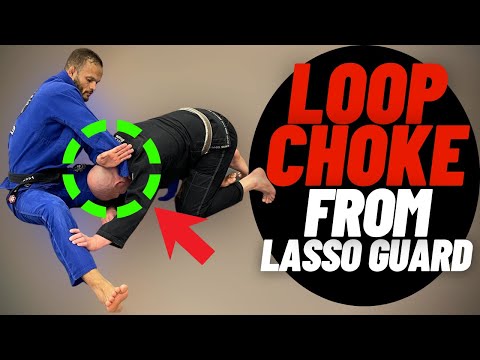
How To Do Loop Choke From Lasso Guard! ( You Can't Miss it)
0
Guard Choke·BIG OSS Jiu-Jitsu Channel
in this Video today i show 2 ways to to apply a loop choke from lasso guard, Lasso guard is one of the most powerful gua…
Перевод: Guard Choke (katakana loanword)
Guard chokes are choking submissions executed from bottom guard positions — closed guard, open guard, half guard, and various guard variations. [1] These techniques exploit the guard player's ability to control distance, break posture, and use the legs to create leverage while the opponent is trapped between the legs or in a guard configuration. Common guard chokes include cross-collar chokes from closed guard, loop chokes from half guard, gogoplatas (shin-across-throat chokes from rubber guard or mission control), and various collar drags into choking positions. Guard chokes are a defining feature of Brazilian Jiu-Jitsu's strategic innovation — the ability to submit an opponent from the bottom position was revolutionary in early MMA and remains central to BJJ's competitive identity. [2]
Guard-based choking techniques are primarily a Brazilian Jiu-Jitsu innovation. While judo includes some guard-position groundwork (ne-waza), the systematic development of offensive submissions from bottom guard is a distinctly BJJ contribution. [1] The Gracie family's emphasis on fighting from the guard in their challenge matches demonstrated that a bottom fighter could submit a top fighter — an idea considered counterintuitive in most wrestling and grappling traditions. [2] The gogoplata, popularized by Nino Schembri and Eddie Bravo, represents modern guard choke innovation using rubber guard flexibility.
Guard-based chokes represent one of the most diverse and effective submission families — from closed guard cross chokes to rubber guard gogoplatas, the guard position offers unparalleled choking opportunities in both gi and no-gi [1]
Guard chokes have been central to BJJ since its inception. Helio Gracie emphasized cross chokes from guard; modern innovators like Marcelo Garcia (guillotines), Eddie Bravo (rubber guard), and Keenan Cornelius (lapel) have expanded the family dramatically [1]
Guard-based chokes collectively produce more submission finishes than any other positional family in both gi (IBJJF) and no-gi (ADCC) competition [1]
Изображений для этой техники пока нет.
Войдите, чтобы предложить изображение.
in this Video today i show 2 ways to to apply a loop choke from lasso guard, Lasso guard is one of the most powerful gua…
Учебных курсов по этой технике пока нет.
Войдите, чтобы предложить курс.
Риск травмы для человека, к которому применяется техника
Guard-based chokes use closed guard leverage for blood chokes
Уровень мастерства, необходимый для надёжного выполнения техники
Разрешена ли техника по основным соревновательным правилам
Japanese BJJ community standard katakana transliteration
Japanese BJJ community standard katakana transliteration
Standard katakana transliteration of Western martial arts terminology (外来語) — used in Japanese MMA, boxing, and BJJ communities
Japanese terminology sourced from Japanese BJJ community standard katakana transliteration
exceptional hip flexibility, long legs
extreme lower body flexibility (rubber guard practitioners)
hip flexors, hamstrings, adductors
Каждое движение в любом боевом искусстве обладает рядом универсальных свойств. Комбинируйте параметры ниже, чтобы найти нужный инструмент или сравнить аналоги из разных стилей.
Lapel overhook chokes use an overhook (whizzer) grip on the opponent's arm combined with a collar or lapel grip to create a choking mechanism from guard position. [1] The overhook traps the opponent's arm and brings their posture down, while the collar grip applies pressure across the neck. [2,3]
Shin-over-neck chokes use the shin or calf placed across the opponent's throat from guard positions to create choking pressure using leg strength. [1,2] The gogoplata is the most famous technique: from rubber guard or mission control, the attacker places the shin across the throat and pulls the opponent's head down onto the shin. [3,4] These chokes require exceptional hip flexibility but generate enormous force due to leg musculature. [5]
Once you establish the lasso, keep pulling your opponent to prevent them from moving away or sitting up. BIG OSS Jiu-Jitsu emphasizes that timing is critical—pull the lasso, move back to connect, then execute the choke before they can escape.
Keep your leg straight and place your foot between your opponent's legs rather than leaving it on the hip. When you flatten yourself and extend your leg, this stretch forces their posture to break and creates the opening for the choke, according to BIG OSS Jiu-Jitsu.
BIG OSS Jiu-Jitsu stresses that it's very important to thread the sweep first so your opponent stops defending, then you execute the loop choke. If you go for the choke stretch without the sweep setup, your opponent will have an easier time defending.
Secure the collar—don't grip on the sleeves. BIG OSS Jiu-Jitsu recommends wrapping your head with both hands on the collar for the loop choke finish, and make sure something is blocking the opponent's shoulder to prevent them from rolling out.
Guard chokes are choking submissions executed from bottom guard positions — closed guard, open guard, half guard, and various guard variations. These techniques exploit the guard player's ability to control distance, break posture, and use the legs to create leverage while the opponent is trapped between the legs or in a guard configuration.
Guard-based choking techniques are primarily a Brazilian Jiu-Jitsu innovation. While judo includes some guard-position groundwork (ne-waza), the systematic development of offensive submissions from bottom guard is a distinctly BJJ contribution.
IBJJF: разрешён — Legal at all belt levels, gi and no-gi — chokes are the safest submission cat…; IJF: разрешён — Legal (shime-waza) — strangulation techniques are one of three permitted subm…; ADCC: разрешён — Legal; Unified MMA: разрешён — Legal — choke submissions are among the most common finishes in MMA; FIAS Sport Sambo: запрещён — All chokes prohibited in Sport Sambo; FIAS Combat Sambo: разрешён — Legal
Оценка опасности 6/10. High — guard-based chokes use closed guard leverage for blood chokes
Стандартная цепочка подготовки: Achieve Controlling Position → Isolate the Neck → Set the Grip → Apply Pressure.
Стандартные контрприёмы: Tuck Chin — protect the neck by lowering the chin to prevent the choke from sinking / Two-on-One Grip Fight — use both hands to strip the choking grip before it locks / Turn Into — rotate toward the choking arm to relieve carotid pressure / Posture Up — straighten the spine and create distance to break the choking angle.
Распространённые варианты: Standard gogoplata (shin placed across the throat from rubber guard or high g…); Mounted gogoplata (applied from mount position, shin across the throat); Reverse gogoplata (applied from behind or inverted position).
Guard-based chokes collectively produce more submission finishes than any other positional family in both gi (IBJJF) and no-gi (ADCC) competition
Основные ошибки, на которые стоит обратить внимание: Only training one type of guard choke — the family includes fabric chokes, forearm chokes, shin chokes, and leg choke… / Attempting guard chokes without positional control — the guard must be maintained throughout the choke attempt; sacri… / Not chaining guard chokes with sweeps — choke attempts create reactions that facilitate sweeps; train the choke-to-sw… / Holding failed choke attempts too long — if a guard choke isn't finishing, transition to sweeps or other submissions;….
Guard Choke также известен как Gādo Chōku, Guard Submissions, Bottom Choke, Choke from Guard.