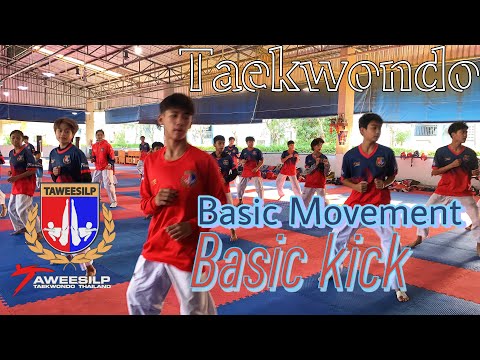
Taekwondo,Basic Movement,Basic Kick
0
Fundamental Kick·Taweesilp Taekwondo Thailand
🥋By Master Taweesilp Khamnuan 7th Dan Black Belt (KUKKIWON) Headcoach of Taweesilp taekwondo gyms 👉Follow me.. on …
Перевод: fundamental kick
The Fundamental Kick family covers core kicking techniques across martial arts — the most powerful strikes in combat, delivering force through the shin, foot, or knee using the largest muscle groups in the body. [1] Kicking generates significantly more force than punching because the legs are both longer (more leverage) and powered by larger muscles (glutes, quadriceps, hamstrings), making kicks the dominant power weapon in Muay Thai, Taekwondo, kickboxing, and karate. [1],[2] This family covers the universal kicking archetypes: front kick (teep/mae geri), roundhouse kick (the most versatile and commonly used kick), side kick, back kick, and their variations across martial arts traditions. [2],[3] In MMA, the low kick (targeting the opponent's lead leg) has become one of the most tactically important techniques, while head kicks produce the most spectacular knockouts. [3]
Kicking techniques appear in virtually every martial arts tradition worldwide, from ancient Greek pankration (documented in pottery from 5th century BCE) to Asian martial arts developed over millennia. [1] Muay Thai developed the most combatively tested kicking system through centuries of full-contact competition in Thailand. [1],[2] Taekwondo made kicks the centrepiece of Korean martial arts, developing the most diverse kicking vocabulary of any art. [2],[3] The adoption of Muay Thai-style leg kicks into MMA in the 1990s–2000s transformed striking strategy, as fighters discovered that consistent low kicks could disable opponents. [3]
Kicks are the most powerful strikes in combat sports — biomechanical studies show that roundhouse kicks generate 3-4 times more force than punches from the same fighter. [1] In MMA, head kicks are responsible for many of the most dramatic knockouts in UFC history (Edson Barboza, Yoel Romero, Joaquin Buckley). [2] Low kicks have decided multiple high-profile fights, most notably in the Conor McGregor vs Dustin Poirier trilogy where calf kicks played a decisive role. [3]
Изображений для этой техники пока нет.
Войдите, чтобы предложить изображение.
🥋By Master Taweesilp Khamnuan 7th Dan Black Belt (KUKKIWON) Headcoach of Taweesilp taekwondo gyms 👉Follow me.. on …
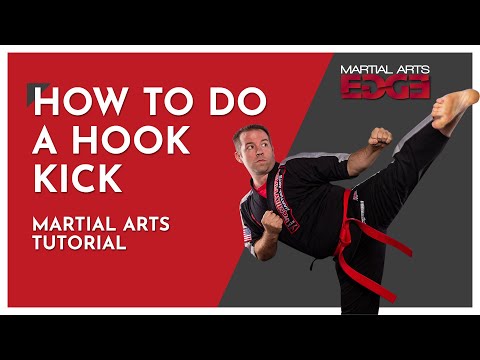
This video will show you how to do a hook kick in the martial arts. This hook kick tutorial will go over how to hook ki…
Учебных курсов по этой технике пока нет.
Войдите, чтобы предложить курс.
Риск травмы для человека, к которому применяется техника
Kicks generate massive force capable of knockouts, broken bones, and ligament damage; the low kick can disable the opponent's lead leg (as demonstrated in multiple UFC fights where fighters couldn't continue due to leg damage); head kicks cause concussions and spectacular KOs
Уровень мастерства, необходимый для надёжного выполнения техники
Разрешена ли техника по основным соревновательным правилам
Muay Thai: The Art of Eight Limbs (Kraitus & Kraitus, 1988)
Description sources — [1] Muay Thai: The Art of Eight Limbs (Kraitus, 1988) [2] Dynamic Karate (Nakayama, 1966) [3] UFC fight analysis
Effectiveness sources — [1] Biomechanical studies on kick force [2] UFC knockout statistics [3] McGregor vs Poirier fight analysis
Description sources — [1] Muay Thai: The Art of Eight Limbs (Kraitus, 1988) [2] Dynamic Karate (Nakayama, 1966) [3] UFC fight analysis
Effectiveness sources — [1] Biomechanical studies on kick force [2] UFC knockout statistics [3] McGregor vs Poirier fight analysis
hip flexibility (especially for head kicks), balance (standing on one leg while kicking), shin conditioning (kicking hard surfaces without injury)
long legs (more range and leverage), flexible hips, explosive hip rotation, good balance
glutes (hip extension), quadriceps (knee extension), hip flexors (chamber), hamstrings (roundhouse retraction), calves (standing leg pivot), core (balance and power transfer)
Каждое движение в любом боевом искусстве обладает рядом универсальных свойств. Комбинируйте параметры ниже, чтобы найти нужный инструмент или сравнить аналоги из разных стилей.
The Foot Stomp is a close-range stomping strike delivered onto the top of the opponent's foot, typically executed from the clinch position against the cage in MMA, used to create pain, disrupt the opponent's base, and force positional changes. [1] The technique is deceptively simple — the fighter lifts one foot and drives the heel downward onto the opponent's instep or toes — but its tactical value in MMA's cage-clinch exchanges is significant: the acute pain from the heel crushing the small metatarsal bones of the foot forces the opponent to shift their weight, creating openings for takedowns, clinch breaks, and positional improvements. [1] BJ Penn documented the Foot Stomp in The Book of Knowledge (2007) as one of the 'dirty' clinch techniques used when pinned against the cage — a category of low-glamour, high-utility techniques that don't produce highlight-reel finishes but accumulate damage and create tactical advantages through persistent discomfort. [1] The Foot Stomp is one of the most commonly used techniques in UFC cage-clinch exchanges: fighters including Daniel Cormier, Colby Covington, and Jon Jones have used foot stomps extensively during cage-wall wrestling sequences, sometimes delivering 10-20 stomps per round to gradually degrade the opponent's comfort and willingness to maintain clinch positions. [2] The technique's value is CUMULATIVE rather than fight-ending: a single foot stomp rarely produces significant damage, but repeated stomps over multiple rounds cause metatarsal bruising, swelling, and pain that progressively impairs the opponent's footwork, stance stability, and willingness to plant their feet for power techniques. [1,2] In self-defence, the foot stomp is taught as a fundamental close-range response to being grabbed or held — stomping on the attacker's instep with the heel creates instant pain and frequently breaks the attacker's grip. [1]
The Heel Stomp from Shell drives the heel downward from the shell position onto a grounded or crouching opponent. [1]
The Punt Kick to Face is a soccer-style kicking motion directed at a grounded opponent's head, delivering the instep in a wide swinging arc identical to a football punt — one of the most devastating and controversial techniques in MMA's history. [1] The technique is executed while the opponent is on the ground (on their back, on all fours, or sitting up) and the attacker is standing: the attacker takes a running or stepping approach and swings the foot in a full arc into the opponent's face, using the same mechanics a footballer uses to punt a ball. [1] The Punt Kick was a legal and commonly used technique in early MMA (PRIDE Fighting Championships in Japan, Vale Tudo in Brazil, early UFC events before the Unified Rules) and remains legal in some current rulesets (ONE Championship allows soccer kicks to grounded opponents). [1,2] Under the Unified Rules of MMA (used by the UFC, Bellator, and most American MMA organizations), the Punt Kick is ILLEGAL when the opponent has anything other than the soles of their feet on the ground — a fighter cannot kick a 'grounded' opponent's head. [2] BJ Penn documented the technique in The Book of Knowledge (2007) for its MMA application, noting that understanding the Punt Kick is important even where it is illegal, because fighters competing under rulesets that permit it (PRIDE, ONE Championship) must know both how to deliver and how to defend it. [1] The Punt Kick is one of the most fight-ending techniques in combat sports when permitted: PRIDE FC saw numerous fights ended by devastating soccer kicks to downed opponents, most notably Wanderlei Silva's brutal finishes that became synonymous with the PRIDE era. [2,3] The technique's prohibition under the Unified Rules was one of the most significant regulatory decisions in MMA history, fundamentally changing how fighters approach ground-and-pound and significantly reducing the danger of being knocked down. [2]
The Spring Stomp Kick is a stomping kick delivered by springing upward and driving the foot down onto a grounded opponent. [1] The upward spring generates additional downward force through the stomp. [1]
The Up-Kick from Shell is a powerful upward kick delivered from the defensive shell position on the ground, targeting a standing opponent's face or body as they attempt to enter the guard. [1]
Kicking is the most extensively documented striking category in our corpus — 'front kick' (1,891 hits), 'roundhouse' (2,901), 'side kick' (1,773), and 'back kick' (574) collectively appear in nearly every martial arts book. The kick is the longest-range empty-hand weapon and generates the most force due to the mass and length of the leg. (200+ books; De Bremaeker & Faige, Essential Book of Martial Arts Kicks)
It depends on your target and desired effect. According to The Martial Arts EDGE, pointing your toes and hitting with the bottom of your foot creates a slapping motion, while pulling your toes back and striking with your heel turns it into a hammer strike with more power.
The Martial Arts EDGE emphasizes that you must pull your leg down as fast as possible after the kick lands, because leaving your knee up in the air leaves you off-balance and vulnerable to being knocked over. Speed on the return is just as critical as speed on the way up.
According to The Martial Arts EDGE, while a head-level hook kick looks flashy and impressive, it becomes slower because the increased distance to the target slows delivery. A midsection kick is more practical and effective because the shorter distance allows for greater speed.
The Martial Arts EDGE recommends using a small target on a heavy bag or wave master and practicing hitting only the small target without hitting the larger bag itself. This develops the fine motor control needed to hit your intended target accurately in real situations.
The Fundamental Kick family covers core kicking techniques across martial arts — the most powerful strikes in combat, delivering force through the shin, foot, or knee using the largest muscle groups in the body. Kicking generates significantly more force than punching because the legs are both longer (more leverage) and powered by larger muscles (glutes, quadriceps, hamstrings), making kicks the dominant power weapon in Muay Thai, Taekwondo, kickboxing, and karate.
Kicking techniques appear in virtually every martial arts tradition worldwide, from ancient Greek pankration (documented in pottery from 5th century BCE) to Asian martial arts developed over millennia. Muay Thai developed the most combatively tested kicking system through centuries of full-contact competition in Thailand.
Unified MMA: разрешён — Legal striking technique; WBC/Boxing: запрещён — All kicks prohibited in boxing; WKF: разрешён — Legal, chudan (body) kick scores 2 points, jodan (head) kick scores 3 points; Kyokushin: разрешён — Legal at full power to body and head; WT: разрешён — Legal, body kick 2 points, head kick 3 points, spinning body 4 points, spinni…; WAKO: разрешён — Legal in Full Contact and Low Kick formats; K: разрешён — 1/GLORY — Legal; IFMA: разрешён — Legal — kicks are a core Muay Thai technique
Оценка опасности 8/10. High — kicks generate massive force capable of knockouts, broken bones, and ligament damage; the low kick can disable the opponent's lead leg (as demonstrated in multiple UFC fights where fighters couldn't continue due to leg damage); head kicks cause concussions and spectacular KOs
Стандартная цепочка подготовки: Establish Striking Range → Set Up with Hands → Chamber → Execute → Retract → Reset.
Стандартные контрприёмы: Shin Check — raising the shin to intercept incoming kicks / Catch the Kick — catching the opponent's kicking leg to set up sweeps or takedowns / Step In — closing distance inside the kick to nullify its power / Counter Punch — timing a punch to land as the opponent commits to the kick.
Распространённые варианты: Roundhouse kick (the most versatile kick) (rotating arc kick that can target legs, body, or head; st…); Front kick (teep/mae geri) (straight push kick for range management and damage; Ander…); Side kick (yoko geri) (lateral kick driving the heel sideways; longest range kick); Back kick (ushiro geri) (turning and driving the heel backward; extremely powerful); Axe kick (naeryeo chagi) (raising the leg high and bringing it down on the opponent…); Spinning heel kick (rotating 360 degrees and delivering a heel kick; devastat…); Low kick (leg kick) (roundhouse kick targeting the opponent's thigh; a fight-c…); Oblique kick (push kick to the knee) (straight kick targeting the opponent's lead knee; controv…).
Kicks account for the majority of scoring actions in Taekwondo and a significant portion of knockouts in MMA, Muay Thai, and kickboxing. The low kick has become one of the most tactically important techniques in MMA.
Основные ошибки, на которые стоит обратить внимание: Kicking with the foot instead of the shin (in Muay Thai/MMA) — the shin is harder and more durable than the foot; foo… / Not pivoting the standing foot — insufficient pivot limits hip rotation and reduces power by 50% or more / Dropping the guard when kicking — hands must stay up to protect the chin; dropping hands while kicking invites counte… / Kicking from too far away — kicks that fall short waste energy and leave you off-balance.
Fundamental Kick также известен как Fandamentaru Keri Waza, Kicking Technique, Foot Strike, Leg Strike.