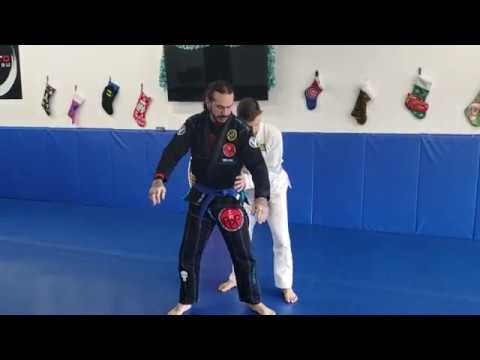
Back Clinch & Rear Sit Out
0
Стандартен Седнал Заден Контрол·P3 Martial Arts·Added by Admin
Translation: стандартен седнал заден контрол
Стандартният седнал заден контрол установява пълен контрол върху гърба на противника, като контролиращият боец седи изправено зад него, с поставени куки или триъгълник с тялото, захват „колан
Стандартният седнал заден контрол е основната седнала позиция за контрол на гърба. [1]
Стандартен вариант на контрол на гърба в BJJ. [1]
Зачита се като контрол на гърба в IBJJF състезания. [1]
No images yet for this technique.
Sign in to suggest an image.
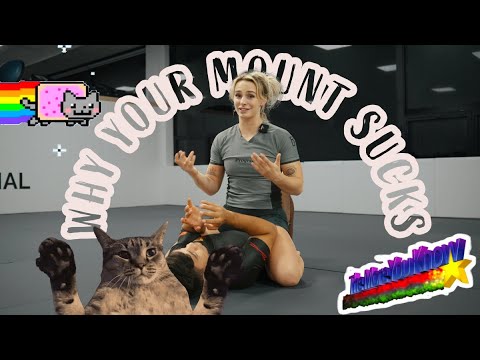
When you first start Jiu Jitsu, you're gonna be getting stuck in the bottom of mount. A lot. Even by people who aren't v…
Here are a few of my favourite tips on controlling from the mount position, and why you may be struggling in this positi…
The standard seated rear mount is a dominant grappling position achieved after successfully controlling an opponent from behind. P3 Martial Arts emphasizes the entry mechanics: capitalizing when an opponent throws an overextended punch (particularly a loopy lead hook), the attacker changes level and steps in like a double-leg takedown, hugging the hip while driving the crown of the head into the opponent's armpit to avoid guillotine vulnerability. The rear clinch is then established with a grip around the belt. The takedown itself involves positioning one leg directly behind the opponent's corresponding leg, leaning to the opposite side to create a dragging motion that trips the opponent to the mat, while posting on a hand to maintain momentum and transition quickly into full mount. Ffion Davies provides complementary control details for the mounted position: maintaining head control via cross-face with deep arm placement reaching to the armpit, controlling the upper elbow to prevent bridge escapes, and positioning hips slightly above the opponent's hips to neutralize bridging power. Davies emphasizes blanket pressure distribution across the entire body rather than pinpoint force, keeping knees wide for base stability, and bailing out intelligently if the opponent gains momentum rather than clinging desperately. Brandon McCaghren's contribution focuses on escape mechanics from mount, detailing three common defensive responses (bridge and roll, knee-elbow escape, kipping escape) that a mounted grappler must anticipate and counter. Together, these instructors provide entry, control, and defensive awareness for the position.
Synthesized from 3 instructors
No instructional courses yet for this technique.
Sign in to suggest a course.
Risk of injury to the person this technique is applied to
Умерена — контролът на гърба е доминираща позиция; позволява задни задушавания (Danaher 2021)
Skill level needed to execute this technique reliably
Whether this technique is allowed under major competition rule sets
Mastering Jujitsu (Renzo Gracie & John Danaher, 2003)
Alias sources — [1] Jiu-Jitsu University (Ribeiro, 2008) [2] Mastering Jujitsu (Gracie & Danaher, 2003)
Effectiveness sources — [1] Jiu-Jitsu University (Ribeiro, 2008)
Mixed Japanese-Western terminology — combines traditional Japanese terms with katakana loanwords
Alias sources — [1] Jiu-Jitsu University (Ribeiro, 2008) [2] Mastering Jujitsu (Gracie & Danaher, 2003)
Effectiveness sources — [1] Jiu-Jitsu University (Ribeiro, 2008)
стабилна база, тежък таз, способност за контрол в яздещо положение
по-тежко телосложение със силен таз за натиск
аддуктори на бедрото, коремни мускули, глутеуси, квадрицепси
The bridge and roll is the easiest mount escape for beginners. You trap both of your opponent's arms on one side of their body, bridge your hips upward, look back over your shoulder like you're doing a backwards roll, and execute the escape as one fluid movement rather than separate steps to improve your success rate.
Don't trap the foot from the center because your opponent can stay low and hide the foot trap. Instead, shift your hip over, turn your knees toward their leg, and pull your heel to your butt to create a much more effective trap.
Keep your elbow on the inside and hide the underhook from your opponent so they cannot manipulate it into an arm triangle. This defensive posture is important to maintain throughout the escape.
Keep your head up with the crown of your head positioned in your opponent's armpit, and drive your head straight into their armpit rather than keeping it down, which prevents them from executing a standing guillotine.
Стандартният седнал заден контрол установява пълен контрол върху гърба на противника, като контролиращият боец седи изправено зад него, с поставени куки или триъгълник с тялото, захват „колан
Стандартният седнал заден контрол е прототипната доминираща позиция в грапъла, установена като най-високо оценяваната позиция в BJJ състезания и широко призната като най-изгодната позиция в земния бой в MMA. Тя представлява върховното позиционно постижение в йерархията на грапъла.
IBJJF: легална — Разрешено, маунтът носи 4 точки — най-високо оценяваната позиция; IJF: легална — Разрешено, осаекоми (задържане) — 10–19 секунди носи ваза-ари, 20 секунди нос…; ADCC: легална — Разрешено, маунтът носи 2 точки; Unified MMA: легална — Разрешена доминираща позиция; UWW: легална — Разрешено, излагането на гърба носи точки, задържането завършва мача с хвърляне; FIAS Sport Sambo: легална — Разрешено, задържането носи точки
Оценка на опасност 4/10. Умерена — контролът на гърба е доминираща позиция; позволява задни задушавания (Danaher 2021)
Стандартната верига за подготовка: Преминаване на гарда → Утежняване → Контрол на ръцете → Заплаха със сабмишъни.
Стандартните контри включват: Мост (Упа) — експлозивно повдигане на таза, за да се дестабилизира горният боец / Излизане с лакът-коляно (скарида) — създай пространство, като приближиш лакътя към коляното и се изплъзнеш с таза / Рамка — постави рамки с предмишниците, за да попречиш на горния боец да натегне тежестта си.
Чести варианти: Нисък маунт (тазът тежко върху корема на противника, краката обвити за…); Висок маунт (колената под мишниците, ръцете изолирани за сабмишъни); S-маунт (едното коляно е високо под мишницата, другият крак прекръ…); Технически маунт (единият крак е с кука, другото коляно е поставено, модифи…).
Зачита се като контрол на гърба в IBJJF състезания.
Основни грешки, за които да внимавате: Непоставяне на всичките три елемента (куки, колан, контакт с гърдите) — и трите са необходими за стабилен контрол / Седене прекалено далеч от таза на противника — затвори разстоянието за максимален контрол / Неангажиране на корема — седналата позиция се срутва без активиране на коремните мускули / Атакуване преди позицията да е напълно установена — първо осигури всички елементи.
Стандартен Седнал Заден Контрол е известна също като Sutandādo Zai Ushiro Kijōi, Изправен заден контрол, Седнал заден контрол.