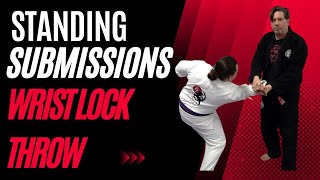
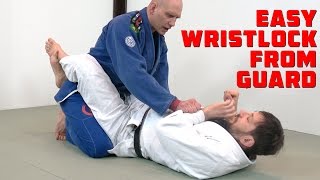
Introduction to Clinch Wrist Locks
J.D. Olsen demonstrates how to integrate aikido-based wrist locks into Brazilian Jiu-Jitsu clinch work. The technique focuses on capitalizing on an opponent's grip attempts during the clinch by positioning the defender's arm to control where and how the opponent will grab.
Nikio Position Fundamentals
The Nikio position forms the foundation for several wrist lock variations. When an opponent grabs the defender's arm or collar, the defender captures the grab by coming over the top and bending the opponent's wrist into the Nikio configuration, creating a lock that can be finished by rotating both arms in opposite directions.
Same-Side Collar Grab Response
When an opponent attempts a same-side collar grab, the defender pulls the opponent's hand to their chest while bringing the other hand over the top to establish the lock. The finishing motion involves pulling both arms in opposite directions while bowing to apply pressure through wrist flexion.
Sankio Wrist Lock Technique
The Sankio variation addresses wrist and sleeve control attempts. The defender grabs the opponent's wrist and pins it to their own arm, then steps through to secure the lock, with an optional second step to ensure control and prevent escape.
Thumb and Fingertip Control
To prevent the opponent from withdrawing their hand during the lock application, the defender secures their thumb over the opponent's fingertips while positioning their own fingertips over the opponent's thumb, creating a grip analogous to protecting a burned wrist. This method of isolation prevents the opponent from breaking free even if they attempt to pull away.
Control as a Prerequisite
The instructor emphasizes that establishing control over the opponent's arm precedes any lock application. The defender must maintain firm hand positioning before executing the wrist snap to ensure the technique functions regardless of grip variation or hand placement.
Adaptability Across Grip Variations
The Nikio and Sankio principles remain effective whether the opponent grabs the collar, tricep, sleeve, or shoulder area. Pinning the opponent's hand to the defender's chest remains the constant element that allows the technique to succeed across multiple grip scenarios.
Positioning and Finishing Sequence
From the controlled hand position, the defender moves their head to the inside and performs a stepping motion with rotation before stepping backward to complete the lock. This coordinated footwork combined with arm positioning applies pressure through the opponent's wrist and elbow joint.
Getting Aikido Wrist Locks from the Clinch in Brazilian Jiu-Jitsu
Key Takeaways
- •Introduction to Clinch Wrist Locks
- •Nikio Position Fundamentals
- •Same-Side Collar Grab Response
- •Sankio Wrist Lock Technique
Related Techniques
Frequently Asked Questions
What does this video teach about from clinch?
This video covers introduction to clinch wrist locks, nikio position fundamentals, same-side collar grab response. It provides detailed instruction from Martial Arts Unlimited.
How long does it take to learn from clinch?
The basic mechanics can be understood in a single session, but developing reliable execution requires consistent drilling over weeks of practice. This 8-part breakdown helps structure your training by isolating each phase of the technique.
What are the key details for finishing from clinch?
The Nikio and Sankio principles remain effective whether the opponent grabs the collar, tricep, sleeve, or shoulder area. Pinning the opponent's hand to the defender's chest remains the constant element that allows the technique to succeed across multiple grip scenarios.