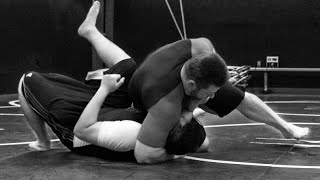
Hand Fight to Head Control
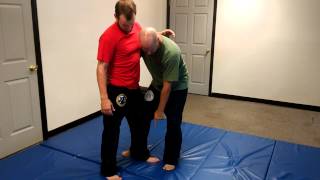
Initiate the sequence with hand fighting to establish head control over your opponent. This preliminary position creates the foundation necessary for the subsequent takedown entry.
Shooting Position and Chest Placement
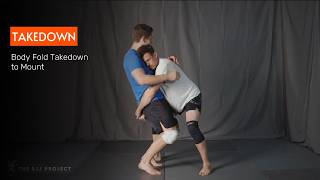
Execute a forceful shoot with the forehead driven forward directly into the opponent's chest. For taller opponents, aim under the chin; for shorter opponents, target the side of their face.
Drive and Initial Bend
Drive through with significant power during the shoot to begin bending the opponent backward. This forward momentum establishes the primary control dynamic.
Trapping the Arm
Insert the left arm underneath to secure and squeeze the opponent's right arm tightly against their chest. This positioning neutralizes their ability to execute a sprawl counter.
Counter Prevention
The tight compression on the trapped arm prevents the opponent from using upper body defense mechanisms. This constraint forces them into a compromised position.
Finishing the Takedown
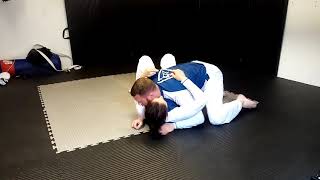
Complete the body fold takedown by leveraging the accumulated control and backward momentum. The opponent is driven to the ground with their arm immobilized against their torso.
Body Fold Takedown Entry Details Gracie Jiu Jitsu Self Defense Short
Key Takeaways
- •Hand Fight to Head Control
- •Shooting Position and Chest Placement
- •Drive and Initial Bend
- •Trapping the Arm
Frequently Asked Questions
What does this video teach about body fold takedown?
This video covers hand fight to head control, shooting position and chest placement, drive and initial bend. It provides detailed instruction from Peter Mettler Martial Arts.
How long does it take to learn body fold takedown?
The basic mechanics can be understood in a single session, but developing reliable execution requires consistent drilling over weeks of practice. This 6-part breakdown helps structure your training by isolating each phase of the technique.
What are the key details for finishing body fold takedown?
The tight compression on the trapped arm prevents the opponent from using upper body defense mechanisms. This constraint forces them into a compromised position.