Introduction: Standing vs. Drop Seoi Nage
Standing seoi nage commands respect in judo competition, whereas drop seoi nage is often dismissed as a less impressive technique. This instructional sequence demonstrates how to effectively execute standing seoi nage through proper grip protection and strategic timing. Understanding the fundamental differences between these variations is essential for competitive success.
Grip Analysis: Right vs. Right Collar Control
The right-versus-right collar grip presents significant technical challenges due to downward pressure from the opponent. The defensive side requires careful sleeve management to prevent the opponent from establishing control that would compromise the throw. Proper lapel protection is the first priority when executing this grip variation.
Foundational Setup: Lapel Protection
Protecting the lapel through hand positioning prevents the opponent from establishing a defensive grip that would inhibit arm extension. This foundational element must be established before transitioning into the throwing sequence. The protection hand serves as both a defensive barrier and a setup mechanism for the attack.
Basic Standing Seoi Nage Entry
The basic standing seoi nage involves securing the collar, lowering the head, and executing an upward rotation over the shoulder. This fundamental version serves as the foundation for more advanced variations. Proper timing of the head positioning and body rotation creates the necessary momentum for the throw.
Deceptive Grip Transition
Disguising the seoi nage attack by feinting an overhand grip creates confusion and improves throwing success. This deceptive transition combines the foundational lapel protection with commitment to the attack. The element of misdirection is essential when multiple threat options are presented simultaneously.
Countering Shoulder Post Defense
When the opponent posts on the shoulder to resist the throw, the practitioner must neutralize this defensive hand by securing the wrist and rotating the arm into a controlled pin. Stepping back and placing pressure on the hand's fatty tissue allows for effective arm extension control. This counter-defense prevents the opponent from maintaining a stable base.
Leg Attack Integration
Incorporating a leg kick or co-lateral attack while executing seoi nage further disrupts the opponent's balance and base. This multi-directional assault prevents the opponent from establishing a strong defensive posture. The simultaneous leg and upper body attacks create compound pressure that is difficult to defend.
Armpit Control Under Resistance
When the opponent controls the practitioner's hand to prevent the standard armpit connection, an alternative approach involves pulling the opponent's armpit toward the practitioner's body rather than inserting the hand. This variation requires precise elbow positioning and cross-body arm mechanics. While effective, this technique should not be used as a standalone option.
Combination Strategy: Integrated Defense and Attack
The most effective standing seoi nage execution combines multiple defensive responses and attacking variations in rapid succession to keep the opponent uncertain. Rather than relying on a single technique, the practitioner sequences head control, lapel protection, leg attacks, and armpit variations to create unavoidable throwing opportunities. This layered approach ensures success even when the opponent anticipates one specific attack vector.
Competitive Application and Timing
Staggering the timing of attacks and presenting multiple threat options simultaneously prevents the opponent from predicting the seoi nage throw. The opponent must defend against numerous possibilities, making the eventual throw impossible to avoid. Mastery of standing seoi nage requires confident integration of all variations into a cohesive throwing strategy.
Impress Your Judo Friends With Standing Seoi Nage
Key Takeaways
- •Introduction: Standing vs. Drop Seoi Nage
- •Grip Analysis: Right vs. Right Collar Control
- •Foundational Setup: Lapel Protection
- •Basic Standing Seoi Nage Entry
De Ashi instructional about to drop - get your download below of the popular soto makikomi instructional NEW Soto Makikomi FULL INSTRUCTIONAL https://shintarohigashi.com/judo-courses Available for Streaming and Download for only $20 Soto Makikomi is a huge full body throw that is uses primarily by heavy weights. Dangerous, explosive and EFFECTIVE! Learn how to do it the proper way, with your and your partner's safety in mind. Enjoy this instructional now, now presented in 4K HD! CONCISE AND INFORMATIVE Just like his YouTube channel, this video cuts the fat of frivolous explanations that are only applicable to very unique circumstances. Instead, he presents you with a broad, proven and effective approaches that can be utilized across your entire judo system. His in depth explanations remain tailored for the judoka interested in leveling up their game.
Related Techniques
Frequently Asked Questions
What does this video teach about eri seoi nage?
This video covers introduction: standing vs. drop seoi nage, grip analysis: right vs. right collar control, foundational setup: lapel protection. It provides detailed instruction from Shintaro Higashi.
How long does it take to learn eri seoi nage?
The basic mechanics can be understood in a single session, but developing reliable execution requires consistent drilling over weeks of practice. This 10-part breakdown helps structure your training by isolating each phase of the technique.
What are the key details for finishing eri seoi nage?
The most effective standing seoi nage execution combines multiple defensive responses and attacking variations in rapid succession to keep the opponent uncertain. Rather than relying on a single technique, the practitioner sequences head control, lapel protection, leg attacks, and armpit variations to create unavoidable throwing opportunities. This layered approach ensures success even when the opponent anticipates one specific attack vector.
Related videos
Ilias Illiadis' SECRETS To Ippon Seoi Nage! - With Ilias Illiadis, Travis Stevens, And Judo Fanatics
Travis Stevens
Kata-eri Seoi nage for Judo/BJJ/Sambo
Shintaro Nakano
Judo Legend Jeon Ki Young: Seoi-otoshi Variation (HD)
Singapore Judo Club
Morote-Seoi-Nage Tips | Riki Judo Dojo
Riki Judo Dojo
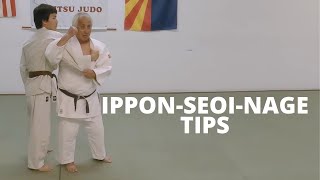
Ippon-Seoi-Nage Tips | Riki Judo Dojo
Riki Judo Dojo