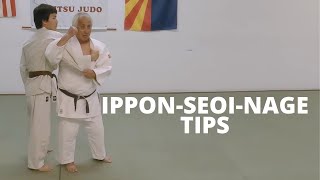
Introduction to Ippon Seoi Nage
Ilias Illiadis demonstrates his specialized variation of the Seoi Nage throw. This instructional focuses on the grip mechanics and body positioning that distinguish his approach from standard Seoi Nage technique.
Grip Foundation and Hand Position
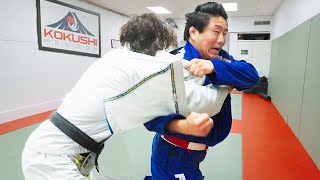
The grip remains constant throughout the technique—both fingers must be positioned on the outside of the collar, not inside. The right hand is placed with both fingers extended outward, and the elbow drives inward toward the opponent's armpit, creating a locked position that generates throwing power.
Critical Elbow Positioning
The elbow must be positioned low and compressed into the opponent's armpit rather than elevated upward. Raising the elbow reduces mechanical advantage and allows the opponent to escape or counter the technique. Proper elbow positioning creates the foundation for efficient power transfer.
Distance Management and Entry
Illiadis maintains a specific distance from the opponent before executing the throw. Rather than starting from too close or too far, the thrower initiates the technique from a mid-range position that allows for controlled footwork and proper hip engagement without telegraphing the movement.
Footwork Mechanics: The Half-Step Entry
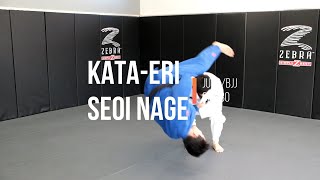
The technique begins with a half-step forward using the right leg, immediately followed by the left leg driving upward and inward. This synchronized legwork generates hip momentum and prevents the opponent from countering by stepping backward. The legs work in coordinated sequence, not simultaneously.
Hand and Leg Synchronization
The right hand and right leg must move together as a unified action, with the elbow driving into the armpit while the leg executes the entry step. This simultaneous coordination accelerates the throw and prevents the opponent from disrupting the technique mid-execution. Timing between hand and leg action is critical for success.
Finger Safety: Inside vs. Outside Grip
Placing fingers inside the collar creates vulnerability to injury from the opponent's counter techniques. By keeping both fingers positioned outside the collar, the thrower protects their hand while maintaining a secure grip. This positioning also enhances the structural integrity of the throw.
Breaking the Opponent's Posture
Before executing the throw, the thrower must first disrupt the opponent's stable posture by breaking their balance. This is accomplished through controlled collar manipulation that forces the opponent's weight forward, creating the vulnerability necessary for a successful throw.
Shoulder Freedom and Entry Positioning
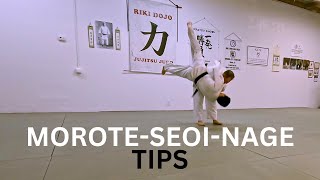
The throwing shoulder must remain free and uncluttered throughout the entry and execution phases. The thrower never initiates the technique from a tucked or closed position, as this restricts hip rotation and power generation. Maintaining shoulder freedom allows for full extension and maximum throwing force.
Training Application: Chikomi Drill Practice
When practicing Seoi Nage during chikomi (repetitive drilling), all technical principles must remain consistent with live competition scenarios. Developing proper habits during drilling—particularly regarding grip security, elbow positioning, and footwork precision—ensures reliable technique execution when fighting at full intensity.
Ilias Illiadis' SECRETS To Ippon Seoi Nage! - With Ilias Illiadis, Travis Stevens, And Judo Fanatics
Key Takeaways
- •Introduction to Ippon Seoi Nage
- •Grip Foundation and Hand Position
- •Critical Elbow Positioning
- •Distance Management and Entry
I hope you found this technique useful. If you're looking for more details on how you can improve your judo, check out my website www.judofanatics.com. Make sure you use the coupon code in the end screen of this video to save on any DVD purchase you make on the site. My goal is to help judo players and grapplers like yourself improve as quickly and as much as possible. I understand that not everyone has access to high-level coaching, so this is my attempt to help out as many people as possible! Make sure you join my YouTube Community for exclusive content and perks! Level 1 - Gets you a special icon that lets everyone know your a valued member of the community! Level 2 - Gets your YouTube Handle displayed on the end screen of my videos! Level 3 - Let's you join a members-only live Q&A once a month where I can work with you guys on how to improve your game. You can ask anything you like judo, bjj, nogi, sub only everything is on the table! Click here to become a member: https://bit.ly/JudoSilencer_Community Below are some of my favorite products you can find online that helped me become one of the best grapplers on the planet! Submit Everyone BJJ Gi: https://amzn.to/2FQKr99 Mizuno Judo Gi: https://amzn.to/2TpBZWp Baseline Rashguards: https://amzn.to/2TlNEFQ Baseline Shorts: https://amzn.to/2ReoZAk Baseline Spats: https://amzn.to/2srqiUd Finger Tape: https://amzn.to/2NrYVAI Lightweight Backpack: https://amzn.to/2RhWYYK BJJ Belts: https://amzn.to/2QTPps0 Follow me on my other social media outlets: Facebook: https://www.facebook.com/travisstevensjudo/ Twitter: https://twitter.com/judosilencer Instagram: https://www.instagram.com/judosilencer/
Related Techniques
Frequently Asked Questions
What does this video teach about eri seoi nage?
This video covers introduction to ippon seoi nage, grip foundation and hand position, critical elbow positioning. It provides detailed instruction from Travis Stevens.
How long does it take to learn eri seoi nage?
The basic mechanics can be understood in a single session, but developing reliable execution requires consistent drilling over weeks of practice. This 10-part breakdown helps structure your training by isolating each phase of the technique.
What are the key details for finishing eri seoi nage?
The throwing shoulder must remain free and uncluttered throughout the entry and execution phases. The thrower never initiates the technique from a tucked or closed position, as this restricts hip rotation and power generation. Maintaining shoulder freedom allows for full extension and maximum throwing force.