Introduction to Kata Guruma
Kata guruma is a classic judo throwing technique that can be adapted to modern IJF regulations. This technical breakdown covers both traditional applications and contemporary variations that remain competition-legal.
Classical Kata Guruma Setup
The practitioner initiates kata guruma with a lapel grip while securing the opponent's elbow against their shoulder. The opponent's balance must be broken forward, shifting their weight onto the balls of their feet before executing the throw.
Grip and Arm Positioning
The throwing arm must pin the opponent's arm securely between the practitioner's head and shoulder. Proper grip depth and shoulder positioning are critical to controlling the opponent throughout the technique's execution.
Standing and Kneeling Execution
Kata guruma can be performed from either a standing position with a well-balanced hook or from a kneeling position on one or both knees. In both variations, the fundamental grip mechanics and shoulder trapping remain consistent.
Modern IJF Adaptations
Current IJF regulations prohibit leg grabs, requiring competitors to develop alternative kata guruma variations. Modern applications focus on shoulder control and wrist positioning rather than thigh grips.
Shoulder Pinning Variation
Instead of gripping the thigh, the practitioner pins the opponent's wrist on the same side while maintaining deep grip contact. Pressure application triggers the opponent to open space, allowing the practitioner to trap the shoulder with the back of their head while looking toward the ceiling.
Cross-Grip Variation
The practitioner can attack from the outside using a cross-grip with the bow hand while maintaining the same shoulder-trapping principle. Center of gravity alignment directly below the opponent's center ensures effective control as the practitioner pulls over the shoulder.
Sleeve Control Variation
This variation involves gripping one side while controlling the opponent's opposite sleeve end rather than reaching for the leg. The blocking hand pins the opponent's wrist against their own stomach, allowing shoulder control on the outside before the final wheel.
Finishing the Throw
Regardless of grip variation, the practitioner traps the shoulder with the back of their head and wheels the opponent over their shoulder in one continuous motion. Maintaining tight control throughout the entry and execution ensures a clean, effective throw.
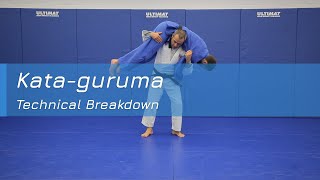
Kata-guruma - Technical Breakdown
Key Takeaways
- •Introduction to Kata Guruma
- •Classical Kata Guruma Setup
- •Grip and Arm Positioning
- •Standing and Kneeling Execution
#efficientjudo #judo #judothrows Technical Breakdown from Kata-guruma, looking how to perform the classic technique, as well as some IJF legal variations.
Related Techniques
Frequently Asked Questions
What does this video teach about drop kata guruma?
This video covers introduction to kata guruma, classical kata guruma setup, grip and arm positioning. It provides detailed instruction from Efficient Judo.
How long does it take to learn drop kata guruma?
The basic mechanics can be understood in a single session, but developing reliable execution requires consistent drilling over weeks of practice. This 9-part breakdown helps structure your training by isolating each phase of the technique.
What are the key details for finishing drop kata guruma?
This variation involves gripping one side while controlling the opponent's opposite sleeve end rather than reaching for the leg. The blocking hand pins the opponent's wrist against their own stomach, allowing shoulder control on the outside before the final wheel.