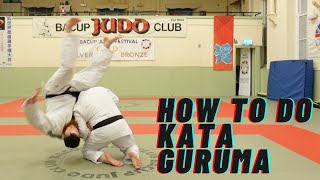
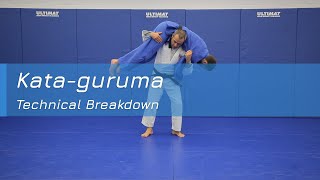
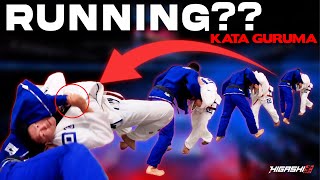
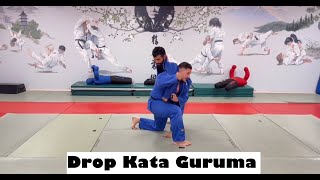
Introduction to Drop Kata Guruma
Drop Kata Guruma is a modified fireman's carry adapted for modern judo rules following the 2012 leg-touch restriction. This throw enables practitioners to execute a traditional fireman's carry movement without contacting the opponent's legs, making it effective for bringing an opponent to their back.
Historical Context and Rule Adaptations
Prior to 2012, judoka could execute the traditional fireman's carry by reaching between the opponent's legs. The rule change prohibiting leg contact necessitated the development of Kata Guruma as a viable alternative that achieves the same result through modified mechanics.
Grip Positioning and Setup
The thrower establishes an unorthodox but highly effective grip: the right hand controls the opponent's armpit area on the outside of the arm, while the left hand grips the sleeve. This grip combination provides maximum leverage while simultaneously breaking the opponent's lapel hold.
Entry and Foot Positioning
The thrower executes a small preparatory step with the rear foot before sliding the lead leg through the opponent's stance. Upon completion of the slide, the thrower sits weight onto the opponent's foot while maintaining a bent position with the rear leg and straight position with the lead leg.
Arm Wrapping and Upper Body Mechanics
As the thrower slides through, the opponent's armpit wraps around the thrower's neck and head. The thrower pulls this arm across and around, creating a tight wrap that provides sufficient force to complete the throw with controlled body weight rather than excessive muscular effort.
Critical Elbow Technique and Finishing Position
The throwing-side elbow tilts downward toward the mat during the throwing motion, creating additional leverage that forces the opponent over. This elbow drive, combined with chest pressure against the opponent's leg, completes the technique efficiently and with proper mechanical advantage.
Variations and Execution Options
The technique can be executed with or without the preparatory baby step. Advanced practitioners can eliminate the step and snap the throw in one continuous motion, while beginners benefit from the additional step for improved balance during the initial learning phase.
Competition Follow-Up and Pin Transition
After throwing, the competitor must immediately follow the opponent to the mat to establish top position for a pin. Maintaining the established grip while transitioning over the opponent ensures the throw scores as ippon rather than wazari, maximizing point value.
In depth Judo Throw Tutorial: Drop Kata Guruma
Key Takeaways
- •Introduction to Drop Kata Guruma
- •Historical Context and Rule Adaptations
- •Grip Positioning and Setup
- •Entry and Foot Positioning
Here is my step by step guide on how to do a proper drop Kata Guruma for Judo. This is one of the harder throws, don't be intimidated if you can't get it first try. Please note that this throw was modified for competition since we can't touch the legs. Check me out: https://linktr.ee/jbutler.90
Related Techniques
Frequently Asked Questions
What does this video teach about drop kata guruma?
This video covers introduction to drop kata guruma, historical context and rule adaptations, grip positioning and setup. It provides detailed instruction from Jesse Butler.
How long does it take to learn drop kata guruma?
The basic mechanics can be understood in a single session, but developing reliable execution requires consistent drilling over weeks of practice. This 8-part breakdown helps structure your training by isolating each phase of the technique.
What are the key details for finishing drop kata guruma?
The technique can be executed with or without the preparatory baby step. Advanced practitioners can eliminate the step and snap the throw in one continuous motion, while beginners benefit from the additional step for improved balance during the initial learning phase.