Mid-Level Single Leg Position Setup
When a wrestler or jiu-jitsu player shoots for a single leg takedown but the opponent doesn't fully sprawl, the attacker often finds themselves in the mid-level position. In this position, the attacker's head is positioned against the opponent's ribs with a straight back, controlling one leg. This is an unavoidable and common position that requires immediate, technical finishing sequences.
Running the Pipe: Classic Mid-Level Finish
Running the Pipe is a fundamental finish from the mid-level single leg position, named for the motion of pulling a pipe through one's legs. The attacker circles toward the opponent's heel to eliminate balance, then turns and pulls the leg straight down. In wrestling, the goal is to follow the opponent directly to the mat to maintain back control; in jiu-jitsu, the attacker may attempt a leg drag or guard pass.
Limitations of the Pipe Against Athletic Opponents
While Running the Pipe is effective, highly athletic opponents can create distance and escape to center, forcing the attacker into a vulnerable position. Attempting to dive and collect both legs requires releasing the initial grip, which allows skilled competitors to extract their far leg and reverse position. This necessitates alternative finishing techniques from the mid-level position.
The Humeral Bone Lock: Technical Foundations
An advanced finish taught by Eastern European wrestling coaches involves using the humeral bone (upper arm) rather than the shoulder to create a fulcrum against the opponent's femur. The attacker locks this bone across the opponent's thigh while maintaining head position and keeping their top hand secured. This creates a mechanical advantage that functions regardless of the opponent's athletic ability or prior knowledge of the technique.
Humeral Lock Execution and Pressure Application
Once the humeral bone is positioned across the opponent's femur, the attacker executes the finish by squatting rather than bending at the waist. This upward drive from the squat position creates intense pressure that leverages the thigh against the fulcrum, forcing the opponent downward. The technique generates significant discomfort through pressure mechanics rather than dangerous joint manipulation.
Pressure Mechanics vs. Injury Prevention
The humeral bone lock creates extreme pressure sensation that feels like leg-breaking force despite being mechanistically safe when executed correctly. The attacker does not generate sufficient pressure to cause actual femur fracture; rather, the unique leverage point creates an illusion of dangerous force. Proper technique emphasizes controlled pressure application that compels submission without risking structural damage.
Combining Techniques for Maximum Effectiveness
Advanced practitioners can combine Running the Pipe and the humeral bone lock in sequence for maximum finishing rate. If the pipe finish fails or the opponent demonstrates exceptional resilience, the attacker transitions to the humeral lock without resetting position. This layered approach ensures a high-percentage takedown against both athletic and experienced opponents.
Grip Point Precision and Practice Considerations
Success with the humeral bone lock depends on precise grip placement at the midpoint between elbow and shoulder, positioned squarely across the thigh. Like advanced techniques in jiu-jitsu, the proper pressure angle and positioning requires repetition to develop feel and timing. Once learned correctly, the technique becomes a reliable finishing option from the mid-level single leg position in both wrestling and grappling contexts.
#10 An effective but incredibly painful single leg takedown for wrestlers and Jiu Jitsu players
Key Takeaways
- •Mid-Level Single Leg Position Setup
- •Running the Pipe: Classic Mid-Level Finish
- •Limitations of the Pipe Against Athletic Opponents
- •The Humeral Bone Lock: Technical Foundations
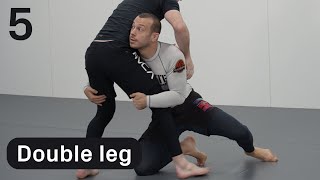
All of us will get into a position called the “mid level” where we get the single leg off the floor, and our hands are locked behind his knee. You can do a number of things to take him down from here. I show three of them here, but the main focus in this video is how you apply a substantial amount of pressure to his thigh and he will most likely fall down from it. I learned this from a member of the Ukrainian national freestyle team back in the early 90s. It works like crazy by itself, but is even more used when you chain it together with other options from this position. As John Smith says, it’s best if you can finish the single on the mat, because it takes away a lot of his athleticism. Coming up to the feet introduces a whole different set of problems. Check out our video where we demonstrate the proper way to finish the outside single on the mat, where you turn the corner, and shelf the leg: https://youtu.be/5_vZy4cZ5n4 We also have a video where we show how to use your forehead in the ribs to transfer his weight to his back leg to make the front leg light, and get to your feet. This will be useful to this video, because we go into detail there. It’s important that the hand that’s under the leg is palm facing down. This is important and we cover the reasons for that in our video here: https://youtu.be/YqDrJb4tQwU
Frequently Asked Questions
What does this video teach about standard run-the-pipe double?
This video covers mid-level single leg position setup, running the pipe: classic mid-level finish, limitations of the pipe against athletic opponents. It provides detailed instruction from Breza-Grappling.
How long does it take to learn standard run-the-pipe double?
The basic mechanics can be understood in a single session, but developing reliable execution requires consistent drilling over weeks of practice. This 8-part breakdown helps structure your training by isolating each phase of the technique.
What are the key details for finishing standard run-the-pipe double?
Advanced practitioners can combine Running the Pipe and the humeral bone lock in sequence for maximum finishing rate. If the pipe finish fails or the opponent demonstrates exceptional resilience, the attacker transitions to the humeral lock without resetting position. This layered approach ensures a high-percentage takedown against both athletic and experienced opponents.