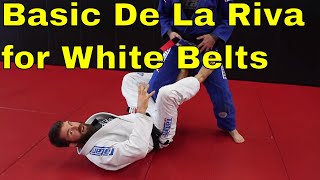
Introduction to Reverse De La Riva
The Reverse De La Riva is a fundamental guard position that practitioners frequently encounter during rolling. Understanding this guard is essential because it commonly emerges as a transition point from other guard variations such as De La Riva, collar sleeve, and double sleeve passes.
Positional Relevance and Adaptability
Mastering the Reverse De La Riva provides defensive security against multiple passing angles. When opponents attempt to trap the leg and transition from other guards, a strong understanding of this position allows the defender to maintain comfort and control despite the opponent's positional changes.
The Three Levels Framework
The Reverse De La Riva is best understood through three distinct levels that categorize the opponent's posture: Level One involves one knee grounded, Level Two involves a lean with the heel elevated, and Level Three occurs when the opponent stands completely upright. Each level requires different control strategies and tactical approaches.
Level One: Grounded Knee Position
When the opponent has one knee on the ground, the defender can establish superior collar control and body connection. This position enables easy weight transfer manipulation, creating opportunities for back-taking spins, single-leg sweeps, or transitions into the Patch Guard.
Level Two: The Driving Lean
At Level Two, the opponent generates significant forward momentum through their passing drive. Rather than attempting weight transfer, the defender should exploit this momentum by lifting the opponent to execute back-taking spins or establish X-Guard positions.
Level Three: Upright Standing Position
When the opponent stands completely upright, traditional weight manipulation becomes ineffective. The defender should focus on underhook control to execute back-taking techniques through spinning transitions or employ single-leg attacks and X-Guard entries.
Grip Flexibility and Style Adaptation
The upper-body grip in the Reverse De La Riva is adaptable and not restricted to collar control. Practitioners can maintain spider guard, lasso guard, or sleeve grips while executing the same technical principles across all three levels, allowing customization to individual playing styles.
Breadth Versus Depth in Guard Mastery
Developing a comprehensive understanding of positional structure through broader overviews enhances adaptability against multiple opponent responses. This strategic breadth prevents overreliance on single techniques while building the foundational framework necessary for deeper technical exploration.
Espen Mathiesen Reverse De La Riva Overview
Key Takeaways
- •Introduction to Reverse De La Riva
- •Positional Relevance and Adaptability
- •The Three Levels Framework
- •Level One: Grounded Knee Position
This video Espen Mathiesen shows his basic foundations for controlling the reverse de la riva position. This is a powerful guard that can be mixed in from many different position. Not only does it stop your opponent from passing but it gives you many ways to attack to the back. Espen breaks it down by your opponents positions Level 12 &3. Look out for the next overview of the double guard pull position. ————————————————————————- Follow on IG @espenmathiesen Follow on IG @JonThomasBJJ Full Reverse DLR Instructional Here: https://www.mavericksjj.com/courses/Reverse-delariva 30 Percent Off Discount Code: “RDLRYT”
Related Techniques
Frequently Asked Questions
What does this video teach about reverse de la riva?
This video covers introduction to reverse de la riva, positional relevance and adaptability, the three levels framework. It provides detailed instruction from JonThomasBJJ.
How long does it take to learn reverse de la riva?
The basic mechanics can be understood in a single session, but developing reliable execution requires consistent drilling over weeks of practice. This 8-part breakdown helps structure your training by isolating each phase of the technique.
What are the key details for finishing reverse de la riva?
The upper-body grip in the Reverse De La Riva is adaptable and not restricted to collar control. Practitioners can maintain spider guard, lasso guard, or sleeve grips while executing the same technical principles across all three levels, allowing customization to individual playing styles.