Introduction to the Duck Under
The duck under is a fundamental grappling technique with two primary finishing methods: a direct mat takedown and an elevated finish using the claw. Both variations begin with identical setup and grip work before diverging at the execution phase.
Establishing the Collar Tie
The collar tie is the critical control point for the duck under, as it provides leverage to drag the opponent to the mat. The grip requires a locked hand with the forearm pinched tightly against the opponent's neck, creating a closed, compact position rather than an extended hold.
The Monkey Grip and Arm Control
The non-controlling hand establishes a monkey grip high on the opponent's tricep. This two-point control system—collar tie and tricep grip—creates the foundation for both finishing variations and prevents the opponent from escaping the position.
Creating the Window and Head Position
As the practitioner steps to the outside of the opponent's base, a slight lift of the arm creates enough space to execute the duck under. Critically, the head must remain in a strong, upright position throughout to prevent the opponent from trapping it.
Mat Finish: Knee Drop and Spiral
The first variation concludes with a knee drop to the mat while spinning on the planted leg, using body momentum and weight to drive the opponent down. The collar tie remains locked throughout to control the opponent's neck and facilitate back control on the mat.
Claw Finish: Level Change and Positioning
The claw finish keeps the practitioner on their feet during the initial phase, requiring only a level change from the knees rather than a full knee drop. The arm must remain pinched against the shoulder like holding a telephone to prevent the opponent from escaping.
Perpendicular Positioning and Posture
After the level change, the practitioner rotates to become perpendicular to the opponent while maintaining proper posture: bent knees, engaged hips, and a straight back. This positioning creates the optimal mechanical advantage for the explosive lift portion of the technique.
The Claw Grip and Explosive Finish
The free hand secures a grip on the inside of the opponent's thigh as high as possible in the crotch area. The finish is driven entirely through leg and hip extension, never relying on arm or back strength, resulting in a powerful upward lift before slamming the opponent to the mat.
How to Take Down Your Opponent with the Duck Under
Key Takeaways
- •Introduction to the Duck Under
- •Establishing the Collar Tie
- •The Monkey Grip and Arm Control
- •Creating the Window and Head Position
https://www.nymaa.com/ Adult program https://bit.ly/2G4cMJ2 Kids program https://bit.ly/2X3B64G Private lessons https://bit.ly/2RzYULO Brooklyn Location https://bit.ly/2QQOqaz Astoria Location https://bit.ly/2XqRwUZ Little Neck Location https://bit.ly/2Xt7r5t Glen Cove Location https://bit.ly/2QLZK7V The duck under is a classic wrestling entry into a takedown. In this tutorial, Sifu Paul is in a collar tie and has bicep control. To perform the duck under, lift your opponent’s arm with the bicep control and sneak your head under his armpit and towards his back. At 3:01 the move is shown without putting your knee to the floor. This is best if you’re fighting on a hard surface which is very likely in a self defense situation. A few tips - Keep your head up when your do this move. If not, your opponent can attempt a front headlock or guillotine choke - Make sure to get perpendicular to your partner or all the way towards his back. Otherwise he’ll attempt to circle towards you - When lifting for the takedown, get your hips lower than your opponent and make sure your hips are in with your back straight.
Frequently Asked Questions
What does this video teach about standard duck under back take?
This video covers introduction to the duck under, establishing the collar tie, the monkey grip and arm control. It provides detailed instruction from NY Martial Arts Academy.
How long does it take to learn standard duck under back take?
The basic mechanics can be understood in a single session, but developing reliable execution requires consistent drilling over weeks of practice. This 8-part breakdown helps structure your training by isolating each phase of the technique.
What are the key details for finishing standard duck under back take?
After the level change, the practitioner rotates to become perpendicular to the opponent while maintaining proper posture: bent knees, engaged hips, and a straight back. This positioning creates the optimal mechanical advantage for the explosive lift portion of the technique.
Related videos
Learning the "DUCK Under" Takedown
TeachMeGrappling Coach Brian
Master THIS Duck Under Takedown to Score More In BJJ
Brandon Reed BJJ
Keys To The Duck Under Takedown by John Smith
FANATIC WRESTLING
Duck Under to Knee Pinch - Jay Rod
Bernardo Faria BJJ Fanatics
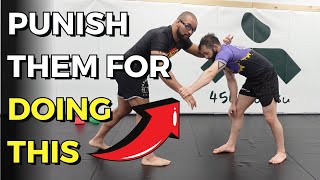
The Slickest Way to Take the Back Fast in BJJ (Duck Under Technique)
Brandon Reed BJJ