Three Stances (Kamae) of Hanbō
The hanbō short staff is practiced from three foundational stances: kata yaburi, musō, and the intermediate position. These three kamae form the postural basis for all hanbō techniques and transitions.
Three Ukemi (Falling Techniques) with Hanbō
Three distinct falling methods are practiced with the hanbō. From kata yaburi, practitioners rock backward and perform a back ukemi; from musō stance, a sideways roll returns to musō; from the third stance, the practitioner slips the leg and returns to position. These falling patterns condition the body to maintain contact with the staff during dynamic transitions.
Defense Against Lapel Grab with Elbow/Wrist Strike
When an opponent initiates a lapel grab, the defender steps laterally and delivers a striking blow to either the elbow or wrist using the hanbō. The strike employs the three levels—jōdan (upper), chudān (middle), and gedān (lower)—with emphasis on impact rather than pushing pressure. Practitioners should execute the technique with controlled force during practice, transitioning from slow placement to full dynamic application.
Arm Bar and Takedown from Grab Defense
Following the initial strike to a grabbing attacker's arm, the defender steps beside and applies pressure to the immobilized arm bone using the hanbō as a lever. A two-step footwork pattern precedes the final positioning. If the attacker maintains grip, the technique transitions into a controlled arm bar followed by optional striking with the free hand.
Defense Against Frontal Knife Stab
Against a committed abdominal stab, the defender blocks the attacker's wrist with an initial strike, then executes a two-step entry while controlling the knife arm and stepping behind the opponent's leg. Pressure applied to the extended arm creates a takedown angle while the hanbō serves as both defensive shield and striking weapon throughout the exchange.
Wrist Strike with Upward Deflection Disarm
An alternative knife defense begins with an upward strike to the wrist that causes the blade to slide through the attacker's hands toward disarmament. The defender then captures the knife hand using an Aikido-style arm lock, controlling the wrist position to access the back of the opponent's arm and create a triangular lock structure.
Kata Yaburi Response: Deflection and Arm Manipulation
Within the kata yaburi form, the defender deflects the incoming knife stab, allows the attacker to release the blade, and flicks it away while maintaining guard. The defender then grasps the opponent's wrist with the palm facing outward to access the back of the arm, creating a triangular configuration that enables throwing or striking based on the attacker's body angle.
Hoshi-ori Technique: Downward Wrist Strike and Takedown
The hoshi-ori defense addresses a knife stab by stepping directly forward and striking downward onto the attacker's wrist. After capturing the hand and stepping to the outside, the defender delivers an upward strike followed by a controlled takedown. The defender maintains contact with the hanbō during the fall to prevent injury while demonstrating the full force application of the technique.
Two-Handed Grab Defense with Forearm Pressure
When an opponent seizes the hanbō with both hands, the defender rotates the staff to grind the edges into the opponent's forearm bones, creating pain compliance. The defender then steps back and may deliver a striking blow before regaining center control, using the staff's edges as a pressure point during the manipulation.
Ninjutsu Short Staff (Hanbō 半棒) Basics
Key Takeaways
- •Three Stances (Kamae) of Hanbō
- •Three Ukemi (Falling Techniques) with Hanbō
- •Defense Against Lapel Grab with Elbow/Wrist Strike
- •Arm Bar and Takedown from Grab Defense
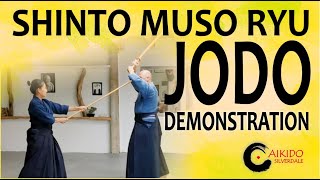
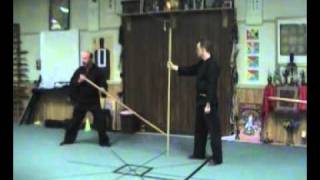
In today's video Nick Tomlinson from Bujinkan Whangaparaoa takes a group of mainly Aikidoka through the basic techniques of the ninjutsu short staff, or Hanbō (半棒) including a number of less commonly seen variations. If you enjoyed this video, please hit the LIKE button as it helps YouTube recommend us in searches, thank you and PLEASE SUBSCRIBE! https://www.youtube.com/channel/UC73eDRgTsTVjTgx8o_e9wrw?sub_confirmation=1 If you'd like to support our channel, please watch the AIKIDO SILVERDALE PLAYLIST https://www.youtube.com/watch?v=3lNflHbvHb8&list=PLA520V4pOPWLgGGutGjKnpNokg_pwFC08 JOIN OUR DISCORD https://discord.gg/qHXqMyUEx8 AIKIDO WEAPONS (BOKKEN & JO) PLAYLIST https://www.youtube.com/watch?v=zitD6pFCcsA&list=PLA520V4pOPWLdOiMdee7QqlKKXElrN23J MELBOURNE UKEMI AND BODY MECHANICS SEMINAR https://www.youtube.com/watch?v=MhFQWoZiydc&list=PLA520V4pOPWLCSymbKRNljvSdp-WPMVKB AIKIDO SILVERDALE Official website: http://www.AikidoAuckand.co.nz Official website of our organisation worldwide: http://www.instituteofaikido.com Facebook: https://www.facebook.com/AikidoAuckland/ Instagram: https://www.instagram.com/aikidoauckland/ #ninjutsu #ninja #shortstaff
Related Techniques
Frequently Asked Questions
What does this video teach about jojutsu — short staff?
This video covers three stances (kamae) of hanbō, three ukemi (falling techniques) with hanbō, defense against lapel grab with elbow/wrist strike. It provides detailed instruction from AIKIDO SILVERDALE.
How long does it take to learn jojutsu — short staff?
The basic mechanics can be understood in a single session, but developing reliable execution requires consistent drilling over weeks of practice. This 9-part breakdown helps structure your training by isolating each phase of the technique.
What are the key details for finishing jojutsu — short staff?
The hoshi-ori defense addresses a knife stab by stepping directly forward and striking downward onto the attacker's wrist. After capturing the hand and stepping to the outside, the defender delivers an upward strike followed by a controlled takedown. The defender maintains contact with the hanbō during the fall to prevent injury while demonstrating the full force application of the technique.