Historical Context and Modern Police Use
The jō was widely employed by Japanese law enforcement during the feudal period and remained in use by riot police until approximately 25 years prior to this demonstration. The weapon's adoption by police forces reflected its effectiveness as a non-lethal control device, offering greater versatility and power than many alternatives. Modern tactical equipment such as tasers has largely replaced the jō in contemporary policing, though it remains central to traditional martial training.
Weapon Characteristics and Construction
The jō is distinguished by its lightweight design and remarkable versatility despite its simplicity. Training weapons are typically crafted from white oak, a dense hardwood selected for its durability and ability to withstand repeated impacts during practice. The robust construction of these weapons accounts for their frequent breakage during intensive training sessions.
Training Principles and Safety
Shinto-Muso Ryu training emphasizes controlled execution without compromising technical integrity or power. Practitioners are trained to avoid injuring training partners while maintaining the full effectiveness of techniques rather than diluting them for safety purposes. This approach requires significant skill development and cannot be mastered in a short training period.
Organizational Structure
Shinto-Kan in Woodinville, Washington, serves as the headquarters for Shinto-Muso Ryu jojutsu instruction throughout the United States and the Americas. The Katori Shinto-kan tradition represents a distinct lineage within jojutsu pedagogy. This centralized structure maintains standardized training methodology across affiliated schools.
Movement Efficiency and Combat Application
Every movement within jojutsu kata possesses tactical purpose with no superfluous techniques included in the system. In actual combat scenarios, practitioners must develop reflexive responses to opponent weaknesses rather than executing predetermined sequences. Training employs choreographed forms to develop this spontaneous reactivity and technical proficiency without requiring practitioners to engage in actual combat.
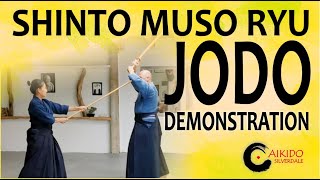
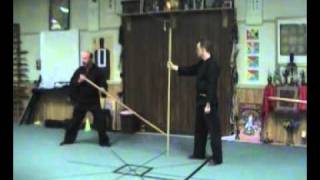
Short Staff vs. Sword Demonstration (Shinto-Muso Ryu Jojutsu)
Key Takeaways
- •Historical Context and Modern Police Use
- •Weapon Characteristics and Construction
- •Training Principles and Safety
- •Organizational Structure
Is there a better name for that kind of "short staff"?
Related Techniques
Frequently Asked Questions
What does this video teach about jojutsu — short staff?
This video covers historical context and modern police use, weapon characteristics and construction, training principles and safety. It provides detailed instruction from janosKern.
How long does it take to learn jojutsu — short staff?
The basic mechanics can be understood in a single session, but developing reliable execution requires consistent drilling over weeks of practice. This 5-part breakdown helps structure your training by isolating each phase of the technique.
What are the key details for finishing jojutsu — short staff?
Shinto-Kan in Woodinville, Washington, serves as the headquarters for Shinto-Muso Ryu jojutsu instruction throughout the United States and the Americas. The Katori Shinto-kan tradition represents a distinct lineage within jojutsu pedagogy. This centralized structure maintains standardized training methodology across affiliated schools.