Introduction and Background
The instructor introduces the spladle as a wrestling technique he developed and successfully used during his junior year of high school after spraining his ankle. He reports pinning 23 out of approximately 30 opponents using this modified technique and indicates it also has applications in MMA competition.
Setup and Single Leg Defense
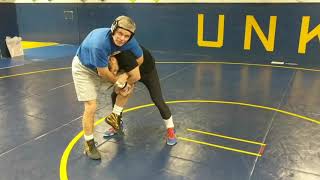
The spladle is executed when an opponent shoots a single leg takedown with their head on the inside. The defender first establishes an overhook to settle the opponent's pressure, then drapes the overhook arm across the opponent's back and inserts the hand through the back of the opponent's thigh.
Foot Control and Weight Distribution
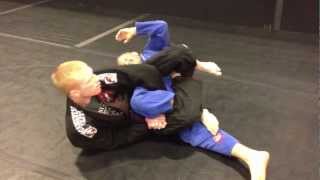
Rather than locking the hands traditionally, the instructor grabs the opponent's foot and pulls it inward, which applies significant pressure to the opponent's knee while negating their leg's power. The defender then walks toward the opponent, causing the held foot to step behind the defender's free foot before sitting back to complete the pin.
MMA Variation to Split Crotch
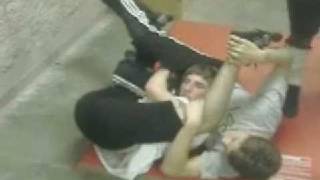
In MMA applications where a pin is not the goal, the defender can transition the spladle into a split crotch submission. The defender steps their free foot over the opponent's body and pulls the opponent's foot in the direction that maximizes stretch, forcing a submission tap.
Alternate Entry from Standing Position
An alternative setup involves the defender giving the opponent their leg during the wrestling exchange, which triggers the opponent's natural reaction to grab it. The defender can then hook the opponent's foot before dropping to their hip, allowing earlier entry into the finishing position.
Execution Timing and Control
The instructor emphasizes keeping the opponent's head down to neutralize their strength and advocates executing the spladle slowly rather than explosively. He notes that rushing the technique allows the opponent to escape, whereas a controlled application locks the submission in place.
Summary and Key Points
The instructor recaps the four main steps: getting the opponent to engage on the leg, scooping through to grab the foot, hooking the foot on the ground or before dropping, and slowly settling the opponent back into the locked position. He identifies the spladle as a high-percentage desperation move effective at regional and county competition levels, particularly against muscular opponents with limited flexibility.
Squid Spladle
Key Takeaways
- •Introduction and Background
- •Setup and Single Leg Defense
- •Foot Control and Weight Distribution
- •MMA Variation to Split Crotch
If you're a wrestler or if you just want to improve your mixed martial arts game, pay attention. Because today MMA Surge host Andrew "the Squid" Montañez unleashes the spladle. This technique helps you gain control of your opponent's back, setting you up for a pin in wrestling or a submission or a ground attack in MMA. For more submissions and strikes, subscribe to MMA Surge: http://bit.ly/UcYJPA. Check out these other great MMA Surge episodes: Phil Davis' Kimura http://www.youtube.com/watch?v=agRJzb... How to Throw a Hook http://www.youtube.com/watch?v=GrEwEU... The Reverse Triangle http://www.youtube.com/watch?v=ydgi3N... Gogoplata http://www.youtube.com/watch?v=pFZxBS... The Superman Punch http://www.youtube.com/watch?v=SPYAYk... About Squid: Originally from Queens, NYC, The Squid has a history of taking down the competition. He has dominated at Vale Tudo contests, Grappler's Quest Nationals, even the National Fighting Championship. Follow him on Twitter at http://www.twitter.com/AndrewJitsu.
Related Techniques
Frequently Asked Questions
What does this video teach about spladle?
This video covers introduction and background, setup and single leg defense, foot control and weight distribution. It provides detailed instruction from mahalodotcom.
How long does it take to learn spladle?
The basic mechanics can be understood in a single session, but developing reliable execution requires consistent drilling over weeks of practice. This 7-part breakdown helps structure your training by isolating each phase of the technique.
What are the key details for finishing spladle?
The instructor emphasizes keeping the opponent's head down to neutralize their strength and advocates executing the spladle slowly rather than explosively. He notes that rushing the technique allows the opponent to escape, whereas a controlled application locks the submission in place.