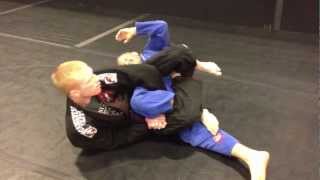
Compression Locks Overview
Compression locks are submission techniques that rely on misdirection and forced resistance patterns. The instructor explains that all three primary techniques—elbow crush, cross-body arm compression, and knee crush—operate on the principle of making the opponent believe one attack is coming while executing another.
Elbow Crush from Guard Break
When an opponent attempts a basic guard break by driving elbows inward, the defender allows one elbow to pass while maintaining control of the other. The defender then threads their wrist (not forearm) deep between their legs toward the opponent's wrist, forcing it into a compressed position.
Elbow Crush Finishing Position
The wrist contact point must be positioned deep in the opponent's elbow crease rather than on the forearm. The defender locks the position using a triangle or figure-four grip on the tricep, then generates pressure by rotating their own wrist while pulling backward to compress the arm.
Cross-Body Arm Compression Setup
From a cross-body position, the defender creates the appearance of pursuing an armbar or keylock while actually setting up an arm compression. The defender initiates wrist contact as the opponent resists and begins to push upward.
Cross-Body Compression Execution
As the opponent pushes upward, the defender uses a swimming motion to slide the opponent's hand toward their own armpit. The defender then locks their bicep against the opponent's wrist—not the forearm—and slides backward while pushing the opponent's wrist downward to complete the compression.
Rolling Knee Bar to Knee Crush Transition
When one leg is caught between the defender's legs, the rolling knee bar becomes viable. The defender initiates the knee bar, and when the opponent resists by bending their leg, the defender identifies the setup for a knee compression.
Knee Crush Technique
As the opponent resists the knee bar straightening attempt, the defender inserts their wrist (perpendicular to the opponent's leg) between the knee and their own body. The defender then releases and allows the opponent's leg to recoil into the compressed wrist position, creating the finishing lock.
Common Principles of Compression Locks
All compression lock variations share a unified principle: the defender applies pressure in one direction to provoke resistance, then capitalizes on the opponent's defensive response in the opposite direction. Success depends on opponent misdirection and using their own defensive strength against them.
January 07 Technique - Compression Locks
Key Takeaways
- •Compression Locks Overview
- •Elbow Crush from Guard Break
- •Elbow Crush Finishing Position
- •Cross-Body Arm Compression Setup
Train sambo at http://nycombatsambo.com
Related Techniques
Frequently Asked Questions
What does this video teach about arm compression?
This video covers compression locks overview, elbow crush from guard break, elbow crush finishing position. It provides detailed instruction from sambosteve.
How long does it take to learn arm compression?
The basic mechanics can be understood in a single session, but developing reliable execution requires consistent drilling over weeks of practice. This 8-part breakdown helps structure your training by isolating each phase of the technique.
What are the key details for finishing arm compression?
As the opponent resists the knee bar straightening attempt, the defender inserts their wrist (perpendicular to the opponent's leg) between the knee and their own body. The defender then releases and allows the opponent's leg to recoil into the compressed wrist position, creating the finishing lock.