The Faulke Step Concept
The instructor introduces a footwork pattern called the "Faulke Step," named after a practitioner named Dave Bubbly who frequently employed the technique. This stepping pattern forces the opponent to follow or lose balance. The method is foundational to setting up multiple throwing techniques in judo.
Two-Step Footwork Pattern
The Faulke Step consists of a normal first step followed by a second step placed laterally away from center. The opponent is mechanically forced to follow this second step to maintain balance; failure to step results in falling backward. The instructor emphasizes that the opponent has no choice but to follow the movement.
Throw Options from the Step
Once the opponent takes the forced second step, the practitioner can execute multiple throwing techniques including uchimata, drop seoi nage, or other attacks. The instructor demonstrates hooking the opponent's foot once their position is predictable. This positioning allows the attacker to execute techniques without hesitation.
Timing and Decisiveness
Once the opponent steps, the attacker must immediately commit to a throw technique without hesitation. Delaying more than one second allows the opponent to counter, as they are now positioned behind or to the side of the attacker. Success depends on split-second decision-making and immediate execution.
Foot Placement and Direction
On the second step of the Faulke Step, the instructor's foot points inward rather than outward. The stepping direction creates a circular motion that pulls the opponent around the attacker's body. This inward foot orientation is crucial to forcing the opponent to follow rather than resist.
Position Advantage and Counter Opportunities
By executing the Faulke Step, the attacker positions themselves behind or beside the opponent, creating access to techniques like ippon seoi nage, drop seoi, uchimata, and seoi gaeshi. The opponent's compromised position makes countering difficult if the attacker commits immediately. However, any hesitation gives the opponent time to counter with lifts or other responses.
Pulling Mechanics and Grip Control
The attacker must pull the opponent around their body rather than pulling them directly inward. The circular motion prevents the opponent from resisting or bracing effectively. The grip pulls the opponent in an arc that maintains the forced stepping pattern.
Practice and Execution Speed
Practitioners should drill the footwork at controlled speeds before applying it at full fighting pace. During live engagement, the step must be executed quickly while maintaining proper foot positioning. The speed and precision of the second step determine whether the opponent is truly forced to follow.
"Faulke Step" Judo Grip Fighting and Throw Setup
Key Takeaways
- •The Faulke Step Concept
- •Two-Step Footwork Pattern
- •Throw Options from the Step
- •Timing and Decisiveness
Sensei Tracy of Venice Judo demonstrates the "Faulke step" to initiate an attack.
Related Techniques
Frequently Asked Questions
What does this video teach about hooking throw?
This video covers the faulke step concept, two-step footwork pattern, throw options from the step. It provides detailed instruction from Preston Poulter.
How long does it take to learn hooking throw?
The basic mechanics can be understood in a single session, but developing reliable execution requires consistent drilling over weeks of practice. This 8-part breakdown helps structure your training by isolating each phase of the technique.
What are the key details for finishing hooking throw?
The attacker must pull the opponent around their body rather than pulling them directly inward. The circular motion prevents the opponent from resisting or bracing effectively. The grip pulls the opponent in an arc that maintains the forced stepping pattern.
Related videos
Mastering the Osoto Gari Throw in Judo For Self Defense
Joey GAINZalez
Osoto Gari 大外刈 Major Outer Reap TECHNIQUE study video
Judo Life
Major Inner Reap - Grappling Fundamentals
CORE MMA
Uchi Mata - inner thigh throw
MRAKRON
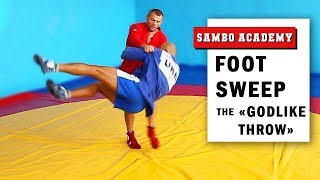
Foot sweep the most beautiful throw. How to do it correctly \ sambo academy
IVAN VASYLCHUK. SILA PARTERA