Directional Principle
The osoto gari is most effective when thrown in the opponent's weak direction rather than their strong corner. Attempting the technique in the direction where the opponent can lean back and drop their leg slightly results in poor positioning. The practitioner must move around to attack the opponent's vulnerable angle.
Entry and Weight Distribution
Proper execution begins with an offset body position and close stance, stepping back before stepping in deeply. The practitioner must rock the opponent's body weight onto one leg, then insert their own body before executing the sweep. Extended stepping develops hip power and generates maximum force through the technique.
Hip Engagement and Pivot
Chest contact combined with drawing the opponent's weight creates an arc over the practitioner's hips. The hip becomes the pivot point and axis of rotation for the entire technique. Proper hip positioning ensures the legs sweep cleanly over the top during execution.
Upper Body Mechanics
The hand under the opponent's armpit lifts while drawing their body weight forward. Most opponents naturally resist backward pressure; the practitioner exploits this reflex by arcing the opponent's weight toward the opposite shoulder and leg. This timing utilizes the opponent's resistance rather than fighting against it.
Shoulder Shrug Counter to Resistance
Opponents typically push away as the practitioner enters, using the edge of their hand against the shoulder. A practiced shoulder shrug executed during entry negates this resistance and allows clean technique execution. This subtle movement is essential for effective osoto gari in randori situations.
Forearm Lock Alternative
When chest contact proves difficult, the practitioner can use the forearm as the contact point instead, locking it tightly with a wakeshima grip. This variation maintains effectiveness while addressing positioning challenges presented by the opponent's resistance pattern.
Quick Step Variation
A quick-step entry using two hop steps allows the practitioner to shrug while entering with momentum. This variation particularly suits situations where generating continuous pressure is difficult due to opponent resistance.
Small Practitioner Modification
Smaller practitioners can cross-step in front of their own foot, leaving space for body insertion. The shrug mechanism remains essential, but the approach angle changes to accommodate size differences between thrower and opponent.
Drive-Based Approach
An alternative style emphasizes driving downward with a strong palm-out grip maintained centrally on the body. The opposite hand lifts and presses the side of the head, with the practitioner looking toward the opponent's throat at the conclusion. This method relies more on direct downward force than the arcing principle.
Combination with Sasai
The osoto gari combines effectively with sasai surikami ashi through footwork transitions. The practitioner can feint osoto gari before switching to sasai, or begin with osoto gari intentions and convert to sasai upon recognizing specific opponent reactions.
Yamashita Style Variation
An established judo approach involves pulling over the top with the hand while drawing across the body. This variation suits larger practitioners and emphasizes horizontal pulling angles through the osoto gari sweep.
Double-Timing and Rhythm
Advanced practitioners employ double-timing to increase attack frequency and tempo. As the opponent steps back, the practitioner steps up with coordinated chest, hip, and leg movement, compounding pressure through repeated technical attempts.
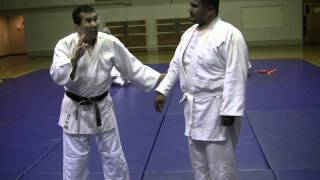
Osoto Gari 大外刈 Major Outer Reap TECHNIQUE study video
Key Takeaways
- •Directional Principle
- •Entry and Weight Distribution
- •Hip Engagement and Pivot
- •Upper Body Mechanics
This video is about o soto gari osotogari. Ōsotogari Static entry, moving forwards, combination technique coached by Graeme Spinks, 7dan Judo Coach Special thanks to Sho Ueha for being my uke
Related Techniques
Frequently Asked Questions
What does this video teach about major outer reap?
This video covers directional principle, entry and weight distribution, hip engagement and pivot. It provides detailed instruction from Judo Life.
How long does it take to learn major outer reap?
The basic mechanics can be understood in a single session, but developing reliable execution requires consistent drilling over weeks of practice. This 12-part breakdown helps structure your training by isolating each phase of the technique.
What are the key details for finishing major outer reap?
An established judo approach involves pulling over the top with the hand while drawing across the body. This variation suits larger practitioners and emphasizes horizontal pulling angles through the osoto gari sweep.
Related videos

Mastering the Osoto Gari Throw in Judo For Self Defense
Joey GAINZalez
"Faulke Step" Judo Grip Fighting and Throw Setup
Preston Poulter

Major Inner Reap - Grappling Fundamentals
CORE MMA

Uchi Mata - inner thigh throw
MRAKRON

Foot sweep the most beautiful throw. How to do it correctly \ sambo academy
IVAN VASYLCHUK. SILA PARTERA