Major Inner Reap - Grappling Fundamentals
0
Major Inner Reap·CORE MMA
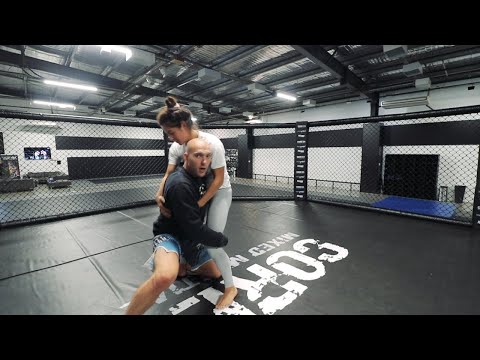
The Major Inner Reap / Large Inside Trip - a classical Judo technique which has been repurposed for BJJ & MMA. This is …
Translation: major/minor inner reap
The Major Inner Reap family covers ashi-waza techniques in which the thrower reaps the opponent's leg from the inside, driving the attacking leg between the opponent's legs to sweep away the supporting foot or leg. [1] Inner reaping techniques (uchi-gari) attack the opponent's base from the inside line, which is often less well defended than the outside, creating powerful close-range throws that are difficult to counter. [1],[2] The two primary techniques — o-uchi-gari (major inner reap) and ko-uchi-gari (minor inner reap) — attack different legs and at different ranges, forming one of the most important attacking combinations in judo. [2],[3]
Inner reaping techniques were part of the original Kodokan gokyo and have been central to judo's tactical framework since the art's founding. [1] The o-uchi-gari/ko-uchi-gari combination was systematised as one of judo's fundamental renzoku-waza (combination technique) patterns, taught as complementary attacks that set each other up. [2],[3]
Inner reap techniques are classified under ashi-waza in the Kodokan judo syllabus. [1]
O uchi gari and ko uchi gari are among the most commonly attempted ashi-waza in IJF competition. [1]
No images yet for this technique.
Sign in to suggest an image.
The Major Inner Reap / Large Inside Trip - a classical Judo technique which has been repurposed for BJJ & MMA. This is …
No instructional courses yet for this technique.
Sign in to suggest a course.
Risk of injury to the person this technique is applied to
O-Uchi-Gari and variants; backward fall risk with head impact (Kano 1986)
Skill level needed to execute this technique reliably
Whether this technique is allowed under major competition rule sets
Kodokan Judo — Official Nage-waza Classification
Traditional Judo throwing technique terminology (Kodokan Institute)
Official Kodokan ground technique classification system
Standard Japanese martial arts terminology (kanji/hiragana)
Established Japanese martial arts naming convention — native Japanese term (和語/漢語)
Traditional Judo throwing technique terminology (Kodokan Institute)
precise timing, ankle coordination, upper body kuzushi ability
excellent balance and quick reflexes
tibialis anterior, calves, hip rotators, forearms (grip)
Every move, in any martial art, shares a few universal traits. Mix and match below to pinpoint the right tool — or compare equivalents across styles.
Ko Uchi Gari (minor inner reap) is a judo ashi-waza technique in which the thrower reaps the opponent's near leg from the inside, using a small, quick hooking or sweeping action against the inner ankle to remove the support. [1] The 'ko' (minor) designation reflects the smaller range and closer distance compared to o-uchi-gari — ko-uchi-gari targets the near foot with a short, sharp reap rather than reaching for the far leg. [1,2] The throw is typically performed as a quick snapping attack when the opponent's weight settles on the near foot, and it is one of the most effective setup techniques in judo for chaining into larger throws like o-uchi-gari, uchi-mata, or seoi-nage. [2,3]
O Uchi Gari (major inner reap) is a judo ashi-waza technique in which the thrower drives the leg between the opponent's legs and reaps the far leg from the inside, sweeping it backward while pushing the opponent's upper body in the same rearward direction. [1] The 'o' (major) designation indicates that the technique targets the far leg with a large, powerful reaping action, creating a diagonal throwing line. [1,2] The thrower typically steps deep between the opponent's feet, hooks or reaps the far leg's inner calf or ankle with the foot or shin, and drives forward to topple the opponent backward over the reaped leg. [2,3]
O-uchi-gari is the most common combination setup throw in judo — it is used to off-balance opponents before following with o-soto-gari, uchi-mata, or tai-otoshi. (Kano, Kodokan Judo; Mifune, Canon of Judo)
You need a solid underhook and overhook with good arm control, similar to pummeling position. According to CORE MMA, make sure you have nice and tight control in the arm with a good underhook before attempting the technique.
Step off at about a 45-degree angle, with your back leg stepping and lead leg pulling to straddle your opponent's lead leg. CORE MMA emphasizes that this angled positioning allows you to use your leg to trip theirs.
Trip at the ankle level, not higher up the leg. CORE MMA explains that you want the same catching action that occurs when you trip on a sidewalk—the contact at the ankle causes the body to commit forward over the top.
Step over the knee to secure at least half guard rather than allowing them to re-guard or sweep you. CORE MMA stresses the importance of stepping over the knee during the follow-through to maintain control.
The Major Inner Reap family covers ashi-waza techniques in which the thrower reaps the opponent's leg from the inside, driving the attacking leg between the opponent's legs to sweep away the supporting foot or leg. Inner reaping techniques (uchi-gari) attack the opponent's base from the inside line, which is often less well defended than the outside, creating powerful close-range throws that are difficult to counter.
Inner reaping techniques were part of the original Kodokan gokyo and have been central to judo's tactical framework since the art's founding. The o-uchi-gari/ko-uchi-gari combination was systematised as one of judo's fundamental renzoku-waza (combination technique) patterns, taught as complementary attacks that set each other up.
IJF: legal — Legal throwing technique; IBJJF: legal — Legal at all belt levels; UWW: restricted — Legal in freestyle, banned in Greco-Roman (no leg attacks below waist); Unified MMA: legal — Legal throwing technique; ADCC: legal — Legal; FIAS Sport Sambo: legal — Legal; FIAS Combat Sambo: legal — Legal
Danger rating 6/10. High — O-Uchi-Gari and variants; backward fall risk with head impact (Kano 1986)
The standard setup chain: Grip Setup (Kumi-kata) → Off-Balance (Kuzushi) → Entry (Tsukuri) → Execution (Kake).
Standard counters include: Lower Centre of Gravity — bend knees and drop hips to make the throw harder to execute / Lift the Targeted Leg — raise the foot being attacked above the sweeping action / Counter-Throw — exploit the attacker's committed weight to throw them instead / Grip Break — deny the thrower their preferred gripping configuration.
Common variants: Forward sweep (sweeping the foot in the direction the opponent is stepping); Rear sweep (sweeping the foot backward as the opponent retreats); Combination sweep (chaining sweeps to both feet); Counter sweep (timing the sweep as the opponent initiates their own attack).
O uchi gari and ko uchi gari are among the most commonly attempted ashi-waza in IJF competition.
Top errors to watch for: Reaping the unweighted leg — the reap must target the leg that is bearing the opponent's weight / Not driving the opponent's upper body in the direction of the reap — the hands must push or pull to create the off-ba… / Reaping too high on the leg — target the ankle or lower calf for the best leverage / Standing too far away and reaching with the reaping leg — close the distance first.
The Major Inner Reap is also known as O Uchi Gari / Ko Uchi Gari, Inner reap throws, Inside leg attacks.