Introduction to Closed Guard Defense
The closed guard is one of jiu-jitsu's most recognizable positions and presents countless submission and sweep opportunities for the guard player. This lesson focuses on shutting down the closed guard and passing it effectively. Maintaining solid posture and stifling the opponent's attacks prevents sweeps and submissions, even if a complete pass is not immediately achieved.
Posture and Grip Management Fundamentals
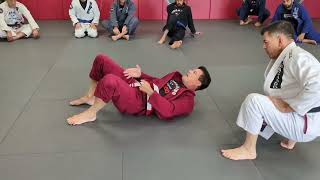
Solid posture is critical for neutralizing closed guard attacks. When the opponent establishes a cross-collar grip to break posture, the defender should grab both sleeves and simultaneously push outward while pulling the upper body back. Placing weight on the opponent's body and framing on their arms keeps their hands elevated off the mat, limiting their attack options.
Guard Break One: Armpit Control and Hip Pressure
The defender grabs the opponent's gi at the armpit and locks their elbows to keep the opponent's shoulders on the mat. From a forward-leaning position, the defender stands up while placing their knees together beneath the opponent's hips and sits down as if in a chair. The break is completed by pushing down on the opponent's leg below the knee joint while driving the hips backward, or alternatively by underhooking the top ankle to peel the leg off.
Guard Break Two: Cross-Collar Grip Neutralization
When the opponent applies a cross-collar grip, the defender breaks the grip with both hands and pins the opponent's arm to their hip. The defender then bases their weight on their hands to stand up, maintaining pressure on the opponent's hand and driving the hips forward to prevent sweeps. The pass is finished by pushing down on the opponent's leg behind the knee.
Guard Break Three: Underhook with Head Pressure
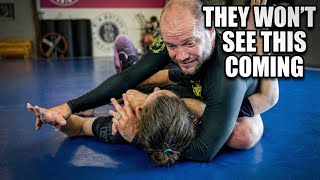
This advanced guard break uses head positioning rather than upright posture. The defender obtains an underhook and drives their forehead into the opponent's jaw to pin their shoulders flat, then staples the opponent's wrists to the mat. The defender walks their toes to the opponent's side to flatten the thigh, then switches hips to step over the ankles into half guard, using the elbow to peel the top leg.
Guard Break Four: Lapel Control and Knee Insertion
The defender grabs both sides of the opponent's lapel and drives the palm of one hand into their core while locking the elbow out. From this controlled position, the defender supports their weight on their hands and inserts one knee up the middle while pulling the other knee to the side. The pass is completed by maintaining distance with the locked straight arm while pushing down below the knee to pass the guard.
4 Best Closed Guard Breaks
Key Takeaways
- •Introduction to Closed Guard Defense
- •Posture and Grip Management Fundamentals
- •Guard Break One: Armpit Control and Hip Pressure
- •Guard Break Two: Cross-Collar Grip Neutralization
In today’s video we cover the 4 most effective Closed Guard breaks for bjj. Given that breaking closed guard is not the most straight forward thing for bjj white belts, we’ll also be covering the basics of shutting down closed guard! Join the FB group: https://www.facebook.com/groups/694131237911923/?ref=share Add me on the gram: https://www.instagram.com/jedi_himself/ 0:00 Intro 1:03 Technique #closedguard #bjj #bjjwhitebelt
Related Techniques
Frequently Asked Questions
What does this video teach about closed guard?
This video covers introduction to closed guard defense, posture and grip management fundamentals, guard break one: armpit control and hip pressure. It provides detailed instruction from Jedi Does Jiujitsu.
How long does it take to learn closed guard?
The basic mechanics can be understood in a single session, but developing reliable execution requires consistent drilling over weeks of practice. This 6-part breakdown helps structure your training by isolating each phase of the technique.
What are the key details for finishing closed guard?
This advanced guard break uses head positioning rather than upright posture. The defender obtains an underhook and drives their forehead into the opponent's jaw to pin their shoulders flat, then staples the opponent's wrists to the mat. The defender walks their toes to the opponent's side to flatten the thigh, then switches hips to step over the ankles into half guard, using the elbow to peel the top leg.