Setup and Entry Recognition
The mounted rubber guard is executed primarily on the practitioner's preferred rubber guard side. Entry occurs when the bottom player feels the opponent's arm draped around their back while isolating it, even without a secure grip. Once the bottom player detects this arm position combined with the top player's knee placement, they can initiate the technique.
Transition to Top Position
From the bottom position, the practitioner pops up onto their knee or foot while maintaining arm isolation. As they elevate, they palm the opponent's face and press it toward the ground while shifting their base to close the position. This transition capitalizes on the opponent's arm being trapped across the practitioner's body.
Face Control and Base Management
The practitioner guides the opponent's face to the floor using controlled pressure rather than striking force in training environments. The knee positioning remains tight throughout this movement. The base is opened strategically to allow weight distribution and enable the leg to wrap around the opponent smoothly and efficiently.
Transition to Mounted Arm Triangle Variants
Once the opponent is face-down, the practitioner can execute various finishing options including Armadillo plata submissions. The practitioner slides under the opponent's head, controls their wrist, and turns the corner by placing their knee near the opponent's head. This positioning resembles the gangsta lean but with additional submission mechanisms in place.
Gogoplata Finish Setup
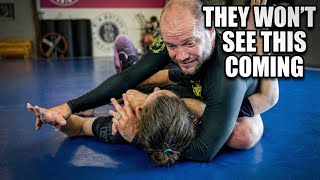
From the mounted position, the practitioner places their shin across the opponent's throat or face, exploiting the gogoplata submission. Many opponents attempt to defend by tucking their chin, but this typically extends the engagement rather than preventing the eventual tap. The opponent's arm control is maintained throughout to prevent escape.
Proper Finishing Mechanics for Gogoplata
The gogoplata finish must be executed with the practitioner's body on the ground rather than sitting upright, preventing the opponent from regaining space. After securing the wrist control, the practitioner flips their body over while maintaining the shin placement. The finish is completed by leaning and straightening the toes, creating sufficient pressure to force submission.
Wrist Control and Escape Prevention
Maintaining wrist control throughout the transition is critical to prevent the opponent from reversing position. Palming the opponent's wrist creates a structural lock that makes lateral escape impossible. Without this control, the practitioner would be forced to finish from their back, significantly reducing leverage and efficiency.
Mounted Rubber Guard - 10th Planet Jiu Jitsu
Key Takeaways
- •Setup and Entry Recognition
- •Transition to Top Position
- •Face Control and Base Management
- •Transition to Mounted Arm Triangle Variants
Most people think of Rubber Guard as a bottom game, but when you apply these mechanics from the mount, you unlock an interesting level of control. It traps your opponent, kills their escape options, and opens up a devastating position for ground-and-pound striking or submission setups, especially the gogoplata. If you want to make your top game heavy, suffocating, and dangerous, consider adding this to your arsenal. 🔥 Get the Full System: This is just a short excerpt from my complete instructional, Mount Dominance, available now on BJJ Fanatics. In the full course, I cover the entire system for achieving, controlling, and finishing from the mount. 👉 Get it here: https://bjjfanatics.com/products/mount-dominance-by-brandon-mccaghren?srsltid=AfmBOooDnO_zqFu0AhD51sN1oCDkQKB-5JTL1mpQvlAiRe6Ehjgoa5Tp About Brandon Mccaghren: 10th Planet Jiu Jitsu Black Belt under Eddie Bravo and the founder/commissioner of the Professional Grappling Federation (PGF). Don't forget to Like, Comment, and Subscribe
Related Techniques
Frequently Asked Questions
What does this video teach about 10th planet guard?
This video covers setup and entry recognition, transition to top position, face control and base management. It provides detailed instruction from Brandon Mccaghren.
How long does it take to learn 10th planet guard?
The basic mechanics can be understood in a single session, but developing reliable execution requires consistent drilling over weeks of practice. This 7-part breakdown helps structure your training by isolating each phase of the technique.
What are the key details for finishing 10th planet guard?
The gogoplata finish must be executed with the practitioner's body on the ground rather than sitting upright, preventing the opponent from regaining space. After securing the wrist control, the practitioner flips their body over while maintaining the shin placement. The finish is completed by leaning and straightening the toes, creating sufficient pressure to force submission.