Crescent Kick Definition and Distinguishing Features
The crescent kick derives its name from its distinctive arched trajectory, resembling a crescent moon or crescent roll. Unlike front kicks that employ a snapping motion with bent knees, the crescent kick maintains a primarily straight leg that arcs through space. The striking surface uses the inside of the foot rather than the ball of the foot, differentiating it from linear kicking techniques.
Body Mechanics and Balance Considerations
Proper execution requires the lead leg to initiate the motion, ensuring the body follows rather than the leg lagging behind. The base leg pivots on the ball of the foot to facilitate hip rotation and generate the arcing motion. Arm positioning assists the technique, though allowing the kick to lead the motion helps maintain balance throughout the execution.
Progressive Height Training Drill
Instructors can use padded training implements such as combat sticks or longie to establish progressive height goals, beginning below belt level and advancing through belt, chest, and chin levels. Setting predetermined height limits based on student flexibility level prevents overextension and encourages focused technique rather than uncontrolled effort. The pivot of the base leg remains critical at all heights to avoid crossing the legs and creating instability.
Striking Surface and Power Development
Clapping target pads, also called double kick pads, provide auditory feedback that reinforces correct striking surface contact. The inner surface of the foot must make contact with the target during execution, distinguishing the crescent kick from other kicking techniques. Progressive repetition on these pads develops both power generation and consistent striking accuracy.
Progressive Intensity and Prerequisite Skills
Students must demonstrate proper striking surface contact at lower heights before advancing to elevated targets. Partners or instructors observe whether the foot contacts the target correctly, with poor contact preventing height increases until technique improves. This structured progression balances flexibility development with technical proficiency, ensuring students build sound fundamentals before pursuing advanced variations.
Taekwondo Crescent Kick Tutorial
Key Takeaways
- •Crescent Kick Definition and Distinguishing Features
- •Body Mechanics and Balance Considerations
- •Progressive Height Training Drill
- •Striking Surface and Power Development
In this Taekwondo tutorial video, Master Ian Thokar teaches how to do a crescent kick, as well as training techniques to help students improve. Comment below with any questions. Please take a moment to share this with family and friends who might be interested. And remember this video works just like any other tool it only works if you use it! Subscribe to our channel! ➡️https://www.youtube.com/channel/UCxPb5RYGeaHiBNxjx6Bi91A #Taekwondo #MartialArts #BridgeportATA #Belief #YesiCan #ATA #Practice #Bridgeport #WV #WVU #improve #Respect #Discipline #Confidence
Related Techniques
Frequently Asked Questions
What does this video teach about crescent kick?
This video covers crescent kick definition and distinguishing features, body mechanics and balance considerations, progressive height training drill. It provides detailed instruction from ATA Martial Arts Master T.
How long does it take to learn crescent kick?
The basic mechanics can be understood in a single session, but developing reliable execution requires consistent drilling over weeks of practice. This 5-part breakdown helps structure your training by isolating each phase of the technique.
What are the key details for finishing crescent kick?
Clapping target pads, also called double kick pads, provide auditory feedback that reinforces correct striking surface contact. The inner surface of the foot must make contact with the target during execution, distinguishing the crescent kick from other kicking techniques. Progressive repetition on these pads develops both power generation and consistent striking accuracy.
Related videos
TAEKWONDO CRESCENT KICK TUTORIAL
Simon Scher
Muay Thai Sangha Lower Hand Outside and Inside techniques
Sangha Muay Thai Thailand
Muay Thai Sangha Lower Hand Outside and Inside techniques
Sangha Muay Thai Thailand
Taekwondo,Basic Movement,Basic Kick
Taweesilp Taekwondo Thailand
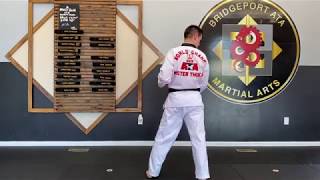
Taekwondo Crescent Kick Tutorial
ATA Martial Arts Master T