Starting Position Philosophy
The instructor recommends that students choose either top or bottom position rather than starting on the knees, as this creates more practical and realistic grappling scenarios. Starting in guard or top position is preferable to mutual kneeling positions, which often result in mutual pushing and wasted time rather than effective technique development.
Pitfalls of Dead Knees
When kneeling with feet flat and inactive (dead toes), students are vulnerable to being driven backward and trapped underneath their opponent. This position is mechanically disadvantageous because the legs cannot quickly escape from under the body, allowing the opponent to easily achieve a guard pass. Students should maintain active, mobile positioning to prevent this common mistake.
Grip Fighting Fundamentals
The instructor establishes that controlling the opponent's wrist creates an immediate positional advantage from the knees. This grip dominance positions the student one step ahead and opens multiple technical possibilities for follow-up techniques.
The Arm Drag Takedown
From the wrist grip, the arm drag is executed by pulling the opponent's arm across the body while stepping around to the back. This simple, high-percentage technique effectively transitions the student into a dominant back-take position.
Knee Pick Mechanics
The knee pick functions as the kneeling equivalent of an ankle pick from standing. The instructor controls the opponent's head tie while dropping the elbow toward the knee and peeling downward, effectively toppling the opponent to their back.
Over-Under Position Transition
When the arm drag fails due to opponent resistance, the instructor establishes an over-under grip position. By posting the rear foot and driving with a swimming motion, the student turns the opponent over explosively.
Snap Down and Follow-Up Options
When the opponent posts their leg during the over-under turnover, the student hops back and snaps them down to the mat. This aggressive snap creates numerous follow-up opportunities including back takes, chin straps, anaconda chokes, and guillotine variations.
Combat Base Positioning
Combat base—with one leg forward and weight distributed across the hands and feet—provides superior mobility and control compared to mutual kneeling. From this position, the student can defend against forward rushes by pulling the opponent into guard or establishing a dominant pass.
Guard Pass from Combat Base
The instructor demonstrates stepping the near foot beside the opponent's leg while controlling both arms, then driving through to establish dominant passing position. This technical sequence creates immediate momentum and positional advantage at the start of a match.
Defending Against the Backwards Throw
When an opponent resists the pass attempt and throws the student backward, maintaining the collar grip allows the student to hook the opponent's foot and arm. By transitioning to an armlock position over the opponent's head, the student converts defensive positioning into a high-percentage submission attempt.
Match Starting Recommendations
The instructor recommends beginning matches in one of three positions: both students in guard, instructor on top and opponent on bottom, or both in combat base. These starting configurations provide technical depth and realistic progression compared to starting on mutual knees.
Starting From the Knees - Do's and Don'ts - Leviathan Brazilian Jiu-Jitsu Chattanooga
Key Takeaways
- •Starting Position Philosophy
- •Pitfalls of Dead Knees
- •Grip Fighting Fundamentals
- •The Arm Drag Takedown
Don't forget to SUBSCRIBE, like,share, and leave a comment🤙 www.leviathanacademy.com @StillRolling Origin USA https://originmaine.com/?ref=ukfvvSIA4Wbf07&utm_source=affiliate STILLROLLING 10% Off XMartial Gear https://www.xmartial.com/?ref=STILLROLLING Also use promo code: STILLROLLING for an extra 10% off Illusive Fight Wear https://www.ilsv.net/shop.html @illusiveapparel StillRolling22 10% off #xmartialgear #StillRolling #leviathanacademy #stillgrowing #leviathanbjj #leviathanbrazilianjiujitsu
Frequently Asked Questions
What does this video teach about game over?
This video covers starting position philosophy, pitfalls of dead knees, grip fighting fundamentals. It provides detailed instruction from Still Rolling.
How long does it take to learn game over?
The basic mechanics can be understood in a single session, but developing reliable execution requires consistent drilling over weeks of practice. This 11-part breakdown helps structure your training by isolating each phase of the technique.
What are the key details for finishing game over?
When an opponent resists the pass attempt and throws the student backward, maintaining the collar grip allows the student to hook the opponent's foot and arm. By transitioning to an armlock position over the opponent's head, the student converts defensive positioning into a high-percentage submission attempt.
Related videos
Game Over & Saddle Entries from Single Leg X for BJJ
Charles Harriott
Over-Under Clinch: The Foundation of Your Takedown Game (BJJ, Wrestling, MMA) #jiujitsu #wrestling
Kata Jiu Jitsu
K-Guard to 50/50 Inside Heel Hook
Tarik BJJ
Legal Heel Hook in the Gi?
JonThomasBJJ
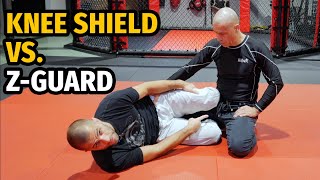
Z-Guard VS. Knee Shield Half Guard
MMA Leech