Introduction to Angle Creation
Creating angles in closed guard is fundamental to Gordon Ryan's offensive system. Rather than relying on strength, proper positioning allows the practitioner to control the opponent's posture and create submission opportunities. This instructional guide breaks down the mechanics of the overhook closed guard position.
Establishing the Overhook
The overhook is secured by threading one arm over the opponent's shoulder while in closed guard. This position immediately limits the opponent's ability to posture up and flatten the guard. The grip should be firm but controlled, maintaining connection through the forearm.
Hip Positioning and Angle
Once the overhook is established, the practitioner must adjust their hip position to create an angle. By rotating the hips and shrimping slightly, the guard player forces the opponent's weight distribution to shift. This angled position prevents the opponent from establishing base and applying pressure.
Controlling the Head and Neck
The overhook allows direct control of the opponent's upper body through the head and neck region. By maintaining connection with the overhook while controlling the opponent's posture, the guard player can manipulate their positioning. This control is essential for setting up submissions and preventing escape attempts.
Preventing Posture Recovery
The opponent will naturally attempt to posture up and escape the closed guard. The overhook combined with proper hip positioning makes this recovery extremely difficult. The guard player should continuously adjust angles to maintain control as the opponent reacts.
Setting Up Submission Chains
From the angled overhook position, numerous submission opportunities become available. Armlock sequences, triangle setups, and collar choke variations all flow naturally from this foundation. The angle created allows the practitioner to transition smoothly between attacks.
Pressure and Weight Distribution
Effective closed guard control requires understanding weight distribution. The overhook position allows the guard player to distribute the opponent's weight inefficiently, creating constant pressure. This pressure compounds the difficulty of escaping while positioning for submission attempts.
Common Transitions and Escapes
Opponents may attempt leg drag passes or bridge escapes from the overhook position. The practitioner must recognize these reactions early and adjust angles accordingly. Maintaining the overhook while shifting hips allows the guard player to counter these common escape attempts.
How to Create Angles in Closed Guard Like Gordon Ryan
Key Takeaways
- •Introduction to Angle Creation
- •Establishing the Overhook
- •Hip Positioning and Angle
- •Controlling the Head and Neck
Hi everyone, my name is Gordon Ryan. This is a look into my life. If you enjoy it, watch it. If you hate it, watch it. If you don't want to watch it, I don't care. I'll be rich and famous either way. Enjoy ❤️ ______________________________________________ All My Links: https://linktr.ee/Gordonlovesjiujitsu Worlds best Jiu Jitsu instructionals⬇️⬇️⬇️ https://gordonthekingryan.com/ ______________________________________________ Follow Me Here: Official IG 👉🏻 https://www.instagram.com/gordonlovesjiujitsu/ Technique breakdowns 👉🏻 https://www.instagram.com/gordonlovesjiujitsu_/ ______________________________________________
Related Techniques
Frequently Asked Questions
What does this video teach about overhook closed guard?
This video covers introduction to angle creation, establishing the overhook, hip positioning and angle. It provides detailed instruction from Gordon Ryan.
How long does it take to learn overhook closed guard?
The basic mechanics can be understood in a single session, but developing reliable execution requires consistent drilling over weeks of practice. This 8-part breakdown helps structure your training by isolating each phase of the technique.
What are the key details for finishing overhook closed guard?
Effective closed guard control requires understanding weight distribution. The overhook position allows the guard player to distribute the opponent's weight inefficiently, creating constant pressure. This pressure compounds the difficulty of escaping while positioning for submission attempts.
Related videos
How to Reliably Hit the Triangle Choke from the Overhook Grip in Closed Guard, with Jon Thomas
Stephan Kesting
Overhook Attacks From Guard!
The Grappling Academy
The “Clamp Guard”: My 2 Favorite Attacks for No Gi BJJ
Brian Glick
How to Create Angles in Closed Guard Like Gordon Ryan
Gordon Ryan
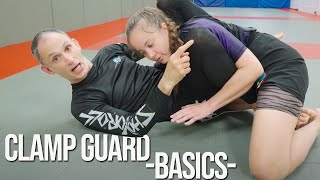
Grace Learns Clamp Guard Basics w Sensei Glick
Shintaro Higashi