Understanding Guard Distance Management
Distance control is the primary function of guard positions in grappling. The clamp guard specifically addresses the challenge of managing an opponent's pressure when they establish a dominant upper body position, such as securing an underhook in half guard.
Preventing the Cross Face
When the opponent secures an underhook, immediately place a hand on their bicep to prevent them from establishing a cross face grip. This defensive hand placement maintains control of the upper body while the lower body remains mobile for repositioning.
Creating Space Through Hip Movement and Knee Elbow Escapes
Move the hips laterally to shift weight onto the side and create separation from the opponent's pressure. Execute successive knee elbow escapes, first bringing the knee to the opponent's hip, then positioning it in front of their shoulder to establish the foundation of the clamp position.
Establishing the Clamp Leg Position
Place one knee in front of the opponent's shoulder to block forward pressure, then position the top leg across their body with the heel near the knees to prevent them from postured up and creating distance. This dual-leg configuration restricts the opponent's movement in both directions.
Using Head Movement to Reduce Pressure
As the opponent drives forward with pressure, move the head away and backward while using the bicep and shoulder hand placement to create space. This head positioning combines with the leg structure to significantly reduce the effectiveness of upper body pressure.
Offensive Transitions from the Clamp
From the clamp position, multiple offensive options emerge including the plata sweep, triangle setup, or returning to half butterfly guard. The position simultaneously provides defensive pressure management while maintaining credible submission threats that force the opponent to respect the bottom player's offense.
The Strategic Value of Threat Over Movement
The clamp guard succeeds not through moving the opponent but through creating legitimate submission threats that encourage them to back off and reduce pressure. Even against larger, stronger opponents, this approach proves effective because leg strength typically exceeds upper body strength in pressure situations.
Grace Learns Clamp Guard Basics w Sensei Glick
Key Takeaways
- •Understanding Guard Distance Management
- •Preventing the Cross Face
- •Creating Space Through Hip Movement and Knee Elbow Escapes
- •Establishing the Clamp Leg Position
The Clamp Guard is super effective in Judo AND BJJ Works in Gi AND No Gi Great crossover dynamic technique to control your opponent Enjoy this great lesson from Sensei Brian Glick Brian Glick's Latest BJJ Fanatics Offering - Under Pressure https://bjjfanatics.com/products/under-pressure-retention-recovery-and-attacking-from-guard-by-brian-glick/?rfsn=7520926.c5e4a8
Related Techniques
Frequently Asked Questions
What does this video teach about clamp guard?
This video covers understanding guard distance management, preventing the cross face, creating space through hip movement and knee elbow escapes. It provides detailed instruction from Shintaro Higashi.
How long does it take to learn clamp guard?
The basic mechanics can be understood in a single session, but developing reliable execution requires consistent drilling over weeks of practice. This 7-part breakdown helps structure your training by isolating each phase of the technique.
What are the key details for finishing clamp guard?
From the clamp position, multiple offensive options emerge including the plata sweep, triangle setup, or returning to half butterfly guard. The position simultaneously provides defensive pressure management while maintaining credible submission threats that force the opponent to respect the bottom player's offense.
Related videos
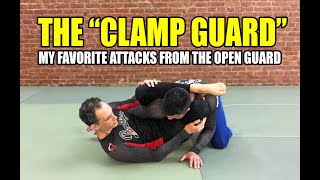
The “Clamp Guard”: My 2 Favorite Attacks for No Gi BJJ
Brian Glick
How to Create Angles in Closed Guard Like Gordon Ryan
Gordon Ryan
How to Reliably Hit the Triangle Choke from the Overhook Grip in Closed Guard, with Jon Thomas
Stephan Kesting
How to Create Angles in Closed Guard Like Gordon Ryan
Gordon Ryan
Overhook Attacks From Guard!
The Grappling Academy