Introduction to Clamp Guard Fundamentals
The clamp guard is an advanced closed guard variation that emphasizes creating favorable angles for submissions and sweeps. This technique, popularized by elite competitors like Gordon Ryan, relies on precise hip positioning and leg pressure to control the opponent's posture. Mastering this guard requires understanding how to manipulate angles while maintaining a secure lockdown.
Establishing the Initial Position
Begin in a traditional closed guard with feet hooked behind the opponent's back. The key distinction of clamp guard is tightening the legs around the torso while simultaneously angling the hips to one side. This creates an asymmetrical pressure that forces the opponent into specific defensive positions.
Creating Angles with Hip Pressure
Once the basic clamp is established, use hip movement to create angles that expose vulnerabilities for arm-drag sweeps or collar drag submissions. The practitioner should shift their hips laterally while maintaining leg pressure, preventing the opponent from posting their arm effectively. This angle manipulation is the distinguishing feature that separates clamp guard from standard closed guard work.
Controlling Posture and Preventing Stacking
Maintain constant pressure through the legs to keep the opponent in a compromised posture, preventing them from generating stacking power. Use your grip on the collar or back to control their upper body while the legs handle lower body pressure. This dual-control system is essential for executing high-percentage attacks from this position.
Setting Up the Arm-Drag Sweep
From the angled clamp position, transition into an arm-drag by controlling one arm while using hip movement to create space. The angle created by the initial clamp guard setup makes this sweep significantly higher percentage than traditional closed guard variations. Timing the leg release with upper body control is critical for smooth execution.
Collar Drag Submission Integration
The clamp guard angles provide excellent access for collar drag attacks, particularly rear-naked choke setups. By maintaining the lateral hip angle while controlling the collar deep, the practitioner can transition directly into submission finishing. This integrated approach makes clamp guard a complete system rather than a single position.
Countering Common Escape Attempts
The opponent will attempt to stack, pass, or posture up to escape the clamp guard's pressure. Effective leg tension combined with strategic arm positioning prevents these escape routes. Understanding the timing of when to increase pressure versus when to transition to submissions is vital for success.
Training Progressions and Practical Application
Begin drilling clamp guard against stationary opponents before progressing to live resistance. Focus on maintaining consistent hip angles and leg pressure while practicing the arm-drag and collar-drag entries. Regular repetition builds the muscle memory necessary to apply this advanced technique against skilled resistance.
How to Create Angles in Closed Guard Like Gordon Ryan
Key Takeaways
- •Introduction to Clamp Guard Fundamentals
- •Establishing the Initial Position
- •Creating Angles with Hip Pressure
- •Controlling Posture and Preventing Stacking
Hi everyone, my name is Gordon Ryan. This is a look into my life. If you enjoy it, watch it. If you hate it, watch it. If you don't want to watch it, I don't care. I'll be rich and famous either way. Enjoy ❤️ ______________________________________________ All My Links: https://linktr.ee/Gordonlovesjiujitsu Worlds best Jiu Jitsu instructionals⬇️⬇️⬇️ https://gordonthekingryan.com/ ______________________________________________ Follow Me Here: Official IG 👉🏻 https://www.instagram.com/gordonlovesjiujitsu/ Technique breakdowns 👉🏻 https://www.instagram.com/gordonlovesjiujitsu_/ ______________________________________________
Related Techniques
Frequently Asked Questions
What does this video teach about clamp guard?
This video covers introduction to clamp guard fundamentals, establishing the initial position, creating angles with hip pressure. It provides detailed instruction from Gordon Ryan.
How long does it take to learn clamp guard?
The basic mechanics can be understood in a single session, but developing reliable execution requires consistent drilling over weeks of practice. This 8-part breakdown helps structure your training by isolating each phase of the technique.
What are the key details for finishing clamp guard?
The opponent will attempt to stack, pass, or posture up to escape the clamp guard's pressure. Effective leg tension combined with strategic arm positioning prevents these escape routes. Understanding the timing of when to increase pressure versus when to transition to submissions is vital for success.
Related videos
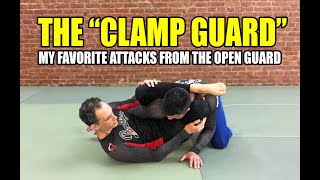
The “Clamp Guard”: My 2 Favorite Attacks for No Gi BJJ
Brian Glick
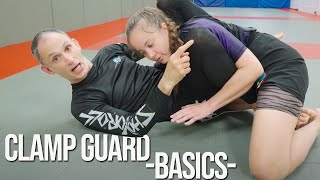
Grace Learns Clamp Guard Basics w Sensei Glick
Shintaro Higashi
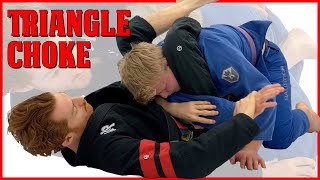
How to Reliably Hit the Triangle Choke from the Overhook Grip in Closed Guard, with Jon Thomas
Stephan Kesting
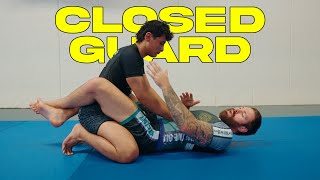
How to Create Angles in Closed Guard Like Gordon Ryan
Gordon Ryan
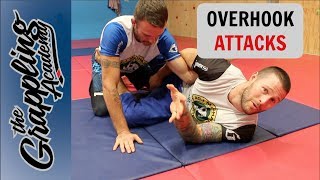
Overhook Attacks From Guard!
The Grappling Academy