How to Create Angles in Closed Guard Like Gordon Ryan
0
Overhook Closed Guard·Gordon Ryan
Hi everyone, my name is Gordon Ryan. This is a look into my life. If you enjoy it, watch it. If you hate it, watch it. I…
Translation: overhook closed guard
The Overhook Closed Guard establishes the closed guard with an overhook (whizzer) control on one of the opponent's arms, pulling the arm across the body and trapping it. [1] The overhook grip creates a powerful arm control that enables triangle choke set-ups, omoplata entries, and sweep attacks. [1],[2] The overhook closes the distance on one side and creates an angle by pulling the opponent's arm across, opening attacking opportunities on the opposite side. [2],[3]
The overhook guard was developed in BJJ as a controlling guard variant, influenced by wrestling overhook control. [1]
Overhook closed guard is a common attacking configuration in BJJ competition. [1]
No images yet for this technique.
Sign in to suggest an image.
Hi everyone, my name is Gordon Ryan. This is a look into my life. If you enjoy it, watch it. If you hate it, watch it. I…
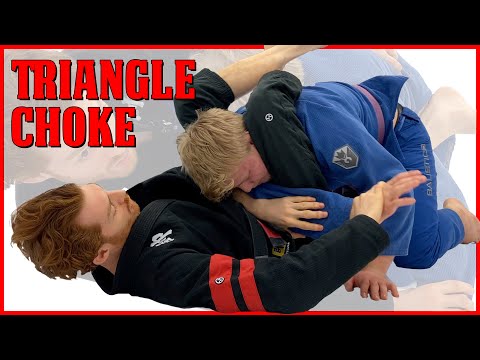
How to set up and finish the triangle choke from closed guard! From 'The Closed Guard System' featuring Jon Thomas, avai…
SALE SALE SALE OVER 50% OFF – BOX SET – ALL 4 COURSES 50% OFF CLICK HERE – https://bit.ly/2lAOHmp • The Blue Belt Sup…
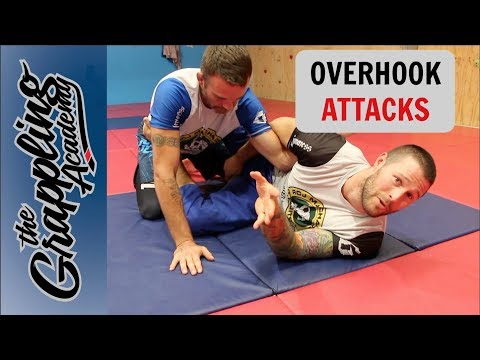
The overhook closed guard is a powerful attacking position established by popping the opponent's wrist off, moving the hips away, sitting up, and securing an overhook grip while lifting the opponent upward rather than pulling downward. According to The Grappling Academy, proper positioning requires clamping the knee tightly across the opponent's body and controlling the wrist, which prevents the opponent from escaping laterally—a critical detail often missed by practitioners who allow excessive mobility by positioning the leg differently. Once established, the overhook enables multiple high-percentage submissions. Stephan Kesting emphasizes the triangle choke as the primary attack, detailing the importance of isolating the tricep, controlling the belt or back grip to trap the elbow, and managing the escape mechanics by scooting out to the side to create proper angle and distance. The triangle setup requires careful positioning to avoid allowing the opponent's elbow to slip free, and finishing demands breaking posture early by getting the arm across the body before securing the head. Both instructors stress that from the overhook position, attackers can also transition to the kimura by controlling the tricep and executing a wrist manipulation, and to shoulder locks when the opponent attempts to extract the elbow. The Grappling Academy notes that the gi version permits cross-choke variations by controlling the far lapel, increasing positional security and submission options.
Synthesized from 3 instructors
No instructional courses yet for this technique.
Sign in to suggest a course.
Risk of injury to the person this technique is applied to
Guard positions are defensive; injury risk comes from transitions, not the position itself
Skill level needed to execute this technique reliably
Whether this technique is allowed under major competition rule sets
Jiu-Jitsu University (Saulo Ribeiro, 2008)
Alias sources — [1] Jiu-Jitsu University (Ribeiro, 2008) [2] The Guard (Moreira & Beneville, 2003) [3] UWW Wrestling Rules
Effectiveness sources — [1] Mastering Jujitsu (Gracie & Danaher, 2003) [2] Jiu-Jitsu University (Ribeiro, 2008)
Standard katakana transliteration of Western martial arts terminology (外来語) — used in Japanese MMA, boxing, and BJJ communities
Alias sources — [1] Jiu-Jitsu University (Ribeiro, 2008) [2] The Guard (Moreira & Beneville, 2003) [3] UWW Wrestling Rules
Effectiveness sources — [1] Mastering Jujitsu (Gracie & Danaher, 2003) [2] Jiu-Jitsu University (Ribeiro, 2008)
hip flexibility, active legs, grip management
long legs for distance control and guard retention
hip flexors, adductors, quadriceps, core, grip
Grab slightly to the side rather than dead center—avoid going too far over the opponent's elbow, and stay tight on the grip. According to Stephan Kesting, proper hand placement is crucial for setting up reliable attacks from this position.
Keep your back on the ground and your hips low—never let your opponent get your back up or your hips elevated, as this makes the choke very difficult to finish. Stephan Kesting emphasizes that maintaining hip control is one of the most important details to focus on.
Pop the opponent's wrist off, move your hips away, then sit up and clamp tightly while lifting them up—not trying to take them down. The Grappling Academy notes that controlling the wrist and clamping across the body prevents the opponent from moving laterally.
Pull the opponent's head into your hamstring rather than trying to pull their arm across your body. The Grappling Academy highlights this as one of the easiest and most effective finishing mechanics from the overhook closed guard.
The Overhook Closed Guard establishes the closed guard with an overhook (whizzer) control on one of the opponent's arms, pulling the arm across the body and trapping it. The overhook grip creates a powerful arm control that enables triangle choke set-ups, omoplata entries, and sweep attacks.
The overhook closed guard is a classic attacking configuration used in both gi and no-gi BJJ, valued for its ability to set up high-percentage submissions like the triangle choke and omoplata. It has been a competition staple for decades.
IBJJF: legal — Legal — guard is fundamental to BJJ, sweeps from guard score 2 points; IJF: restricted — Guard pulling penalized as non-combativity — groundwork from guard permitted …; ADCC: legal — Legal, guard pull penalized -1 point in points portion; Unified MMA: legal — Legal — no penalty for playing guard; FIAS Sport Sambo: legal — Legal
Danger rating 2/10. Low — guard positions are defensive; injury risk comes from transitions, not the position itself
The standard setup chain: Achieve Guard Contact → Control Grips → Manage Distance → Threaten Submissions/Sweeps.
Standard counters include: Guard Pass — systematically work to clear the legs and establish a dominant position / Leg Pin — control one or both legs to neutralize guard retention / Pressure Passing — use heavy chest pressure to flatten and immobilize the guard player.
Common variants: High closed guard (legs high on the back for tighter control and more submis…); Low closed guard (ankles locked at the waist, controlling posture with grips); Body-lock closed guard (wrapping with both overhooks for tight breaking mechanics).
Overhook closed guard is a common attacking configuration in BJJ competition.
Top errors to watch for: Overhooking without pulling the elbow tight — a loose overhook gives the opponent room to extract the arm / Not angling the hips after establishing the overhook — the angle is what creates triangle and omoplata entries / Holding the overhook without attacking — the overhook is a launching pad, not a resting position / Overhooking the arm that is posting — overhook the non-posting arm so the opponent cannot base.
The Overhook Closed Guard is also known as Ōbāfukku Kurōzudo Gādo, Whizzer Guard, Overhook Full Guard, Clamp Guard.