Seatbelt Grip as Default Position
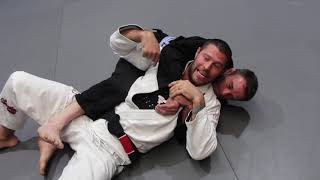
The seatbelt grip is the foundational control method for rear mount, where the bottom hand sits on top of the upper hand. This configuration is superior to holding sleeves or collars alone because it secures the opponent's shoulder and prevents escape attempts. Once established, the opponent cannot effectively unbuckle or remove the grip without prompting the attacker to transition to submissions.
Hand Positioning and Defensive Misdirection
With the bottom hand on top in the seatbelt grip, the opponent's defensive instinct is to attack the upper hand—the non-attacking arm. This misdirection leaves the attacking arm free to execute techniques while the opponent wastes effort defending the wrong limb. If the opponent does manage to peel away the upper hand, the attacker can simply transition to the next phase of the attack.
Maintaining Upper Body Position
The attacker should remain chest-to-back against the opponent at all times, positioning themselves like a backpack rather than sitting upright. The head should stay tight against the opponent's back rather than extended, ensuring maximum control and pressure throughout all transitions and submissions.
Lapel Grip Mechanics for Bow and Arrow Choke
The lapel grip requires turning the collar inward and wrapping the four fingers behind it with the thumb inside, positioning the fat part of the lapel directly against the palm. This deep grip is distinct from a casual lapel grab and maintains a straight wrist, providing the mechanical advantage needed to finish the choke even if the opponent defends with four fingers in the attacker's wrist.
Strategic Arm Sequencing and Grip Hierarchy
The attacker deliberately allows the opponent to target one arm of the seatbelt while the other remains protected and free. By maintaining this configuration, the attacker ensures at least one arm is always available for the next attack phase. This sequencing prevents the opponent from effectively trapping both arms simultaneously.
Parallel Train Tracks Arm Trap
When transitioning to a two-on-one grip, the attacker aligns both arms parallel to each other rather than crossing them in an X pattern. This configuration allows the attacker to trap the opponent's shoulder effectively while forcing the bottom hand down with combined pressure, creating a straitjacket-like constraint.
Shoulder Control Principle
The cross-arm trap works because it controls the opponent's shoulder, preventing them from posting or escaping. If arms are arranged differently without crossing, the shoulder remains free and the opponent retains mobility. Preventing the opponent from getting their back to the mat is the primary defensive principle at rear mount.
Rear Mount Strategy
Key Takeaways
- •Seatbelt Grip as Default Position
- •Hand Positioning and Defensive Misdirection
- •Maintaining Upper Body Position
- •Lapel Grip Mechanics for Bow and Arrow Choke
Emily Kwok shares some techniques, strategies and tactics for the rear mount. From 'Advanced BJJ Q & A', available on iOS at https://itunes.apple.com/us/app/bjj-master-app-by-grapplearts/id1308072068?mt=8 and Android at https://play.google.com/store/apps/details?id=com.grappleartcontainer More info about this app at http://www.grapplearts.com/Blog/total-body-stability-app/ Also available on DVD as part of the "How to Defeat the Bigger Stronger Opponent" set, featuring world BJJ champion Emily Kwok. Produced by Stephan Kesting and Grapplearts.com. http://www.grapplearts.com/biggerstronger for more information
Related Techniques
Frequently Asked Questions
What does this video teach about rear mount?
This video covers seatbelt grip as default position, hand positioning and defensive misdirection, maintaining upper body position. It provides detailed instruction from Stephan Kesting.
How long does it take to learn rear mount?
The basic mechanics can be understood in a single session, but developing reliable execution requires consistent drilling over weeks of practice. This 7-part breakdown helps structure your training by isolating each phase of the technique.
What are the key details for finishing rear mount?
When transitioning to a two-on-one grip, the attacker aligns both arms parallel to each other rather than crossing them in an X pattern. This configuration allows the attacker to trap the opponent's shoulder effectively while forcing the bottom hand down with combined pressure, creating a straitjacket-like constraint.