Course Overview
This introductory lesson covers back control escapes for complete beginners with no prior knowledge. The instructor emphasizes safety and proper technique to prevent submission while executing an escape.
Controlling the Choking Arm
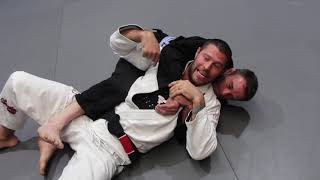
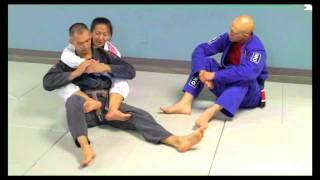
The opponent typically secures back control with one arm around the neck and one underneath. The practitioner must immediately control the choking arm by capturing both hands near the wrist with an elbow-high, hand-down grip to prevent the choke from being completed.
Positioning the Body Flat
The escaping player should pin the opponent to the mat by moving to a supine position rather than remaining on the knees. This flattened position prevents the opponent from following and provides a better foundation for initiating the escape sequence.
Clearing the Leg Hook
The first movement involves stepping the hips forward and pushing them into the opponent's hooked leg to clear the hook. Once the hook is eliminated, the hips can be escaped over the top of the opponent's leg.
Escaping the Shoulder
After clearing the hips, the escaping player must move their head to the opposite side of the opponent's head and position their shoulder toward the mat. Once the shoulder begins to clear, the elbow drops to the ground as a physical barrier.
Critical Mistakes to Avoid
Common errors include controlling the wrong arm, escaping in the wrong direction (away from the choking arm rather than toward it), sitting up instead of bridging, and turning into the opponent too quickly before fully clearing the hips and shoulders. Turning prematurely risks re-exposure of the back and allows the opponent to reinsert hooks.
Head Position and Leverage
Positioning the head on the opposite side of the opponent's head serves two purposes: it removes leverage for a rear-naked choke and creates space for the shoulders to escape laterally. The opponent's head blocks the upper body if positioned on the same side, preventing effective shoulder escape.
Complete Escape Sequence
The full escape involves flattening the opponent while controlling the choking arm, bridging back while tilting the head to the far side, pushing the hips forward to clear the hook, escaping the shoulder with the elbow down, and rolling over the top while maintaining elbow contact with the mat. The elbow remains in contact with the ground as a permanent block against re-insertion of hooks.
Escaping Back Control
Key Takeaways
- •Course Overview
- •Controlling the Choking Arm
- •Positioning the Body Flat
- •Clearing the Leg Hook
Full Course Playlist → https://youtube.com/playlist?list=PLDrQXekZsfYZfV1QZ4T5UkxLwFwQ12EbP Find the Introduction course here → https://submeta.io/@lachlangiles/courses/introduction When our opponent is on our back we need to look to escape while at the same time keeping a secure defence. With our opponent in back control, we are always one step away from submission. In this video, we show you how to defend properly and work to escape back control. More from Lachlan https://www.submeta.io/@lachlangiles Subscribe to watch a huge range of courses all designed to plan, personalize and optimize your game. Follow SUBMETA https://www.instagram.com/submeta.io https://www.facebook.com/submeta.io
Related Techniques
Frequently Asked Questions
What does this video teach about back control?
This video covers course overview, controlling the choking arm, positioning the body flat. It provides detailed instruction from Absolute MMA St Kilda - Melbourne.
How long does it take to learn back control?
The basic mechanics can be understood in a single session, but developing reliable execution requires consistent drilling over weeks of practice. This 8-part breakdown helps structure your training by isolating each phase of the technique.
What are the key details for finishing back control?
Positioning the head on the opposite side of the opponent's head serves two purposes: it removes leverage for a rear-naked choke and creates space for the shoulders to escape laterally. The opponent's head blocks the upper body if positioned on the same side, preventing effective shoulder escape.