Introduction to Back-Take Mechanics
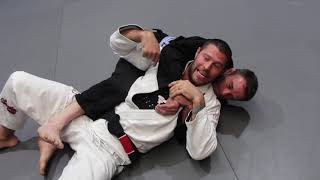
The chair sit is a primary method for taking the back in Brazilian Jiu-Jitsu, typically executed from side control once an opponent begins to turn away. This technique requires first establishing a seatbelt grip and chest-to-back connection to prevent the opponent from rotating back into the attacker.
Chest-to-Back Positioning
The instructor emphasizes sliding the sternum from the opponent's deltoid behind their scapula to establish control. This positioning prevents the opponent from turning back and is foundational to executing the chair sit effectively.
Knee Elevation and Hip Pressure
The attacker lifts their knees off the ground to drive the opponent farther over, then brings one knee up to rest behind the opponent's head. The elbow transitions from the mat to rest on the thigh, which tightens control of the shoulder and neck while the opposite foot establishes base.
Foot Placement Over Hooks
Rather than immediately moving to a hook position, the attacker places their foot against the opponent's hip to prevent hip movement and create hip-to-hip connection. This preventative positioning reduces the risk of the opponent escaping to half guard by walking their hips away.
Maintaining Tension During the Rotation
As the attacker pulls to rotate the opponent, they maintain chest-to-back connection and keep elbows flush against the body to prevent creating escape space. The right leg and arm work together to elevate the opponent during the rotation.
Transitioning to Back Control
After rotating the opponent, the attacker places their feet together momentarily before deciding between a body triangle or hook position. This pause prevents prematurely releasing control and giving the opponent an opportunity to step off the hooks.
Hook Insertion and Consolidation
Once the back control position is established, the attacker consolidates by using a twister hook on the weak side to rotate the opponent toward the strong side. In cases where the opponent tucks their knee, the attacker leans away and uses their shin as a wedge to create space for foot placement.
Advanced Hook Insertion Techniques
If difficulty occurs in reinserting the hook after the main rotation, the attacker can cross their ankles while maintaining chest-to-back connection and use a spinal stretch to create the space needed to place the hook. This technique, popularized by Pablo Popovich, ensures secure back control even against resistant opponents.
How to Take the Back in BJJ 1: The Chair Sit
Key Takeaways
- •Introduction to Back-Take Mechanics
- •Chest-to-Back Positioning
- •Knee Elevation and Hip Pressure
- •Foot Placement Over Hooks
Take the back and get rearmount with the Chair Sit technique. Rob Biernacki and Stephan Kesting show you how to get to the best position in BJJ. More information about the BJJ Back Attacks Formula here: http://www.grapplearts.com/backattacks This app contains 3 hours and 20 minutes of instruction by BJJ black belts Rob Biernacki and Stephan Kesting. App available for Apple, Android and Kindle devices. iPhone, iPod, and iPad devices: https://itunes.apple.com/us/app/bjj-back-game/id1106100929?ls=1&mt=8 Android phones and tablets: https://play.google.com/store/apps/details?id=com.grapplearts.bjjformula4 Kindle devices: http://www.amazon.com/THE-BJJ-BACK-ATTACKS-FORMULA/dp/B01EMCEVXS/
Related Techniques
Frequently Asked Questions
What does this video teach about chair sit?
This video covers introduction to back-take mechanics, chest-to-back positioning, knee elevation and hip pressure. It provides detailed instruction from Stephan Kesting.
How long does it take to learn chair sit?
The basic mechanics can be understood in a single session, but developing reliable execution requires consistent drilling over weeks of practice. This 8-part breakdown helps structure your training by isolating each phase of the technique.
What are the key details for finishing chair sit?
Once the back control position is established, the attacker consolidates by using a twister hook on the weak side to rotate the opponent toward the strong side. In cases where the opponent tucks their knee, the attacker leans away and uses their shin as a wedge to create space for foot placement.