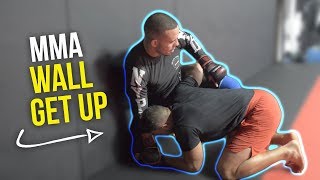
Introduction to Technical Standup
The technical standup is a foundational self-defense and grappling technique designed for safely rising from a supine or back control position. The method prioritizes maintaining distance from an opponent and avoiding vulnerability to strikes while transitioning to standing.
Key Principles
Two critical objectives guide the technical standup: maintaining distance between oneself and the opponent, and preserving a defensive posture to prevent strikes or positional advantage. These principles inform every phase of the movement sequence.
Ineffective Methods to Avoid
A natural forward sit-up exposes the head to punches and knees, while turning to build a base creates blind spots and allows an opponent to take the back or advance position. Both instinctual approaches leave the practitioner vulnerable during the critical transition phase.
Using Feet to Establish Distance
The feet function as the primary distance-management tool during initial phases, allowing the practitioner to push back an approaching opponent or deliver defensive kicks. Maintaining foot control between oneself and the opponent is essential before transitioning to other positions.
Side Turn with Limb Barrier
The practitioner turns to one side while maintaining either a leg or arm between themselves and the opponent to preserve defensive coverage. This positioning allows sequential base-building while preventing the opponent from closing distance or changing position.
Progression Through Support Points
The standup progresses from foot position through elbow support, then hand support, establishing a stable base before advancing to standing. The sequence follows: feet in guard, turn to side, come up to elbow, transition to hand, balance on three points, then stand.
Solo Drill Practice
The technical standup can be practiced without a partner by moving through the sequence systematically. Practitioners begin in open guard with feet forward, turn to side, extend onto elbow, then hand, establish three-point balance, and stand safely.
Common Mistake: Losing Defensive Coverage
The most frequent error is removing the protective limb barrier before establishing a solid base, creating openings for opponent attacks. Practitioners must maintain continuous coverage—either through legs or arms—throughout the entire standup sequence.
Common Mistake: Incomplete Arm Extension
Stopping at the elbow position instead of extending fully onto the hand reduces available space to clear the working leg. Full arm extension creates greater range for leg positioning and prevents premature knee-up positioning that compromises the escape.
Common Mistake: Instinctual Final Stand
Reverting to natural standing mechanics at the finish loses stability and mobility, leaving the practitioner unbalanced. The proper exit requires bringing the rear leg completely across the body to establish a strong, mobile stance.
Technical Stand Up
Key Takeaways
- •Introduction to Technical Standup
- •Key Principles
- •Ineffective Methods to Avoid
- •Using Feet to Establish Distance
Full Course Playlist → https://youtube.com/playlist?list=PLDrQXekZsfYZfV1QZ4T5UkxLwFwQ12EbP Find the Introduction course here → https://submeta.io/@lachlangiles/courses/introduction Knowing how to stand up correctly is important for self-defence, MMA and Jiu-Jitsu. In this video, we demonstrate how to get to our feet without exposing ourself to attack using the technical stand up. It is important to spend some time drilling this movement because it is a reoccurring movement pattern in many techniques. More from Lachlan https://www.submeta.io/@lachlangiles Subscribe to watch a huge range of courses all designed to plan, personalize and optimize your game. Follow SUBMETA https://www.instagram.com/submeta.io https://www.facebook.com/submeta.io
Related Techniques
Frequently Asked Questions
What does this video teach about technical standup?
This video covers introduction to technical standup, key principles, ineffective methods to avoid. It provides detailed instruction from Absolute MMA St Kilda - Melbourne.
How long does it take to learn technical standup?
The basic mechanics can be understood in a single session, but developing reliable execution requires consistent drilling over weeks of practice. This 10-part breakdown helps structure your training by isolating each phase of the technique.
What are the key details for finishing technical standup?
Stopping at the elbow position instead of extending fully onto the hand reduces available space to clear the working leg. Full arm extension creates greater range for leg positioning and prevents premature knee-up positioning that compromises the escape.