WRESTLE Up with this DETAIL!!
0
Wrestle-Up·TeachMeGrappling Coach Brian
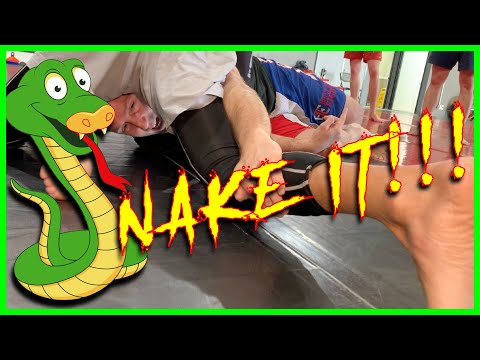
This video I breakdown how to "snake" the leg when you come up for a single from bottom side control. Check out the det…
Translation: wrestle-up
The Wrestle-Up family covers techniques for returning to a standing position by using wrestling-based movements — such as single-leg and double-leg entries — from the bottom position to stand up while simultaneously attacking. [1] The wrestle-up is an aggressive standing escape that combines the goal of returning to feet with an offensive wrestling attack, making it difficult for the opponent to defend both the standing attempt and the takedown threat. [1],[2] Wrestle-ups are particularly effective from half guard, seated guard, and after creating space from bottom side control. [2],[3]
Wrestle-ups combine wrestling takedown entries with BJJ guard escapes. [1]
Wrestle-ups are increasingly common in MMA and no-gi BJJ competition. [1]
No images yet for this technique.
Sign in to suggest an image.
This video I breakdown how to "snake" the leg when you come up for a single from bottom side control. Check out the det…
No instructional courses yet for this technique.
Sign in to suggest a course.
Risk of injury to the person this technique is applied to
Standing escapes from clinch/holds; involves explosive disengagement
Skill level needed to execute this technique reliably
Whether this technique is allowed under major competition rule sets
Jiu-Jitsu University (Saulo Ribeiro, 2008)
Alias sources — [1] Wrestling Physical Conditioning Encyclopedia (Welker, 2010) [2] NCAA Wrestling Rules and Interpretations
Effectiveness sources — [1] Wrestling Physical Conditioning Encyclopedia (Petrov, 1977) [2] Mastering Jujitsu (Gracie & Danaher, 2003)
Standard katakana transliteration of Western martial arts terminology (外来語) — used in Japanese MMA, boxing, and BJJ communities
Alias sources — [1] Wrestling Physical Conditioning Encyclopedia (Welker, 2010) [2] NCAA Wrestling Rules and Interpretations
Effectiveness sources — [1] Wrestling Physical Conditioning Encyclopedia (Petrov, 1977) [2] Mastering Jujitsu (Gracie & Danaher, 2003)
hip escape (shrimping) speed, framing strength, timing
flexible hips and quick lateral movement
hip flexors, obliques, triceps (framing), core
Every move, in any martial art, shares a few universal traits. Mix and match below to pinpoint the right tool — or compare equivalents across styles.
The Double Leg Wrestle-Up subfamily covers standing techniques where the bottom fighter executes a double-leg takedown-style entry from the ground, using the double-leg drive to simultaneously stand up and attack. [1] The double leg wrestle-up is launched from positions like half guard or turtle, where the defender has enough space to shoot into the opponent's legs. [1,2] The technique converts the defensive bottom position into an aggressive offensive attack in a single motion. [2,3]
The Single Leg Wrestle-Up subfamily covers standing techniques where the bottom fighter attacks one of the opponent's legs from the ground, using a single-leg takedown entry to stand up and attack simultaneously. [1] The single leg wrestle-up is the most common wrestle-up variation because it requires controlling only one leg, which is often available from bottom positions like half guard and butterfly guard. [1,2] The technique transitions seamlessly from guard to single-leg attack to standing. [2,3]
The wrestle-up is the fundamental MMA skill of standing up from bottom position using wrestling mechanics — posting on the hand, driving the hips forward, and coming to a wrestling stance. Different from the BJJ technical standup because it incorporates underhooks and clinch work. (Wrestling for Fighting, Couture; MMA training manuals)
Keep your elbows inside and maintain control of your own arms—don't let your opponent grip and control them, as this makes it harder to execute the wrestle-up. Coach Brian emphasizes keeping the arm inside so when your opponent tries to get up on their toes and step behind your leg, you can still get your hand on the whizzer.
If your opponent's leg escapes, you can transition to guard replacement instead. Coach Brian notes that guard replacement will cause your opponent to bring their knee in, which you can then grab, creating a dynamic exchange between guard replacement and sprawl defense.
Use the whizzer when your opponent grabs the waist and tries to drive into you—this will drop them back down. Coach Brian also recommends staying low and being ready to hit with an Uchimata if needed.
The Wrestle-Up family covers techniques for returning to a standing position by using wrestling-based movements — such as single-leg and double-leg entries — from the bottom position to stand up while simultaneously attacking. The wrestle-up is an aggressive standing escape that combines the goal of returning to feet with an offensive wrestling attack, making it difficult for the opponent to defend both the standing attempt and the takedown threat.
Wrestle-ups developed as wrestlers entered BJJ and MMA and brought their stand-up techniques to the bottom position. The integration of wrestling stand-ups with BJJ guard work created a dynamic approach to escaping bottom position that emphasised aggression over defensive recovery.
Unified MMA: legal — Legal defensive/transitional technique; IBJJF: legal — Legal; IJF: legal — Legal; ADCC: legal — Legal; UWW: legal — Legal, escape scores 1 point (freestyle), reversal scores 1 point; FIAS Sport Sambo: legal — Legal; NCAA Folkstyle: legal — Legal, escape scores 1 point, reversal scores 2 points
Danger rating 3/10. Moderate — standing escapes from clinch/holds; involves explosive disengagement
The standard setup chain: Create Space → Disrupt Control → Execute Escape → Recover Position.
Standard counters include: Maintain Pressure — keep consistent weight distribution to limit escape space / Anticipate Direction — read escape attempt direction and block early / Transition — flow to a new position when the current one is threatened.
Common variants: Shrimp to guard (framing and hip-escaping to recover full guard or half guard); Underhook escape (winning the underhook and coming to knees or reversing); Bridge to knees (bridging into the opponent and transitioning to turtle or…); Ghost escape (inverting under the opponent to re-guard from the opposit…).
Wrestle-ups are increasingly common in MMA and no-gi BJJ competition.
Top errors to watch for: Rising to standing without attacking — the wrestle-up combines the standup with the takedown; doing one without the o… / Shooting from too far away — the wrestle-up works from close range; establish grip contact before rising / Standing all the way up before shooting — the takedown should begin during the rise, not after / Not using grips to set up the wrestle-up — arm drags, collar ties, and wrist control create the opening.
The Wrestle-Up is also known as Resuru Appu, Wrestling Up, Takedown From Bottom.