Polearm Durability Against Sword Cuts
Historical polearms were not easily severed by sword strikes, contrary to popular misconception. If polearms were as fragile as commonly portrayed, they would not have been widely adopted in actual warfare throughout history. The shaft construction using materials like ash, oak, and hickory provided substantial resistance to blade damage.
Disengagement and Evasion Tactics
Polearm users could avoid direct contact with an attacking sword by disengaging and repositioning the shaft beneath incoming strikes. This defensive technique, common to quarterstaff work as well, denied the swordsman purchase on the weapon. Following disengagement, the polearm user could immediately counterattack with a thrust.
Yielding and Force Absorption
Rather than static blocking, polearm users minimized impact damage by yielding to incoming strikes and redirecting the attacker's force. This dynamic absorption technique transferred less stress to the shaft than rigid parrying. Additionally, polearm users could deflect strikes against the flat of their weapon rather than the edge, avoiding direct blade contact.
Damage Assessment and Cumulative Wear
Direct edge-to-shaft contact produced measurable damage including cuts and gouges, with deeper cuts proving more dangerous than superficial nicks. Repeated strikes at the same location could accumulate damage severe enough to compromise shaft integrity. However, glancing blows and flat-to-shaft contact caused minimal damage compared to direct edge strikes.
Material Performance Variations
Different shaft materials showed varying resistance to edge damage, with hickory and oak generally performing better than ashwood under blade strikes. The type of wood used in historical polearms significantly influenced durability and maintenance requirements.
Maintenance and Shaft Replacement
Polearm maintenance proved more economical than sword maintenance because a damaged shaft could be easily replaced rather than requiring blade repair. Replacing a quarterstaff or spear haft was inexpensive and straightforward compared to maintaining an expensive sword blade.
Secondary Weapons and Close-Combat Transitions
Polearm users typically carried side arms to engage swordsmen at close range when the pole shaft was compromised or contact was unavoidable. Techniques included deflecting with the false edge, striking with the butt end, or using off-angle cuts to minimize blade contact. These transitions allowed polearm users to maintain combat effectiveness despite shaft vulnerability.
Historical Evidence of Weapon Damage
Norse sagas frequently documented instances of spear shafts and axes breaking in combat, indicating that weapon damage was an expected occurrence in historical warfare. These accounts reflected both the dramatic nature of saga narratives and the practical reality of weapon degradation during sustained fighting.
Sword vs. Polearm - Can You Just CUT it Off?
Key Takeaways
- •Polearm Durability Against Sword Cuts
- •Disengagement and Evasion Tactics
- •Yielding and Force Absorption
- •Damage Assessment and Cumulative Wear
Get Surfshark VPN at https://Surfshark.deals/skall - Enter promo code SKALL for 85% off and 3 extra months for free! This is a common question, considering how difficult it is to fight a spear/halberd/poleaxe/etc with a sword: Can't you just cut the wooden haft? Well, you can try... But is the opponent going to let you? And if it succeeds, what sort of damage to the pole can you expect? In this video I talk about my opinion on the video, demonstrate a few techniques, and test a sharp longsword against an ash and hickory pole. *** Support the channel *** Help fund future videos, get bonus content and other rewards: http://www.patreon.com/skallagrim https://www.subscribestar.com/skallagrim https://www.youtube.com/channel/UC3WIohkLkH4GFoMrrWVZZFA/join Books about history and/or martial arts, swords, knives, video/audio equipment, and other stuff I recommend (as an Amazon Affiliate I earn commission through these links): US - https://www.amazon.com/shop/skallagrimnilsson Canada - https://amzn.to/2HeOCMA Other ways to support the channel by shopping through affiliate links: Kult of Athena, my favorite online store for reproductions of historical arms and armor, fantasy swords, etc: http://ww4.aitsafe.com/go.htm?go=kultofathena.com&afid=28632&tm=14&im=1 Where to get HEMA gear and practice swords: http://www.woodenswords.com/?Click=1799 *** Social media & merch *** How to contact me: https://www.youtube.com/user/SkallagrimNilsson/about See a list of my video uploads: https://twitter.com/_Skallagrim_ https://www.facebook.com/SkallagrimYT Channel-related shirts and other merch: http://skallagrim.spreadshirt.com/ https://teespring.com/stores/skallagrim My side channel (for rambles, vlogs, opinions, gaming, etc): https://www.youtube.com/channel/UCM7qhOYtW23jASfxTxCYvvg *** Music *** Intro song: "Illuminate" by Vindsvept https://vindsvept.bandcamp.com/track/illuminate Outro: "Highland Storm" by The Slanted Room Records http://theslantedroom.weebly.com/
Frequently Asked Questions
What does this video teach about polearm?
This video covers polearm durability against sword cuts, disengagement and evasion tactics, yielding and force absorption. It provides detailed instruction from Skallagrim.
How long does it take to learn polearm?
The basic mechanics can be understood in a single session, but developing reliable execution requires consistent drilling over weeks of practice. This 8-part breakdown helps structure your training by isolating each phase of the technique.
What are the key details for finishing polearm?
Polearm users typically carried side arms to engage swordsmen at close range when the pole shaft was compromised or contact was unavoidable. Techniques included deflecting with the false edge, striking with the butt end, or using off-angle cuts to minimize blade contact. These transitions allowed polearm users to maintain combat effectiveness despite shaft vulnerability.
Related videos
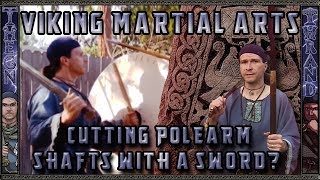
Viking Martial Art lesson 3 Cutting spear or polearm shafts with a sword? Reply to Skallagrim
ThegnThrand
Negishi-ryu Shuriken-jutsu - 42nd Japanese Kobudo Demonstration (2019)
Aikido - Guillaume Erard
Ancient Roman Plumbata Part 2 (Techniques/Accuracy/Long Distance)
Adam Celadin

Shinto Muso Ryu Gyakute zuki
funkrelaxo
SHINTO MUSO RYU JODO DEMONSTRATION | JODO AUCKLAND
AIKIDO SILVERDALE