Striking Basics In Filipino Martial Arts
0
Filipino Martial Art·Budo Brothers
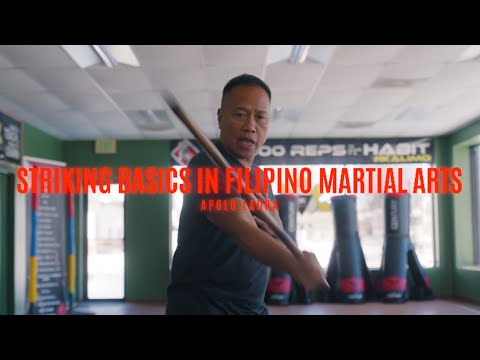
In this video Tuhon Apolo Ladra teaches the core principles of striking in Filipino Martial Arts — with a focus on prope…
Translation: Filipino martial art
The Filipino Martial Art group encompasses the weapon-based and empty-hand fighting systems indigenous to the Philippines, known collectively as Arnis, Eskrima, or Kali. [1] These arts represent one of the most comprehensive and practical weapon-based fighting systems in the world, distinguished by their emphasis on weapon training from the first day of instruction — the opposite of most martial arts which begin with empty-hand techniques and add weapons later. [1],[2] The Filipino martial arts are characterised by the use of rattan sticks (baston), bladed weapons (bolo, barong, kris), stick-and-dagger combinations (espada y daga), double sticks (doble baston), and empty-hand translations of weapon movements (mano mano/panantukan). [2],[3] The systems employ angle-based attack numbering (typically 5-12 angles of attack), flow drills for developing reflexes and coordination, and an emphasis on ambidextrous skill and weapon interchangeability — the principle that the same movements apply whether holding a stick, a blade, or an empty hand. [3],[4]
Filipino martial arts developed over centuries through inter-tribal warfare, resistance to foreign invasion (notably against Spanish colonisation beginning in 1521, when the warrior chief Lapu-Lapu killed Ferdinand Magellan at the Battle of Mactan), and cultural preservation. [1] The arts were suppressed under Spanish colonial rule (1565-1898) and survived through disguised practice in folk dances (the Moro-Moro) and underground training. [2],[3] In 2009, the Republic of the Philippines declared Arnis as the national martial art and sport through Republic Act No. 9850. [3] The art gained international recognition through practitioners such as Dan Inosanto (who trained under multiple Filipino masters and taught alongside Bruce Lee), Remy Presas (founder of Modern Arnis), and the Doce Pares and Balintawak lineages from Cebu. [3],[4]
The Filipino martial arts (FMA — Arnis/Eskrima/Kali) are among the most practical and combat-tested weapon systems in existence. [1] FMA's effectiveness stems from its live-weapon training methodology, its equal emphasis on offence and defence, and its unique principle that empty-hand and weapon techniques share the same body mechanics — a practitioner who can use a stick can apply the same angles with a blade, an empty hand, or an improvised weapon. [2] The Philippine military and police officially use Arnis-based combatives, and the art was declared the national martial art and sport of the Philippines by Republic Act No. 9850 (2009). [3]
Filipino martial arts evolved through centuries of inter-island warfare, trade contacts with Chinese, Malay, and Indonesian martial traditions, and resistance to Spanish colonisation (1521–1898). [1] The first documented account of Filipino combat effectiveness is Antonio Pigafetta's chronicle of the Battle of Mactan (1521), where Rajah Lapu-Lapu's warriors killed Ferdinand Magellan using bladed weapons and hardwood sticks. [2] Major modern lineages include: the Doce Pares system (founded 1932, Cebu), Balintawak Eskrima (founded by Venancio 'Anciong' Bacon, 1950s), Lightning Scientific Arnis (founded by Benjamin Luna Lema), Modern Arnis (founded by Remy Presas, 1966), Pekiti-Tirsia Kali (Tortal family lineage), and Inosanto/LaCoste Kali (Dan Inosanto, from John LaCoste). [3]
Arnis was included as a demonstration sport in the 2005 Southeast Asian Games and became a full medal sport at the 2019 SEA Games in the Philippines. [1] The World Eskrima Kali Arnis Federation (WEKAF), founded in 1989, organises international stick-fighting competitions using padded sticks and protective gear. [2]
No images yet for this technique.
Sign in to suggest an image.
In this video Tuhon Apolo Ladra teaches the core principles of striking in Filipino Martial Arts — with a focus on prope…
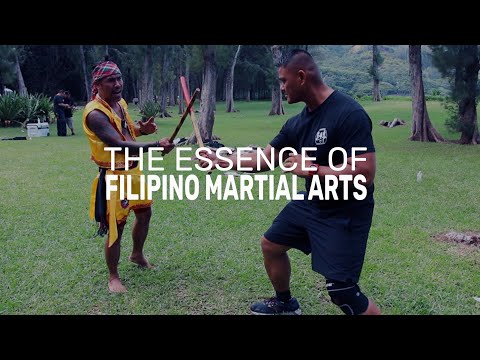
GM Oliver "Pintados" Garduce the essence behind Filipino Martial Arts. He talks about the differences between art and co…
No instructional courses yet for this technique.
Sign in to suggest a course.
Risk of injury to the person this technique is applied to
Arnis/Escrima/Kali stick and blade techniques; designed for close-range lethality
Skill level needed to execute this technique reliably
Whether this technique is allowed under major competition rule sets
Bubishi: The Classic Manual of Combat (Patrick McCarthy, 2008)
Alias sources — [1] Filipino Martial Arts (Wiley, 1994) [2] Filipino Martial Arts (Wiley, 1994) [3] Filipino Martial Arts (Wiley, 1994) [4] Filipino Martial Arts (Wiley, 1994)
Effectiveness sources — [1] Wiley, M., Filipino Martial Arts (Charles E. Tuttle, 1994) [2] Inosanto, D., The Filipino Martial Arts (Know Now Publishing, 1980) [3] Republic Act No. 9850, Republic of the Philippines (2009)
Mixed Japanese-Western terminology — combines traditional Japanese terms with katakana loanwords
Alias sources — [1] Filipino Martial Arts (Wiley, 1994) [2] Filipino Martial Arts (Wiley, 1994) [3] Filipino Martial Arts (Wiley, 1994) [4] Filipino Martial Arts (Wiley, 1994)
Effectiveness sources — [1] Wiley, M., Filipino Martial Arts (Charles E. Tuttle, 1994) [2] Inosanto, D., The Filipino Martial Arts (Know Now Publishing, 1980) [3] Republic Act No. 9850, Republic of the Philippines (2009)
close-range reflexes, wrist dexterity, grip transitions
quick hands, strong wrists for grip changes
forearm flexors, wrist rotators, deltoids, core
Every move, in any martial art, shares a few universal traits. Mix and match below to pinpoint the right tool — or compare equivalents across styles.
The Double Stick (Doble Baston) family covers techniques using two rattan sticks simultaneously, one in each hand, which is one of the most distinctive and visually spectacular aspects of Filipino martial arts. [1] Doble baston training develops ambidexterity, coordination, and the ability to attack and defend simultaneously with both hands, which translates directly to double-weapon combat (two swords, sword and dagger) and empty-hand fighting. [1,2] The double stick family includes sinawali patterns (weaving drills), flow drills (continuous two-person training sequences), and combative applications (simultaneous attack-and-block combinations). [2,3]
The Empty Hand (Mano Mano) family covers the weaponless fighting techniques of Filipino martial arts, which are derived from and informed by the same angles of attack, body mechanics, and tactical principles used in weapon combat. [1] The Filipino empty-hand approach is distinctive because it was developed from weapon fighting rather than independently — practitioners learn to apply stick and blade angles, entries, and destructions using the empty hands, elbows, knees, and headbutts. [1,2] This family includes panantukan (Filipino boxing/dirty boxing), panajakman (kicking), dumog (Filipino wrestling/grappling), and sikaran (kicking art from Rizal Province). [2,3]
The Single Stick (Solo Baston) family covers all techniques using a single rattan stick, which is the core weapon and primary training tool of Filipino martial arts. [1] Solo baston is the foundation of Filipino martial arts training — the single stick teaches the angles of attack, defensive responses, footwork, and body mechanics that transfer to every other weapon and to empty-hand fighting. [1,2] The single stick is typically 26-28 inches long and made from rattan, and techniques include the numbered angle strikes (typically 5-12 fundamental angles of attack), blocks (defensa), disarms (disarma), and counter-for-counter drills. [2,3] Solo baston competition (full-contact stick fighting) is also the primary competitive format in Arnis, governed by the World Eskrima Kali Arnis Federation (WEKAF) and the Philippine Eskrima Kali Arnis Federation. [3]
The Stick And Dagger (Espada Y Daga) family covers techniques using a long weapon (stick or sword) in the dominant hand and a short weapon (dagger or short stick) in the other hand, which is one of the most tactically versatile weapon configurations in Filipino martial arts. [1] Espada y daga (Spanish for 'sword and dagger') assigns distinct roles to each weapon: the long weapon provides range, power, and primary offence, while the short weapon handles close-range defence, trapping, checking, and close-quarters counter-attack. [1,2] The combination creates a comprehensive fighting system where the practitioner can engage at multiple ranges simultaneously — the long weapon threatens at distance while the dagger controls the close range. [2,3]
Filipino martial arts (Arnis/Eskrima/Kali) are the weapon-based fighting systems of the Philippines. The unique principle: train weapons first, empty hands second — the belief that weapon skills transfer to empty-hand combat. Single stick appears across FMA texts as the foundational training weapon. (Wiley, Filipino Martial Arts; FMA manuals)
According to Budo Brothers, maintaining a low stance keeps you hidden from your opponent's line of sight—for example, if fighting in a rice field, staying low makes it harder for them to see and target you effectively.
Budo Brothers instructors emphasize that there is no mistake in Filipino martial arts—it depends on how you deal with the situation, and you can create your own patterns as long as you check your positioning before applying techniques.
Yes—Budo Brothers demonstrates that you can interrupt and strike an opponent using something as simple as a newspaper, showing the practical, adaptable nature of Filipino martial arts.
The Filipino Martial Art group encompasses the weapon-based and empty-hand fighting systems indigenous to the Philippines, known collectively as Arnis, Eskrima, or Kali. These arts represent one of the most comprehensive and practical weapon-based fighting systems in the world, distinguished by their emphasis on weapon training from the first day of instruction — the opposite of most martial arts which begin with empty-hand techniques and add weapons later.
Filipino martial arts developed over centuries through inter-tribal warfare, resistance to foreign invasion (notably against Spanish colonisation beginning in 1521, when the warrior chief Lapu-Lapu killed Ferdinand Magellan at the Battle of Mactan), and cultural preservation. The arts were suppressed under Spanish colonial rule (1565-1898) and survived through disguised practice in folk dances (the Moro-Moro) and underground training.
WEKAF: legal — Legal in padded stick competition; HEMA: legal — Legal in applicable weapon categories
Danger rating 8/10. Very High — Arnis/Escrima/Kali stick and blade techniques; designed for close-range lethality
The standard setup chain: Grip and Stance → Chamber → Strike → Recovery.
Standard counters include: Umbrella Block — raise the stick overhead to intercept a downward strike / Cross Block — meet the incoming strike with a perpendicular block / Disarm — strip the opponent's weapon through leverage on the hand or wrist.
Common variants: Forward grip slash (cutting with the blade in a forward (hammer) grip); Reverse grip stab (thrusting with the blade in an icepick (reverse) grip); Forward grip thrust (straight thrust targeting the body or limbs); Defensive cut (slashing the opponent's attacking limb to disable it).
Arnis was included as a demonstration sport in the 2005 Southeast Asian Games and became a full medal sport at the 2019 SEA Games in the Philippines. The World Eskrima Kali Arnis Federation (WEKAF), founded in 1989, organises international stick-fighting competitions using padded sticks and protective gear.
Top errors to watch for: Training stick techniques without understanding the blade translation — every stick technique represents a blade move… / Ignoring the live hand (non-weapon hand) — the live hand checks, traps, and controls throughout FMA / Not training the 12 angles of attack — the angles are the foundation of the entire system / Practising only prearranged drills without live sparring — drills develop flow, but sparring develops timing and adap….
The Filipino Martial Art is also known as Firipin Bujutsu, FMA, Eskrima, Arnis, Kali.