Introduction: Right-Right Grip Fighting Vulnerabilities
In right-on-right and left-on-right grip fighting scenarios, practitioners often encounter a critical tactical situation that demands awareness and proper response. This lesson addresses the dangers that arise when the dominant grip holder attempts their next attack sequence.
Establishing Control of the Power Hand
When attacking the opponent's power hand and driving it to the hip, the practitioner prevents the opponent from establishing a lapel grip. Successfully controlling this position without opposition creates significant offensive opportunities with a two-to-zero or two-to-one grip advantage.
The Opponent's Defensive Counter: The Post
Skilled grip fighters immediately employ a post arm to the shoulder to neutralize rotational attacks and prevent throws such as Seoi Nage, Sumi Gaeshi, and Tomoe Nage. This defensive reaction creates a secondary problem: the attacker must now secure inside position to execute their primary throws.
The Danger Zone: Inside Position Gap
While holding an overhand grip, the practitioner cannot effectively execute rotational throws like Tai Otoshi or Uchi Mata that require inside head control. The opponent's posted arm blocks inside access, creating a dangerous window where the attacking arm can become trapped during the exchange.
Angle Shift Solution: Moving to the Outside
Rather than engaging from a squared-up position, the practitioner shifts to the outside angle when attacking the power hand. This repositioning forces the opponent to reach across their body to post effectively, placing them at a mechanical disadvantage.
Executing the Outside Attack
From the outside position, the practitioner drives forward with increased pressure to prevent the opponent from collapsing the gap. This angle naturally facilitates securing the power hand grip while maintaining the ability to attack footwork or transition to squared-up forward techniques.
Transition and Follow-Up Attacks
Once the power hand is secured from the outside position, the practitioner can re-square their stance and initiate their preferred forward attacks from a position of established control. This sequence eliminates the vulnerability window that typically results from frontal grip fighting exchanges.
Application Summary
For practitioners struggling with the post arm in right-on-right or left-on-right situations, changing the attack angle by moving outside, applying sustained pressure, and securing the grip from this superior position provides a powerful solution to avoid dangerous grip fighting traps.
Advanced Judo Grip Fighting: A powerful way to avoid the post arm during grip fighting
Key Takeaways
- •Introduction: Right-Right Grip Fighting Vulnerabilities
- •Establishing Control of the Power Hand
- •The Opponent's Defensive Counter: The Post
- •The Danger Zone: Inside Position Gap
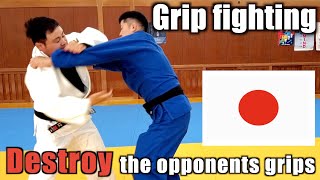
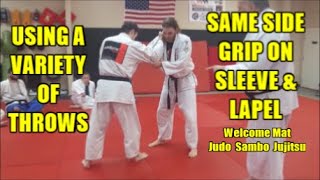
In right v. right grip fighting battles, one player will often post their left (non power) hand on thier opponents right shoulder to prevent their opponent from entering for throws and to work towards gaining an advantagous grip. Here we talk about one way to pevent this from happening.
Related Techniques
Frequently Asked Questions
What does this video teach about right-right ai-yotsu?
This video covers introduction: right-right grip fighting vulnerabilities, establishing control of the power hand, the opponent's defensive counter: the post. It provides detailed instruction from Rochester Judo.
How long does it take to learn right-right ai-yotsu?
The basic mechanics can be understood in a single session, but developing reliable execution requires consistent drilling over weeks of practice. This 8-part breakdown helps structure your training by isolating each phase of the technique.
What are the key details for finishing right-right ai-yotsu?
Once the power hand is secured from the outside position, the practitioner can re-square their stance and initiate their preferred forward attacks from a position of established control. This sequence eliminates the vulnerability window that typically results from frontal grip fighting exchanges.