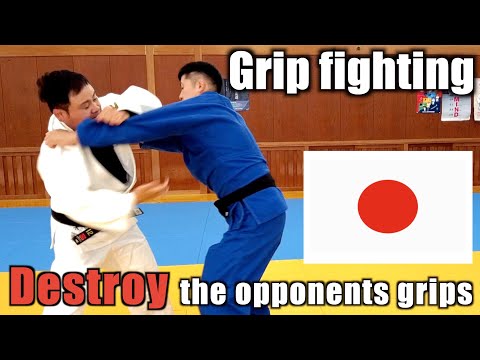
Most Secret techniques:Advanced grip fighting Aiyotsu.
0
Left-Left Ai-Yotsu·FLUID JUDO JAPAN·Added by Admin
learn advanced gripping of Japanese judoka, learn strategies that was used successfully in competitions and randori. #j…
Translation: left-left same-side grip
The Left-Left Ai-Yotsu positions both fighters in left-handed stance, with each gripping right hand on the collar and left hand on the sleeve in a symmetrical left-side-forward configuration. [1] Left-left ai-yotsu is less common than right-right because traditionally most judoka train right-handed, making left-left matchups a specialist scenario. [1],[2] Left-handed fighters who develop strong left-side throwing techniques often have a tactical advantage against right-handed opponents in kenka-yotsu, and the left-left ai-yotsu matchup pits two such specialists against each other. [2],[3]
Left-left ai-yotsu matchups became more common as international judo competition diversified and more athletes developed left-sided techniques as their primary throwing direction. [1] The rise of left-handed specialists in world and Olympic judo drove the development of specific strategies for this matchup. [2],[3]
Left-left ai-yotsu places both fighters in left-handed (southpaw) stance, a less common configuration that requires specific throw adaptations. [1]
This is a variant of the standard ai-yotsu configuration in judo. [1]
Left-left ai-yotsu (symmetrical left-handed grip) is a standard kumi-kata configuration in judo competition, commonly seen when two left-handed judoka face each other at IJF events. [1]
No images yet for this technique.
Sign in to suggest an image.
learn advanced gripping of Japanese judoka, learn strategies that was used successfully in competitions and randori. #j…
No instructional courses yet for this technique.
Sign in to suggest a course.
Risk of injury to the person this technique is applied to
Grip fighting is primarily positional; finger/wrist strain risk
Skill level needed to execute this technique reliably
Whether this technique is allowed under major competition rule sets
Kodokan Judo (Jigoro Kano, 1986)
Alias sources — [1] Kodokan Judo (Kano, 1986) [2] Best Judo (Inokuma & Sato, 1979) [3] Kodokan New Japanese-English Dictionary of Judo (IJF, 2000)
Effectiveness sources — [1] Kodokan Judo (Kano, 1986)
Official Kodokan ground technique classification system
Established Japanese martial arts naming convention — native Japanese term (和語/漢語)
Alias sources — [1] Kodokan Judo (Kano, 1986) [2] Best Judo (Inokuma & Sato, 1979) [3] Kodokan New Japanese-English Dictionary of Judo (IJF, 2000)
Effectiveness sources — [1] Kodokan Judo (Kano, 1986)
grip strength, upper body endurance, balance under pressure
strong arms and shoulders, stable base
forearms, deltoids, core, hip muscles
Keep distance from your opponent as a primary defense. If that fails, block your opponent's left shoulder by extending your arm while preventing your head from being bent forward and down.
Grip the opponent's collar with your right hand to prevent their left shoulder from moving forward, while keeping your right leg forward. Then place your ear to your shoulder to block their arm and grasp their left hand with your left hand.
Twist your wrist and elbows inward to break the grip using quick and supple movements rather than raw power.
The Left-Left Ai-Yotsu positions both fighters in left-handed stance, with each gripping right hand on the collar and left hand on the sleeve in a symmetrical left-side-forward configuration. Left-left ai-yotsu is less common than right-right because traditionally most judoka train right-handed, making left-left matchups a specialist scenario.
Left-left ai-yotsu matchups became more common as international judo competition diversified and more athletes developed left-sided techniques as their primary throwing direction. The rise of left-handed specialists in world and Olympic judo drove the development of specific strategies for this matchup.
Unified MMA: legal — Legal — clinching is integral to MMA; IJF: legal — Legal — kumi-kata (grip fighting) is fundamental to judo; IBJJF: legal — Legal — standing grip fighting and clinch work permitted; IFMA: legal — Legal — the clinch is a core element of Muay Thai, clinch dominance is highly…; WBC/Boxing: restricted — Holding is technically a foul — referee breaks clinch, excessive holding resu…; K: restricted — 1/GLORY — One attack from clinch allowed, then referee breaks; WAKO: restricted — Clinch generally broken by referee — limited or no clinch fighting in most fo…; UWW: legal — Legal — clinch is fundamental to wrestling, the primary position in Greco-Roman
Danger rating 2/10. Low — grip fighting is primarily positional; finger/wrist strain risk
The standard setup chain: Close Distance → Establish Primary Grip → Position the Hips → Apply Pressure.
Standard counters include: Pummeling — fight for inside position by swimming arms under opponent's grips / Frame and Push — create distance using forearm frames against the chest or neck / Grip Break — systematically strip the opponent's controlling grips / Posture Up — straighten the spine and drive the hips forward to break clinch control.
Common variants: Standard variation (primary clinch configuration from the most common entry); Gi variation (adapted with collar and sleeve grips for gi-based grappling); No-gi / MMA variation (modified for no-gi or cage fighting conditions); Offensive variation (configured to set up strikes, takedowns, or submissions f…).
Left-left ai-yotsu (symmetrical left-handed grip) is a standard kumi-kata configuration in judo competition, commonly seen when two left-handed judoka face each other at IJF events.
Top errors to watch for: Right-handed fighters treating left-left like right-right — the angles and entries are mirrored; adjust accordingly / Not developing left-side throws for this matchup — relying on right-side techniques in a left-left grip is awkward / Accepting the opponent's dominant left-hand grip without fighting it — grip dominance is even more critical in the le… / Not studying left-handed opponents' tendencies — left-left ai yotsu has its own meta in competition.
The Left-Left Ai-Yotsu is also known as Hidari Ai-yotsu, Hidari Ai-Yotsu, Left-Handed Same Grip, Southpaw Ai-Yotsu.