Introduction to Ai-Yotsu Same-Side Grip Fighting
Ai-yotsu kumite, where both competitors maintain the same grip orientation, presents unique defensive challenges. This instructional sequence addresses the critical threat of back grip attacks in same-side positioning and provides systematic defensive solutions.
Preventive Distance Management
The primary defense against back grip attacks involves maintaining appropriate distance from the opponent. When distance fails, two advanced defensive techniques become essential for neutralizing the attack.
Technique 1: Shoulder Block and Collar Control
The instructor blocks the opponent's left shoulder extension while simultaneously gripping the collar with the right hand to prevent shoulder advancement. The ear-to-shoulder positioning blocks arm access to the neck while the left hand controls the opponent's left arm, followed by a leg swing to establish left-grip, left-stance positioning.
Sleeve Control and Position Transition
Quick sleeve capture with the right hand establishes proper hikite positioning from an alternate angle. This sequence resets defensive posture while maintaining control of the opponent's upper body.
Randori Application Against Back Grip
In live training, dominating the opponent's surrati (grip point) through the previously explained controlling tactics enables throw execution. Proper positional control transforms defensive positioning into immediate offensive opportunity.
Technique 2: Collar Drop Defense
When the head cannot be raised during back grip attack, lowering the opponent's grip point through controlled collar shifting restores proper posture. Bilateral hand coordination shifts the judogi collar to suppress the opponent's surrati, enabling head elevation and throw execution.
Establishing Optimal Foot Positioning for Forward Throws
Same-side positioning with the opponent's front leg forward limits forward throw options. Wrist twisting combined with hikite pressure rotates the opponent's stance, advancing the rear foot to enable techniques like seoi nage, uchi mata, and tsurigoshi.
Breaking the Opponent's Hikite Grip
Rather than using strength, quick supple elbow movements with varied rhythm break the hikite grip. Circular elbow motion combined with inward wrist and elbow rotation creates space and loosens the opponent's grip, enabling hikite separation.
Balance Disruption and Finishing Position
Forward head movement combined with previously explained footwork disrupts the opponent's balance by positioning the head in front of the feet. This positioning creates the optimal moment for throw execution with the opponent in an unstable, compromised defensive posture.
Most Secret techniques:Advanced grip fighting Aiyotsu.
Key Takeaways
- •Introduction to Ai-Yotsu Same-Side Grip Fighting
- •Preventive Distance Management
- •Technique 1: Shoulder Block and Collar Control
- •Sleeve Control and Position Transition
learn advanced gripping of Japanese judoka, learn strategies that was used successfully in competitions and randori. #judo #ippon #judothrow #柔道 #japan #дзюдо
Related Techniques
Frequently Asked Questions
What does this video teach about left-left ai-yotsu?
This video covers introduction to ai-yotsu same-side grip fighting, preventive distance management, technique 1: shoulder block and collar control. It provides detailed instruction from FLUID JUDO JAPAN.
How long does it take to learn left-left ai-yotsu?
The basic mechanics can be understood in a single session, but developing reliable execution requires consistent drilling over weeks of practice. This 9-part breakdown helps structure your training by isolating each phase of the technique.
What are the key details for finishing left-left ai-yotsu?
Rather than using strength, quick supple elbow movements with varied rhythm break the hikite grip. Circular elbow motion combined with inward wrist and elbow rotation creates space and loosens the opponent's grip, enabling hikite separation.
Related videos
Ken Ken Throws
Seiryoku Zenyo
Advanced Judo Grip Fighting: A powerful way to avoid the post arm during grip fighting
Rochester Judo
Basic Judo throws and concepts
Shintaro Higashi
Grip Fighting Drills - Basic to Advanced
The Judo Coach
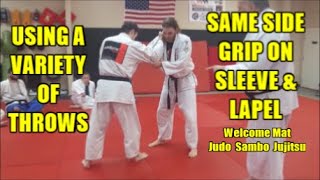
SAME SIDE GRIP ON SLEEVE & LAPEL USING A VARIETY OF THROWS
welcomematstevescott