Cross Grip Setup
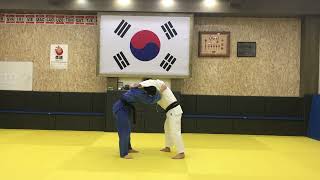
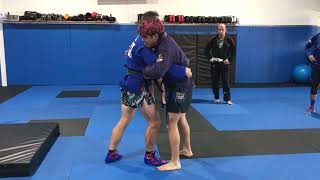
Yoko gake from cross grip is an advanced variation favored by high-level competitors. The practitioner takes one hand across the opponent's body and reaches the other over the back, applying downward pressure while keeping the chest tight against the opponent to prevent them from lifting and escaping.
Pressure Position and Control
The cross grip creates a confined position analogous to a bow and arrow, with the tori maintaining constant pressure to trap the uke. This positioning is considered one of the most disadvantageous situations in judo, particularly against experienced opponents who have multiple throw options available.
Entry and Fall Mechanics
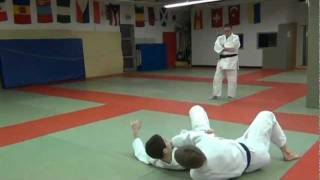
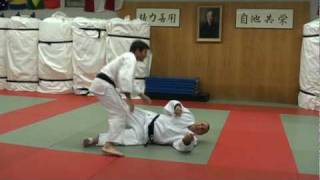
From the controlled cross grip position, the thrower steps inward while maintaining pressure, then falls backward to execute the throw. Although the grip and posture differ from traditional yoko gake, the fundamental kazushi (off-balancing) and throwing mechanics remain consistent.
Hip Placement and Spacing
The leg hook is positioned at the hip level rather than high on the torso to maintain proper spacing and control. In judo, minimizing space between tori and uke is essential, as separation creates opportunities for the opponent to escape or counter.
Grip Pressure and Opponent Response
The tori maintains a tight grip while keeping the hand hugged close to the body, ensuring continuous pressure on the opponent. When the uke attempts to stand upright to relieve pressure, this defensive movement creates the precise moment for the throw execution.
Hook Placement Variation
The practitioner can hook the opponent's ankle or lower leg during the throw to gain additional control over their fall. This variation, while resembling an ankle grasp, provides the tori with superior directional control when the opponent is descending.
Technique Variation and Application
This yoko gake variation differs from the traditional classical form but shares the same fundamental kazushi setup and throwing principles. The variation demonstrates how adapting grip and posture can open new tactical opportunities while maintaining technical integrity.
Yoko Gake
Key Takeaways
- •Cross Grip Setup
- •Pressure Position and Control
- •Entry and Fall Mechanics
- •Hip Placement and Spacing
The fundamentals of the "Yoko Gake" (Side Sacrifice) Throw is demonstrated by Sensei David Becker @ the Tohkon Judo Academy of Chicago.
Related Techniques
Frequently Asked Questions
What does this video teach about yoko gake?
This video covers cross grip setup, pressure position and control, entry and fall mechanics. It provides detailed instruction from WINNING.
How long does it take to learn yoko gake?
The basic mechanics can be understood in a single session, but developing reliable execution requires consistent drilling over weeks of practice. This 7-part breakdown helps structure your training by isolating each phase of the technique.
What are the key details for finishing yoko gake?
The practitioner can hook the opponent's ankle or lower leg during the throw to gain additional control over their fall. This variation, while resembling an ankle grasp, provides the tori with superior directional control when the opponent is descending.