Risk and Execution
Uki waza demands precise execution; poor technique results in the practitioner being pinned or allowing the opponent to score. The difficulty lies in the sacrifice element—the thrower must commit fully to the technique while maintaining control.
Yokosutemi Classification
Uki waza belongs to the yokosutemi (side sacrifice throw) group of techniques. The kata form demonstrates the idealized execution with controlled, flowing movement designed for teaching purposes.
Grip and Footwork
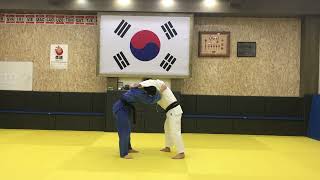
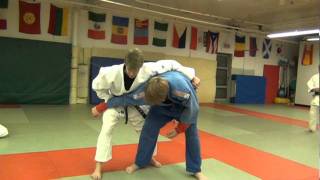
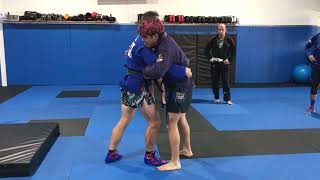
The technique begins with gripping the opponent's sleeve, stepping backward to establish distance, then stepping forward while pulling downward. The initial backward step generates momentum for the throwing action.
Teaching Versus Competition
During instruction, the thrower releases the sleeve grip to allow the opponent to execute zenbukaiten (forward roll). In live competition, such considerations are secondary to effective technique. The instructor emphasizes not holding the opponent's hand to facilitate proper ukemi.
Practical Application Limitations
Uki waza is uncommon in competitive fighting despite its theoretical effectiveness. The technique's complexity and risk-reward ratio make it impractical for most modern judo matches.
Release Timing and Breakfalling
The thrower must release the sleeve grip before impact to avoid being thrown head-first. Proper ukemi requires rolling over the shoulder rather than extending the arm to catch the fall, which risks injury. Early release of the grip is essential to allow the defender's recovery.
Momentum and Kata Mechanics
The backward step builds momentum that is transferred through the pulling action. In kata practice, the thrower releases the opponent's hand completely, allowing them to complete a full rolling breakfall without injury.
Partner Drills and Safety
Training begins with the throwing motion repeated several times before introducing the actual fall. Partners should practice rolling progressively, starting slowly and increasing speed only after establishing proper technique. The thrower must monitor the defender's safety throughout.
Nomenclature and Meaning
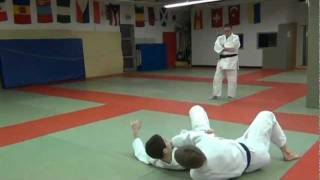
The term 'uki waza' translates roughly to 'floating technique,' referencing the sacrifice nature of the throw. The thrower remains positioned beneath the opponent after the throw completes, distinguishing it from other sacrifice throws.
Competitive Penalties
Repeated unsuccessful uki waza attempts without committed throwing action result in penalties for pulling without attacking. Proper execution requires full commitment to the throw; defensive pulling alone violates competition rules and incurs referee sanctions.
Uki Waza
Key Takeaways
- •Risk and Execution
- •Yokosutemi Classification
- •Grip and Footwork
- •Teaching Versus Competition
Self Sacrifice "Floating" Throw
Related Techniques
Frequently Asked Questions
What does this video teach about uki waza?
This video covers risk and execution, yokosutemi classification, grip and footwork. It provides detailed instruction from WINNING.
How long does it take to learn uki waza?
The basic mechanics can be understood in a single session, but developing reliable execution requires consistent drilling over weeks of practice. This 10-part breakdown helps structure your training by isolating each phase of the technique.
What are the key details for finishing uki waza?
The term 'uki waza' translates roughly to 'floating technique,' referencing the sacrifice nature of the throw. The thrower remains positioned beneath the opponent after the throw completes, distinguishing it from other sacrifice throws.