Yoko Gake
0
Yoko Gake·WINNING
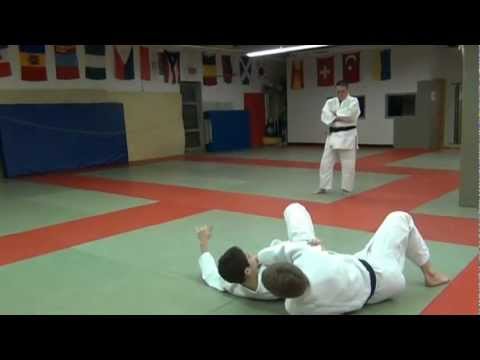
The fundamentals of the "Yoko Gake" (Side Sacrifice) Throw is demonstrated by Sensei David Becker @ the Tohkon Judo Acad…
Translation: side hook
Yoko Gake is a side sacrifice throw where the attacker hooks the opponent's ankle with their foot while falling sideways, dragging the opponent down with them. [1] The attacker steps to the side, hooks the opponent's near ankle with the sole of the foot, and drops their body weight sideways while pulling the opponent into the fall. [1] It requires precise timing to catch the opponent mid-step. [1]
Classified in the Kodokan Judo syllabus. [1]
Kodokan judo lineage: Jigoro Kano (1860–1938) systematized this technique as part of the Kodokan judo curriculum. Transmitted through the Kodokan instructor system to judo federations worldwide. Adopted into BJJ through Mitsuyo Maeda → Carlos Gracie → the Gracie family lineage. [1]
Recognized Kodokan judo technique but rarely seen in modern IJF competition due to rule changes favoring forward-throwing techniques. Occasionally appears in kata demonstrations and regional tournaments. [1]
No images yet for this technique.
Sign in to suggest an image.
The fundamentals of the "Yoko Gake" (Side Sacrifice) Throw is demonstrated by Sensei David Becker @ the Tohkon Judo Acad…
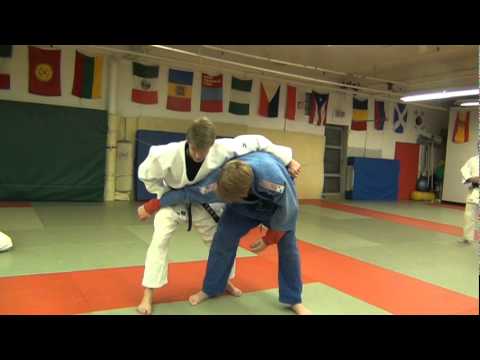
The fundamentals of the "Yoko Gake" (Side Sacrifice) Throw as demonstrated by Sensei's David Becker & Robert Mita @ the …
No instructional courses yet for this technique.
Sign in to suggest a course.
Risk of injury to the person this technique is applied to
Moderate.
Skill level needed to execute this technique reliably
Whether this technique is allowed under major competition rule sets
Kano, J. Kodokan Judo. Kodansha International.
[1] Kano, J. Kodokan Judo. Kodansha International.
Official Kodokan ground technique classification system
Standard Japanese martial arts terminology (kanji/hiragana)
Established Japanese martial arts naming convention — native Japanese term (和語/漢語)
[1] Kano, J. Kodokan Judo. Kodansha International.
precise foot placement, timing, controlled side falling
hip flexors (hooking foot), core (side fall), grip (pulling)
Yoko gake (side hook) is a side sacrifice throw where the attacker hooks the opponent's ankle while falling to the side. A subtle technique that uses timing and direction change rather than force. (Kano, Kodokan Judo)
Use a cross grip where you take your opponent's arm with a cross grip while reaching your other hand over their back to control them tightly.
In Judo and ground work, you never want space between you and your opponent; keeping everything tight and hugging your opponent into you maintains control and pressure throughout the technique.
Yes, yoko gake is a sacrifice throw where you must commit fully to the technique and finish the throw as you fall.
You should capture the arch of your foot into the groove of your opponent's body rather than executing a tight kick.
Yoko Gake is a side sacrifice throw where the attacker hooks the opponent's ankle with their foot while falling sideways, dragging the opponent down with them. The attacker steps to the side, hooks the opponent's near ankle with the sole of the foot, and drops their body weight sideways while pulling the opponent into the fall.
Classified in the Kodokan Judo syllabus.
IJF Judo: Legal: legal — Kodokan classified technique; IBJJF: Legal {src:IBJJF Rules Book v6.0, June 2024|/sources/IBJJF: legal — Rules-v6.0-June-2024.pdf}; Unified MMA: Legal {src:Unified Rules of MMA, August 2025|/sources/Unified: legal — MMA-Rules-August-2025.pdf}; FIAS Sambo: Legal {src:FIAS International Sambo Competition Rules|/sources/FIAS: legal — Sambo-Rules.pdf}
Danger rating 5/10. Moderate.
The standard setup chain: Grip fighting → get opponent to shift weight to near foot → Yoko Gake → Feint a forward throw → opponent shifts weight back → immediate Yoko Gake on the planted foot → Circular movement → catch opponent mid-step → Yoko Gake.
Standard counters include: Lift the targeted foot — remove the hook target / Step back quickly — deny the hook / Drive forward — overwhelm the sacrifice.
Common variants: Inside Yoko Gake (hooking from inside); Outside Yoko Gake (hooking from outside); Drop Yoko Gake (dropping body weight more aggressively).
Recognized Kodokan judo technique but rarely seen in modern IJF competition due to rule changes favoring forward-throwing techniques. Occasionally appears in kata demonstrations and regional tournaments.
Top errors to watch for: Falling before hooking — the hook misses / Hooking too high (calf instead of ankle) — reduced leverage / Not pulling during the fall — opponent doesn't follow you down / Landing flat on your back instead of your side.
The Yoko Gake is also known as Yoko Gake, Yoko-Gake, Side Body Drop, Yokogake.